The Spanish government, in a firm official statement by its Foreign Minister José Manuel Álvarez, denied recent reports that Madrid had agreed to military cooperation with the United States in the context of war with Iran or any military operations against Tehran. This denial came as a direct response to statements made by White House spokeswoman Caroline Leavitt, who claimed there was coordination to control Iranian airspace.
In an interview with local radio station Cadena SER, Minister Álvarez confirmed that his country's position remained unchanged, stating, "I categorically deny any change. Our position regarding the use of our bases in the war in the Middle East, and in bombing Iran, has not changed at all." This statement puts an end to speculation about Spain's involvement in any new military escalation in the region.
Military bases and their location in the Iran-Iran war
To understand the depth of this denial, one must consider the historical and strategic context of military relations between Spain and the United States. Spain hosts two major military bases used by US forces: the Rota Naval Base and the Morón Air Base. These bases are pivotal to US operations in the Mediterranean, the Middle East, and North Africa. However, the bilateral defense agreement between the two countries explicitly stipulates that Washington must obtain prior authorization from the Spanish government for any military missions launched from these bases, particularly those that fall outside the scope of regular NATO missions.
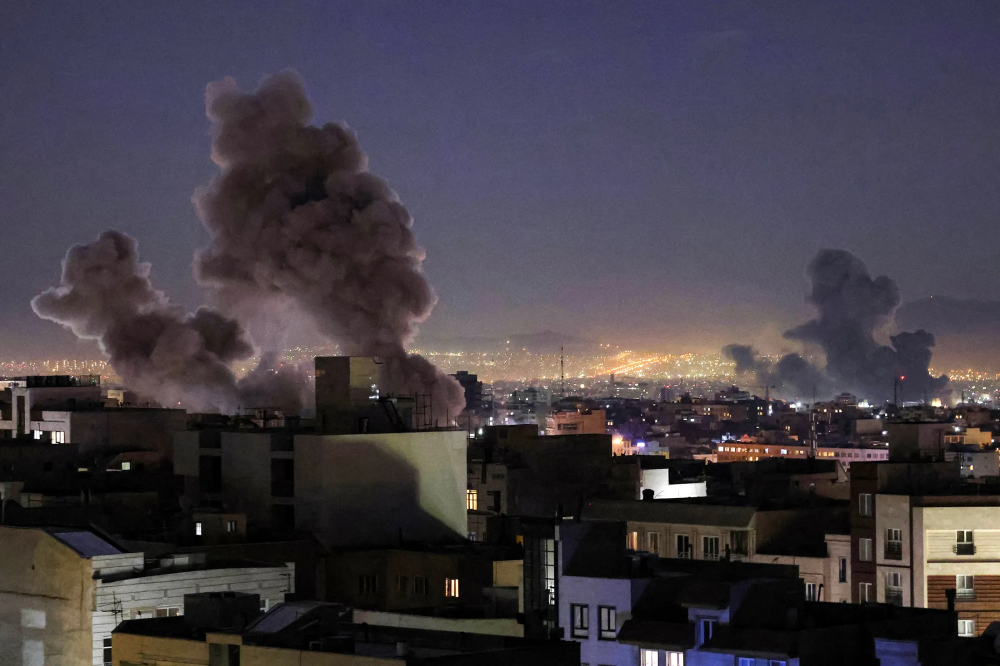
Amid escalating tensions and talk of war with Iran , the sensitivity surrounding the use of these bases is paramount. The current Spanish government has adopted a conciliatory diplomatic approach in the Middle East and fears that using its territory as a launching pad for offensive operations could embroil it in a wider regional conflict that would not serve its national or European interests.
The implications of Spanish exile and its regional impact
This categorical denial carries significant political implications that extend beyond a mere media statement. It reflects Madrid's desire to maintain its sovereign decision-making independence and avoid being automatically drawn into escalating American policies without critical examination. Domestically, the ruling coalition in Spain faces popular pressure against involvement in foreign wars, making any endorsement of a war with Iran a form of domestic political suicide.
On the international level, Spain's refusal could pose a logistical obstacle to US plans, forcing Washington to seek alternatives or longer and more expensive air and sea routes. This stance also sends a message to European partners about the need to adopt unified positions aimed at de-escalation rather than fueling the conflict, which could affect the coherence of the Western stance on dealing with the Iranian issue in the near future.