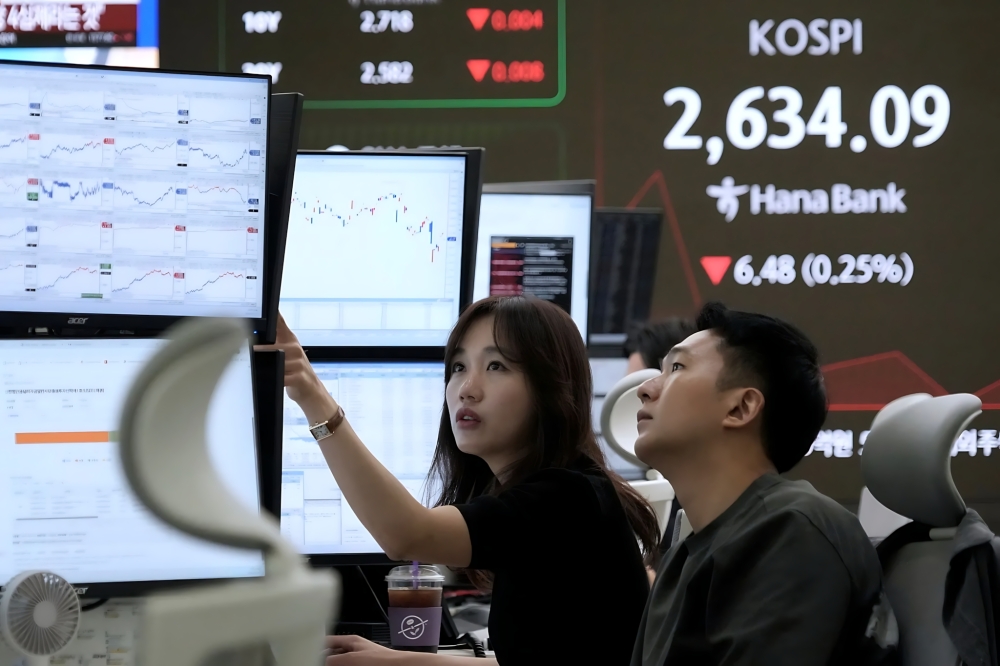
Asian financial markets experienced a turbulent day, with South Korea's stock exchange leading a sharp decline that prompted regulators to take the extraordinary measure of temporarily halting trading. This move followed a drop of more than 4% in the benchmark Kospi index and a plunge of over 5% in Kospi 200 futures, raising concerns among investors about market stability.
General context and impact of Chinese data
This sharp decline comes at a time when investors are cautiously assessing economic data from China, particularly regarding factory activity for January. China is South Korea's largest trading partner, and any slowdown in its economic engine has a direct and rapid impact on major export-oriented Korean companies. This data provides indicators of the health of the world's second-largest economy and influences investment decisions across the region, as weak Chinese demand translates to lower profits for Korean giants like Samsung Electronics and SK Hynix. This concern was clearly reflected in the performance of the two companies' shares, which plummeted by 5.55% and 6.66%, respectively, given their significant weighting in the overall index.
The mechanism for suspending trading and its historical significance
The decision to halt trading, known as a “circuit breaker,” is a regulatory mechanism used in global stock exchanges to limit extreme market volatility and prevent panic selling. This mechanism is activated automatically when losses reach predetermined levels, giving investors a period of calm to reassess their strategies and absorb new information away from the pressure of accelerating declines. Historically, this tool has been used during major crises, such as the 2008 global financial crisis and the COVID-19 pandemic, to restore some stability and confidence to the markets.
Regional and international impact
The sell-off wasn't limited to South Korea; it extended to most major Asian markets. Hong Kong's Hang Seng index fell 1.64%, China's CSI 300 index declined 0.68%, and Australia's S&P/ASX 200 index dropped 1%. In contrast, Japanese markets bucked the trend, with the Nikkei and Topix indices posting slight gains, supported by domestic factors. This divergence reflects the interconnectedness of Asian economies and their collective vulnerability to China, while acknowledging the unique characteristics of each market. The unease also spilled over into US futures markets, with futures contracts for major indices declining, foreshadowing a volatile week on Wall Street as investors closely monitored the prices of metals and cryptocurrencies, which also experienced heavy selling.