Judicial committee to investigate violation of presidential directives
South African President Cyril Ramaphosa, in his capacity as Commander-in-Chief of the Armed Forces, has ordered a high-level judicial inquiry into the controversial participation of the Iranian navy in joint military exercises off the country's coast. This decision follows reports that Iran's participation occurred against explicit presidential directives, raising serious questions about the chain of command within the military establishment and the strategic direction of Pretoria's foreign policy.
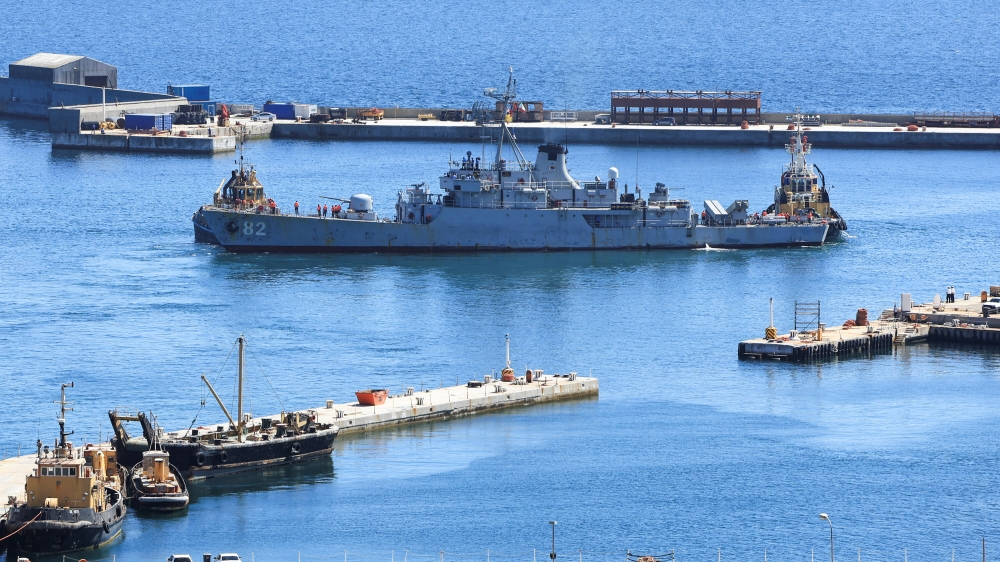
The presidency announced in an official statement the formation of an independent commission of inquiry composed of three judges, tasked with uncovering the circumstances surrounding the “violation of the president’s instructions not to allow the Islamic Republic of Iran Navy to participate in the ‘Peace Will 2026’ exercise led by China and held in South African waters.” The commission has been given one month to submit its final report, which will identify the circumstances of the incident, those responsible for disobeying the presidential order, and recommend necessary measures.
Geopolitical context: Mosi's maneuvers and South Africa's delicate balance
These maneuvers come as part of a series of joint naval exercises known as “MOSSI,” which regularly bring together South Africa, Russia, and China. These exercises aim to enhance maritime and security cooperation among BRICS member states and their allies, and are seen as a clear message of increasing military coordination among these powers in the face of Western hegemony. However, the inclusion of Iran, a country subject to extensive international sanctions, adds a new dimension of complexity and challenge.
Since the end of apartheid, South Africa has pursued a non-aligned foreign policy, attempting to maintain balanced relations with both Western powers, a key economic partner, and rising powers in the East such as China and Russia. This incident places Pretoria's delicate balancing act under considerable strain, as the move is perceived as a clearer alignment with the Moscow-Beijing-Tehran axis.
Significance and potential impacts: internal and international tensions
Domestically, the investigation reveals potential disagreements between the civilian government and the military establishment over sensitive foreign policy issues. Ignoring the directives of the Commander-in-Chief of the Armed Forces sets a dangerous precedent that could affect political stability and the country's image. Internationally, Iran's involvement has provoked strong disapproval from the United States and Western partners, who have described the move as "unacceptable." This comes at a time of already heightened tensions between South Africa and the West due to its neutral stance on the war in Ukraine. This incident could lead to a further deterioration in diplomatic relations and may have economic repercussions, as US lawmakers have previously threatened to review trade ties with South Africa. The findings of the investigation will not only determine domestic responsibility but will also shape the future of South Africa's foreign policy in an increasingly polarized world.