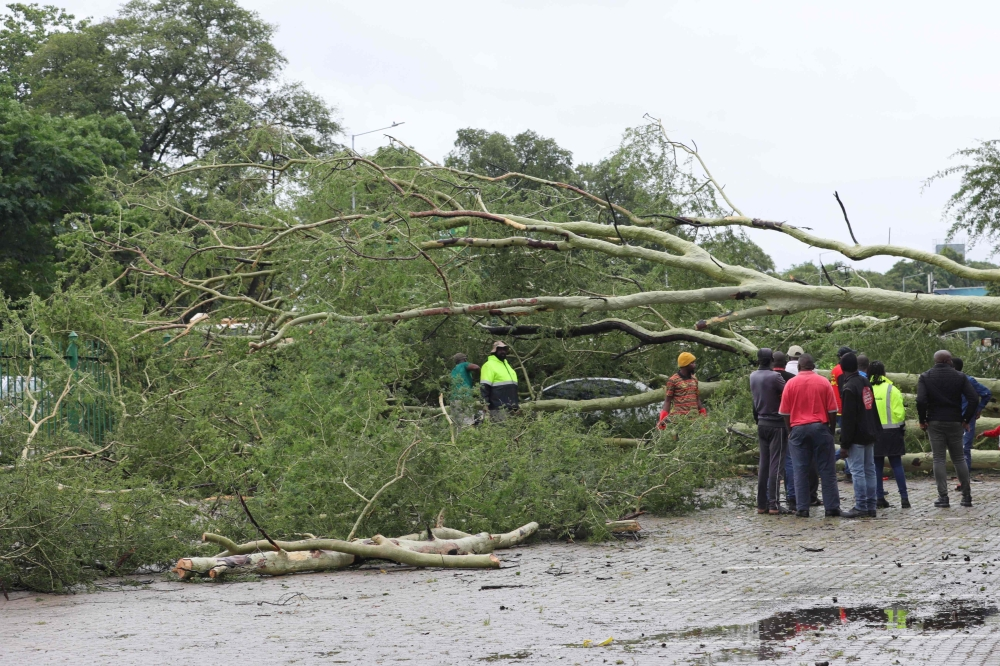
The South African government officially declared a national disaster on Sunday in response to the serious consequences of the massive floods and torrential rains that struck large areas in the northeast of the country, destroying hundreds of homes and causing dozens of casualties, while the effects of the low-pressure system extended to neighboring Mozambique.
Details of the disaster and human losses
The past few weeks have seen unprecedented torrential rains accompanied by powerful thunderstorms, primarily affecting the provinces of Limpopo and Mpumalanga. Official reports confirm that more than 30 people have died in South Africa alone due to drowning or building collapses, while rescue teams continue their tireless efforts to search for the missing amidst extremely challenging weather conditions. In neighboring Mozambique, thousands have been forced to flee to temporary shelters after entire villages were submerged, and emergency births have been reported on rooftops as people sought refuge from the rising waters.
Implications of declaring a “national state of disaster”
The classification of the current situation as a “national disaster” by the director of the National Disaster Management Centre, Elias Sitholi, was a crucial legal and procedural step. This declaration allows the central government in Pretoria to bypass usual bureaucratic procedures and immediately mobilize all available state financial and logistical resources to provide relief to those affected. It also enables the appointment of officials to coordinate the response across various ministries, ensure the delivery of food and medical aid to the affected areas, and facilitate the rehabilitation of vital infrastructure, such as bridges and roads, damaged by the floods.
Economic, environmental, and tourism impacts
The damage wasn't limited to homes and private property; it also affected the country's vital tourism sector. Authorities were forced to close Kruger National Park, one of Africa's largest nature reserves and a major global tourist destination, and evacuate visitors for their safety. Although the Parks Authority announced a partial resumption of visits as the floodwaters receded, warnings remain in place urging extreme caution.
Climate experts point out that the southern African region has been experiencing severe weather fluctuations in recent years, ranging from prolonged droughts to flash floods. Scientists attribute this to global climate changes that intensify natural phenomena, posing major challenges for the region's governments to strengthen their infrastructure and early warning systems.
Regional situation in Mozambique
Across the border, Mozambique is facing a dire humanitarian situation, as it is the delta of several rivers originating in South Africa and Zimbabwe. Increased river flow has led to widespread flooding, complicating rescue efforts that have been slow due to limited resources and the difficulty of accessing remote areas. There are fears that the death toll, currently at eight confirmed fatalities since the start of the rainy season in December, will rise.