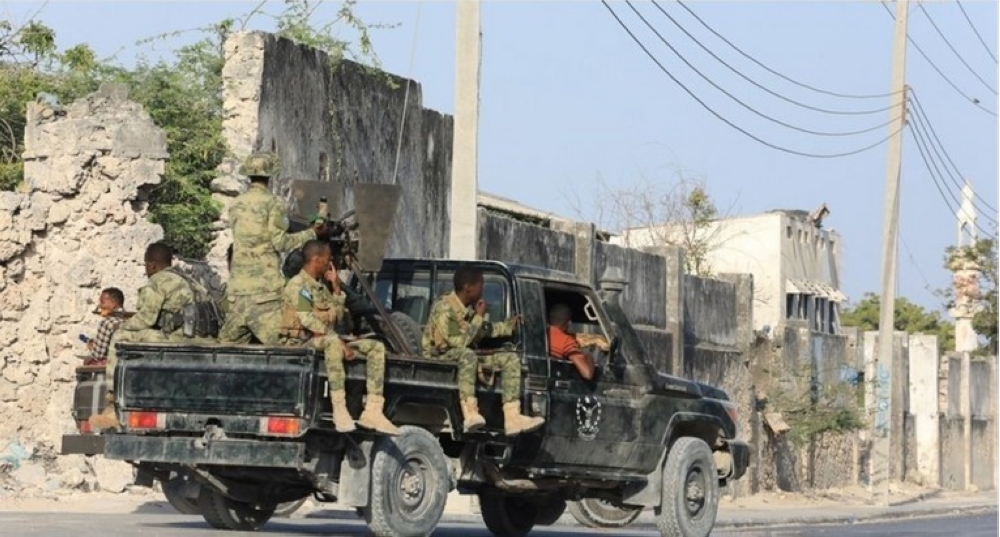
In a new blow to extremist groups, Somali security forces announced the success of a precise and well-planned military operation in the Maha Said area of Middle Shabelle region, in the southeast of the country. The operation resulted in the killing of 13 al-Shabaab militants, including five senior commanders, and seriously wounded eight others, including three commanders, representing a significant setback for the group's operations in the region.
According to the official Somali News Agency, the operation was based on precise intelligence that led forces to a house used by members of the group as a planning and plotting center. Sources indicated that the group was holding a meeting at the time to prepare terrorist plots aimed at destabilizing the region, as well as to pressure local residents to extort money and coerce them into providing support—a tactic the group has consistently employed to finance its operations.
The general context of the war on terror in Somalia
This operation comes within the context of the open war waged by the Somali Federal Government, led by President Hassan Sheikh Mohamud, against the al-Shabaab terrorist group, which is linked to al-Qaeda. For years, Somalia has suffered the scourge of terrorism perpetrated by the group, which previously controlled vast swathes of the country, imposing its strict interpretation of Islamic law. The Somali government has recently intensified its comprehensive military offensives, in cooperation with local clans that have risen up against the group, and with the support of international partners, with the aim of liberating the remaining areas under terrorist control and restoring state authority.
The importance of the process and its expected impact
This operation holds strategic importance that extends far beyond the reported casualty figures. The targeting and killing of five of the movement's leaders in a single operation represents a significant blow to its organizational structure and its command and coordination capabilities. This is expected to weaken the morale of its fighters and sow confusion within their ranks, thus facilitating further advances by government forces on the ground.
Domestically, the success of such operations strengthens citizens' trust in their security forces and encourages more communities to cooperate with authorities and resist al-Shabaab's influence. Regionally, weakening the group contributes to greater security and stability across the Horn of Africa, where al-Shabaab has launched terrorist attacks in neighboring countries such as Kenya and Ethiopia. Internationally, these efforts are seen as a crucial part of the global war on terror and demonstrate the growing capacity of the Somali National Army to assume full security responsibilities, particularly as the African Union Transitional Military Mission in Somalia (ATMIS) prepares for its phased withdrawal.