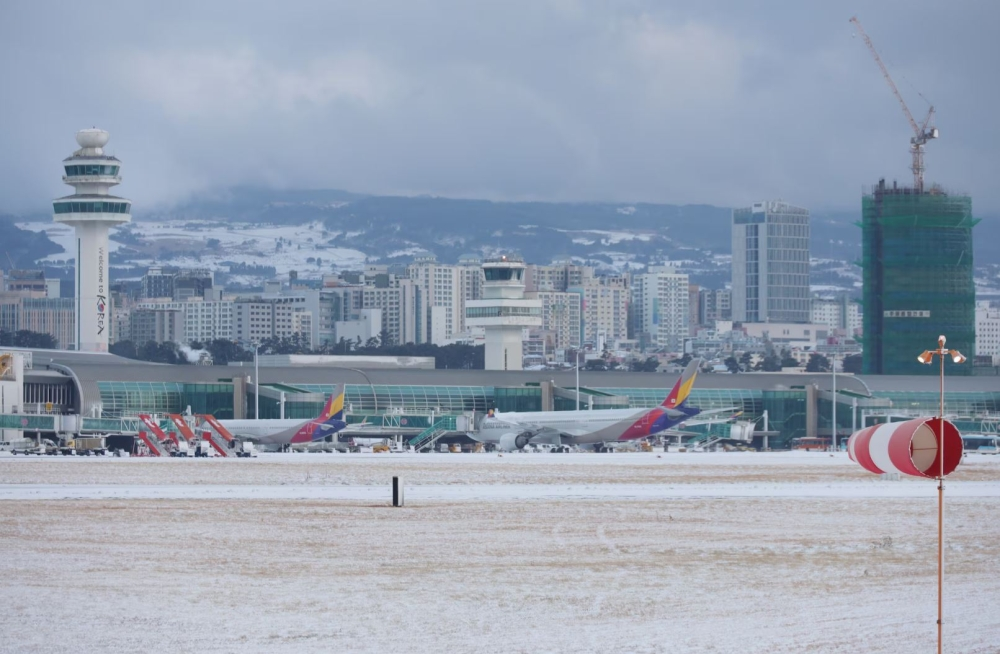
A severe snowstorm accompanied by strong winds brought air traffic to a complete standstill at Jeju International Airport in South Korea, one of the country's busiest airports, leaving more than 11,000 passengers stranded and hundreds of flights canceled. Airport authorities announced the suspension of all takeoffs and landings due to heavy snow accumulation on the runways and poor visibility, a scene reflecting the intensity of the storm battering the southern part of the country.
Details of the crisis at Jeju Airport
The airport operator confirmed that severe weather conditions forced the suspension of operations until further notice to ensure the safety of passengers and aircraft. According to official figures, at least 163 flights, both arriving and departing, were canceled out of a total of 461 scheduled flights, while five other flights were diverted to alternative airports. Snow removal crews are working around the clock to clear runways and taxiways, but continued snowfall is hampering their efforts, raising the possibility of prolonged disruptions.
General context: Jeju Island and its importance
Jeju Island, known as the “Hawaii of Korea,” is a major tourist destination attracting millions of visitors annually from both within Korea and abroad, thanks to its stunning volcanic landscapes, enchanting beaches, and UNESCO World Heritage sites. The air route between Seoul and Jeju is one of the busiest in the world. While the island enjoys a more temperate climate compared to the rest of South Korea, it is not immune to extreme weather events, particularly during winter. Cold air masses from Siberia can bring heavy snowfall and sudden storms, especially to the higher elevations surrounding Mount Hallasan, the country's highest peak.
Expected impacts locally and internationally
The impact of this air paralysis extends far beyond mere inconvenience for travelers. Locally, thousands of stranded passengers face logistical challenges in finding accommodation and securing basic necessities, placing significant strain on the island's infrastructure. The local tourism-dependent economy is also suffering heavy losses due to cancellations. Regionally, the disruption to operations at Jeju Airport is creating a ripple effect, leading to delays and cancellations at other major Korean airports such as Incheon and Gimpo in Seoul. Internationally, foreign tourists are affected, potentially encountering visa expiration issues or missing international connecting flights, highlighting the vulnerability of global transportation networks to extreme weather events.