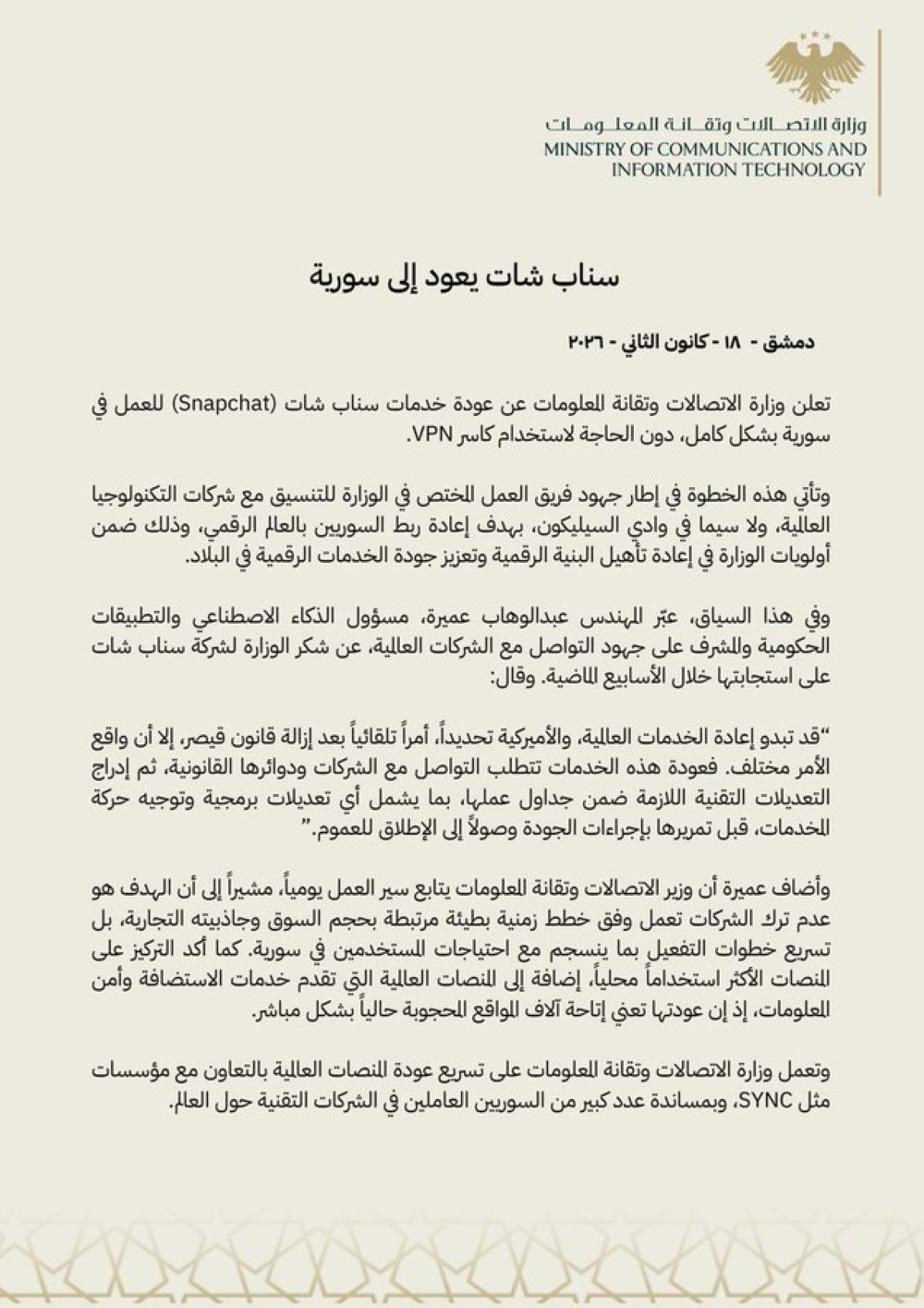
أعلنت وزارة الاتصالات السورية بشكل رسمي عن عودة خدمات منصة التواصل الاجتماعي الشهيرة “سناب شات” (Snapchat) للعمل داخل الأراضي السورية بكامل ميزاتها، ودون الحاجة لاستخدام برامج كسر الحجب (VPN). وتأتي هذه الخطوة تتويجاً لجهود مكثفة قادها فريق عمل مختص في الوزارة للتنسيق المباشر مع شركات التكنولوجيا العالمية في “وادي السيليكون”، بهدف إعادة دمج المستخدمين السوريين في المنظومة الرقمية العالمية.
خلفية تاريخية: سنوات من العزلة الرقمية
لفهم أهمية هذا الحدث، يجب النظر إلى السياق العام الذي عاشه قطاع التكنولوجيا في سوريا خلال العقد الماضي. فمنذ عام 2011، واجهت سوريا عزلة رقمية خانقة نتيجة العقوبات الاقتصادية الغربية، مما دفع كبرى الشركات التقنية الأمريكية مثل Google، Apple، Oracle، وMeta إلى حجب خدماتها أو تقييد الوصول إليها من عناوين IP السورية. هذا الحظر اضطر ملايين السوريين للاعتماد على برمجيات VPN التي غالباً ما تكون غير آمنة، وتبطئ سرعة الإنترنت، وتستنزف بطاريات الأجهزة، فضلاً عن تكلفتها المادية.
آلية العودة والتحديات التقنية
وفي تفاصيل الإعلان، أوضح المهندس السوري عبدالوهاب عميرة، مسؤول الذكاء الاصطناعي والتطبيقات الحكومية، أن عودة الخدمات لم تكن عملية تلقائية بمجرد حدوث انفراجات سياسية أو رفع لقانون قيصر. وأكد أن الأمر تطلب تواصلاً معقداً مع الدوائر القانونية في شركة “سناب شات”، تلاه إجراء تعديلات تقنية دقيقة على جداول عمل الشركة، وتوجيه حركة المخدمات (Servers) لتتعرف على النطاق الجغرافي السوري كمنطقة مسموحة، واجتياز اختبارات الجودة قبل الإطلاق العام.
الأثر المتوقع: انتعاش للتسويق الرقمي وصناعة المحتوى
من المتوقع أن يحدث هذا القرار تأثيراً إيجابياً ملموساً على الصعيدين المحلي والاقتصادي:
- على الصعيد الاجتماعي: سيسهل التواصل اليومي لشريحة واسعة من الشباب السوري الذي يعتبر “سناب شات” منصته المفضلة.
- على الصعيد الاقتصادي والتسويقي: ستتمكن الشركات الصغيرة والمتوسطة والمطاعم والعلامات التجارية المحلية من استخدام أدوات سناب شات التسويقية والوصول للجمهور بشكل أسرع وأكثر دقة، مما يعزز قطاع الإعلانات الرقمية الذي عانى طويلاً من القيود.
- صناعة المحتوى: سيتمكن المؤثرون السوريون من إدارة حساباتهم وتوثيقها بشكل أسهل دون المخاطرة بالحظر بسبب تغيير عناوين الـ IP المستمر.
خطوات مستقبلية لتعزيز البنية الرقمية
وأشار عميرة إلى أن وزير الاتصالات وتقانة المعلومات يتابع الملف بشكل يومي لضمان عدم تباطؤ الشركات العالمية في التنفيذ. وتعمل الوزارة حالياً، بالتعاون مع مؤسسات مثل SYNC وبدعم من المغتربين السوريين العاملين في قطاع التكنولوجيا عالمياً، على استعادة خدمات منصات أخرى حيوية، خاصة تلك المتعلقة بالاستضافة (Hosting) وأمن المعلومات، مما يبشر بفك الحجب عن آلاف المواقع والخدمات البرمجية الضرورية لعمل الشركات والمطورين في سوريا.