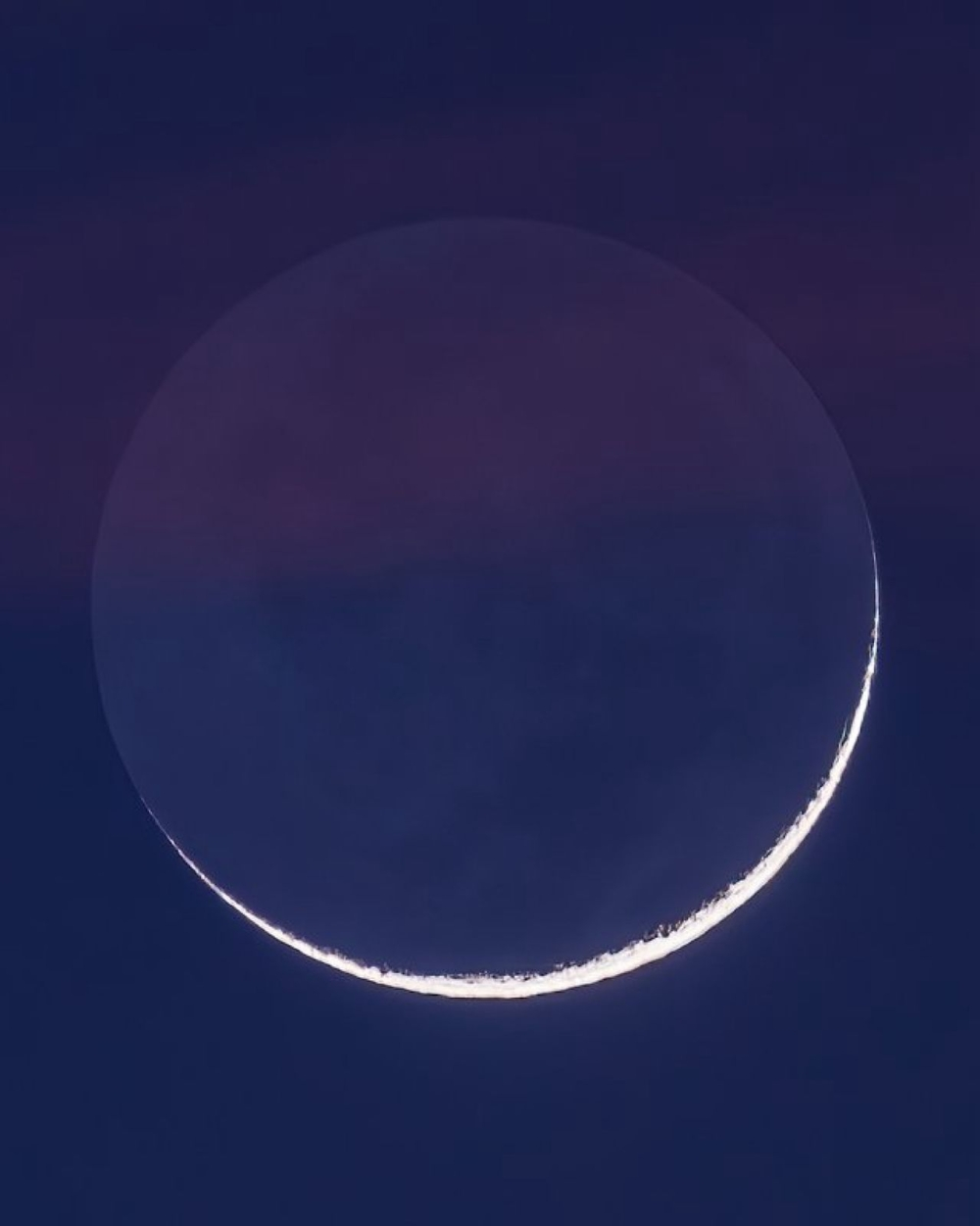
An anticipated astronomical event at the beginning of the month of Sha'ban
The Jeddah Astronomical Society, through its president, Engineer Majid Abu Zahra, announced that the skies of the Kingdom and the Arab region will witness a magnificent astronomical spectacle on the evening of Tuesday, January 20, 2026, corresponding to 29 Rajab 1447 AH, with the sighting of the new crescent moon of Sha'ban. The crescent will grace the southwestern horizon immediately after sunset, presenting an ideal opportunity for amateur astronomers and photographers to document this moment of great religious and cultural significance.
The astronomical and scientific context of crescent sighting
Astronomically, this sighting occurs after the central conjunction (new moon) on Sunday, January 18, 2026, at 10:51 PM Mecca time. The conjunction marks the moment when the moon passes between the Earth and the sun, ending its monthly cycle and beginning a new one. After this moment, the moon gradually moves away from the sun's glare, allowing a small portion of its surface to reflect sunlight towards Earth, which is what we see as a crescent. Abu Zahra explained that the crescent moon will be easier to see on Tuesday evening compared to the previous night due to its increased altitude above the horizon and greater illumination, and it will become increasingly visible in the following nights.
The importance of observing the new moon in the Islamic calendar
The sighting of the crescent moon of Sha'ban holds special significance in the Islamic world, as it marks the beginning of the countdown to the holy month of Ramadan. The Islamic calendar, established during the reign of Caliph Umar ibn al-Khattab (may God be pleased with him), is based on the lunar cycle to determine the beginnings and ends of months. While the traditional method of sighting the crescent with the naked eye has been used throughout Islamic history, modern astronomical calculations now serve as a supplementary and confirmatory tool, combining the legacy of the past with the precision of modern science. The appearance of the Sha'ban crescent awakens in Muslims a sense of spiritual and practical readiness to welcome the month of fasting and worship.
The “light of the earth” phenomenon adds beauty to the scene
Engineer Abu Zahra added that observers may have the opportunity to witness a captivating astronomical phenomenon known as the "Earthlight" or "Ghost Moon." This phenomenon occurs when sunlight reflected from the Earth's surface illuminates the dark portion of the moon, making it faintly visible. This spectacle offers a unique and aesthetically pleasing view and reminds us of the dynamic relationship between the Earth and its moon.
An educational and recreational opportunity for families
The head of the Jeddah Astronomical Society invited families and those interested to take advantage of this evening as an educational and entertaining opportunity, especially for children. Directing the gaze of the younger generation towards the sky to observe these natural phenomena instills in them a love of science, curiosity, and a passion for discovery. Furthermore, observing the moon's movement and its changing phases from night to night, as it acts as a celestial guide to the positions of stars and planets, is a practical lesson in astronomy. It is a moment that combines science, faith, and contemplation, creating beautiful memories that connect people to the vast universe and the good tidings of the approaching month of Ramadan.