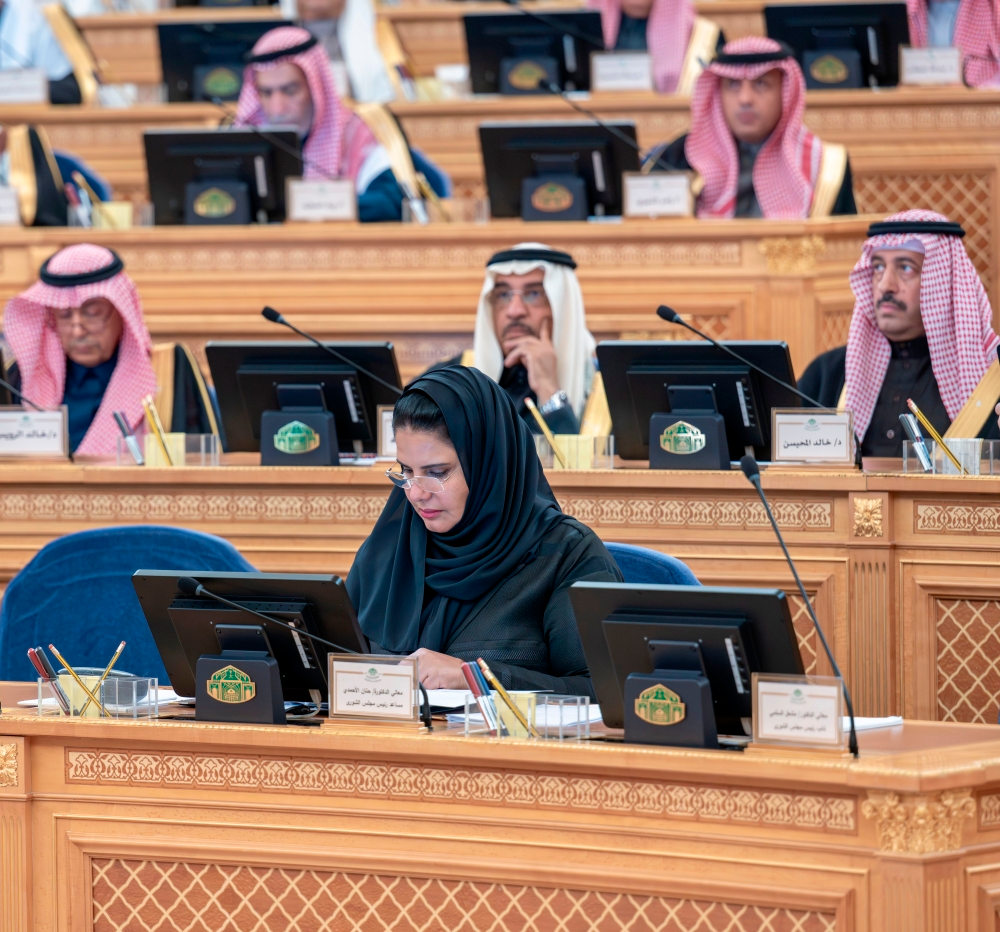
The Shura Council held its fourteenth regular session of the second year of the ninth term on Tuesday, chaired by the Vice President of the Council, Dr. Meshaal bin Fahm Al-Sulami, where the Council discussed a number of vital issues affecting the higher education sector and the future of national cadres in the Kingdom.
Decisions to develop Al-Jouf and Taibah universities
At the beginning of the session, the council issued key resolutions aimed at improving the efficiency of regional universities. The council called on Al-Jouf University to review its current admissions policies to ensure broader opportunities for students to enroll in bachelor's degree programs. The resolution also emphasized the importance of restructuring academic programs to align with the comparative advantages of the Al-Jouf region and its governorates, and urged the university to expedite the completion of student housing projects.
In a related context, the council directed Taibah University to develop its initiatives to be consistent with its strategic goals and to measure their actual impact, calling for the restructuring of its colleges to reflect its institutional identity, and to work diligently to complete the construction projects in the university’s branches in the governorates and to complete the university hospital project.
Aligning education with Vision 2030
These decisions and recommendations fall within the Shura Council's oversight and legislative role, which aligns with the objectives of the Kingdom's Vision 2030, specifically the Human Capital Development Program. The Kingdom seeks to bridge the gap between higher education outputs and the evolving needs of the labor market, ensuring that economic sectors are supplied with highly qualified national talent that contributes to enhancing economic competitiveness.
Labor market needs and the e-university
During the discussion of Najran University’s annual report, important interventions emerged from the members, with Council member Ghanem Al-Ghanem stressing the need to conduct in-depth studies of labor market needs and their suitability to the scientific specializations offered, with the aim of optimally investing human resources.
The council also discussed the Saudi Electronic University's annual report, with discussions focusing on academic quality. Council member Rashid Al-Sharif emphasized the importance of achieving an ideal student-to-faculty ratio, while member Mohammed Ashri called for incentive-based solutions to ensure job security for academics and attract qualified personnel, which would positively impact the university's competitiveness.
International agreements to promote cooperation
On the international relations front, the Council approved a draft memorandum of understanding between the Agricultural Development Fund and the International Fund for Agricultural Development to promote the agricultural sector, in addition to approving a general cooperation agreement between the government of the Kingdom of Saudi Arabia and the government of the Republic of Ghana, reflecting the Council’s keenness to enhance the Kingdom’s international partnerships.