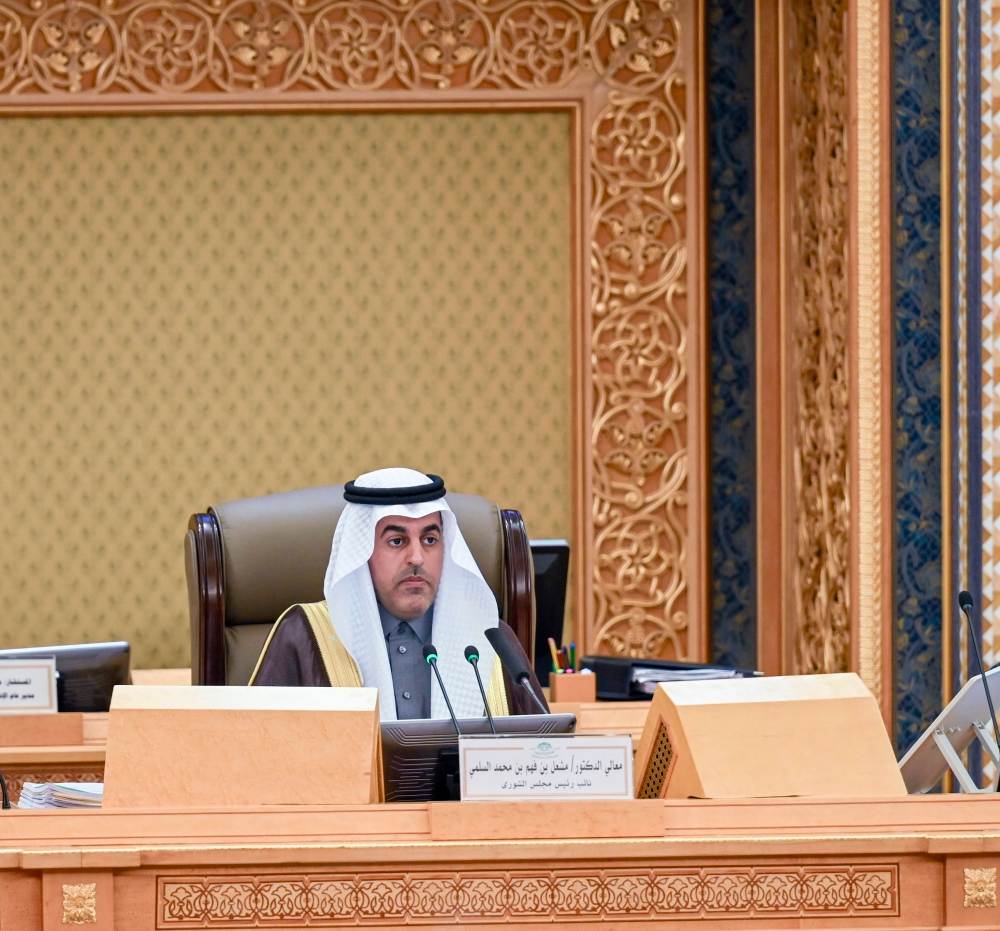
The Saudi Shura Council held its thirteenth regular session of the second year of the ninth term on Monday, chaired by the Vice President of the Council, Dr. Mishaal bin Fahm Al-Sulami. The Council discussed a number of important educational and economic issues and issued key decisions aimed at raising the efficiency of performance in academic institutions and strengthening international relations.
Strategic decisions for the development of King Khalid University
In a move reflecting the Council's commitment to aligning educational outcomes with regional development goals, the Council issued a resolution mandating King Khalid University to develop its academic advising and guidance system, in addition to formulating a comprehensive human resources strategy. This resolution was based on a report from the Education and Scientific Research Committee, presented by Dr. Nasser Tayran.
In its resolution, the council emphasized the need to develop applied colleges within the university's branches, calling for the adoption of a clear operational model that prevents overlapping jurisdictions and specializations with the technical colleges affiliated with the Technical and Vocational Training Corporation. This recommendation is particularly important given the Kingdom's efforts to bridge the gap between university education and the evolving needs of the labor market, in line with Vision 2030.
Linking with the Asir region development strategy
The council requested the university to develop precise performance indicators that measure its alignment with the Asir region's development strategy . This addition is of significant strategic importance, as the Asir strategy, launched by His Royal Highness the Crown Prince, aims to transform the region into a year-round global tourist destination. This necessitates the presence of qualified personnel in the fields of tourism, hospitality, and culture—a role entrusted to King Khalid University to serve local development.
International agreements to promote quality and investment
On the international and economic level, the Council approved two important memoranda of understanding:
- With China: A memorandum of understanding between the Saudi Standards, Metrology and Quality Organization (SASO) and the State Administration for Market Regulation in China (SAMR) in the field of conformity assessment, which enhances product quality and trade exchange between the two countries.
- With Honduras: A memorandum of understanding to encourage direct investment, as part of the Kingdom’s efforts to diversify its investment partnerships globally.
Discussion of the performance of the Islamic University and Bisha University
Performance reports from other universities dominated much of the discussion, as:
- The Islamic University of Madinah: Members called for the need to measure the global impact of the university’s graduates, considering it as one of the Kingdom’s soft power tools, and demanded work to improve its international ranking to be a global reference for Islamic universities.
- Bisha University: Discussions focused on leveraging the region's comparative advantages. Members called for a focus on agricultural and environmental science technologies , and the use of artificial intelligence in exploring mining sites in the Asir region, which aligns with the Kingdom's direction to maximize the utilization of mineral resources in the Arabian Shield as a third pillar of national industry.
The committee concluded the discussions by requesting a deadline to study the members’ proposals and return with its viewpoint at a future session, which confirms the Shura Council’s active oversight and legislative role in improving the performance of government agencies and educational institutions.