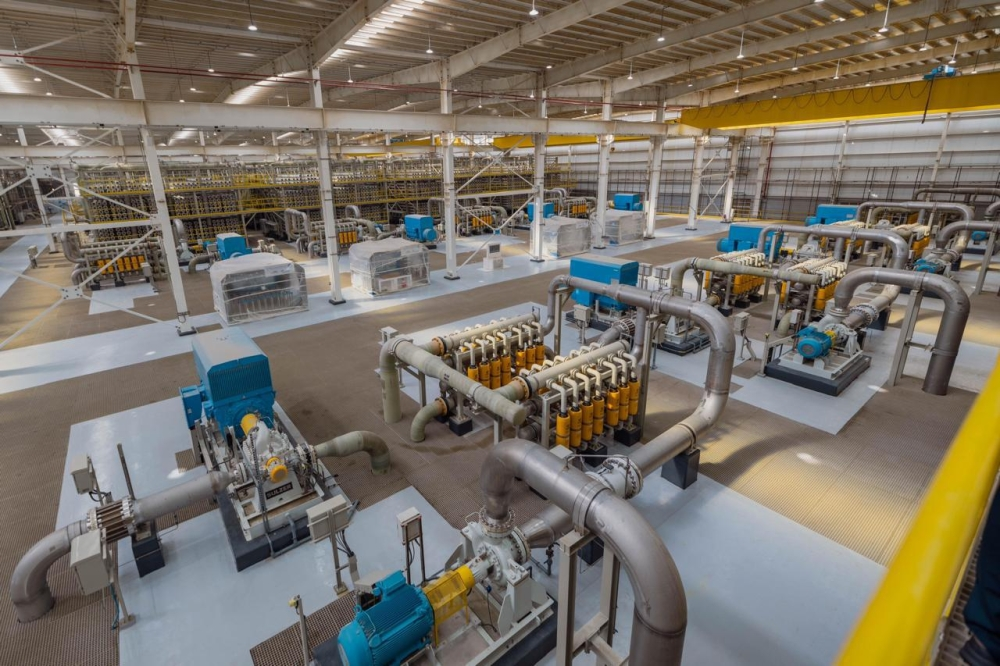
The Saudi Water Authority announced a unique operational achievement at the Shu'aiba 5 desalination plant, successfully increasing its production capacity by 11%, from 600,000 to 665,000 cubic meters of desalinated water per day. The most significant aspect of this achievement is that it was accomplished with high operational efficiency and zero additional capital costs, setting a global standard for optimizing the use of existing infrastructure.
General context: Saudi leadership in addressing water challenges
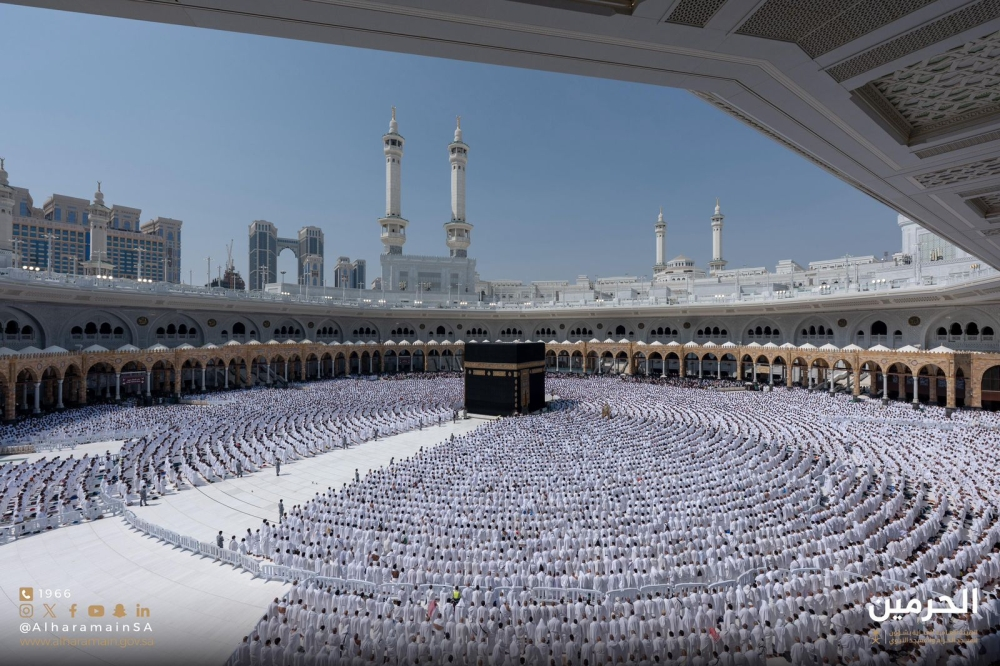
Due to its geographical location and desert climate, Saudi Arabia is among the world's most reliant countries on seawater desalination to meet its growing water needs. For decades, the Kingdom has invested heavily in building and developing desalination plants, becoming the world's largest producer of desalinated water. The Shu'aiba 5 project, located on the Red Sea coast, is one of the newest and most efficient projects within this strategic framework, which aims to ensure water security for major cities and vital areas, most notably the Makkah region, which receives millions of pilgrims annually.
Technological excellence and global recognition
This achievement is not a coincidence, but rather the culmination of the efforts of national engineering teams who have been able to improve existing operational processes. The Shu'aiba 5 plant is known globally for its exceptional efficiency, having entered the Guinness World Records as the largest reverse osmosis (RO) desalination plant with the lowest energy consumption in the world, at just 1.7 kilowatt-hours per cubic meter. This record performance, along with achieving zero carbon emissions, earned it the 2025 Asian Water Awards, and it has also received praise from the World Bank, which considers it a leading and inspiring model for improving energy efficiency in the global desalination sector.
Importance and impact: Sustainable water security and support for Vision 2030
This outstanding operational performance directly contributes to enhancing the reliability of water supplies in the Makkah region. The increased production ensures sustainable and stable water flows, particularly during peak seasons such as Ramadan and Hajj, thus helping to meet the growing demand of pilgrims and provide them with a comprehensive hospitality experience. At the national level, this achievement aligns with the goals of Saudi Vision 2030, especially in the areas of environmental sustainability, reducing carbon emissions by more than 2 million tons annually, and adopting environmentally friendly technologies. It also reinforces the Kingdom's leadership as an international benchmark in the design and operation of highly efficient seawater desalination plants, offering the world a practical solution to address water scarcity challenges with both economic and environmental efficiency.