In a striking diplomatic escalation reflecting strained relations in the Western Hemisphere, Mexican President Claudia Sheinbaum issued a strongly worded statement in response to recent US actions, asserting that the Americas "do not belong to any foreign ideology or power." These fiery remarks followed the US military operation in the Venezuelan capital, Caracas, which resulted in the arrest of President Nicolás Maduro and his transfer to New York.
A response to the new "Donoro Doctrine"
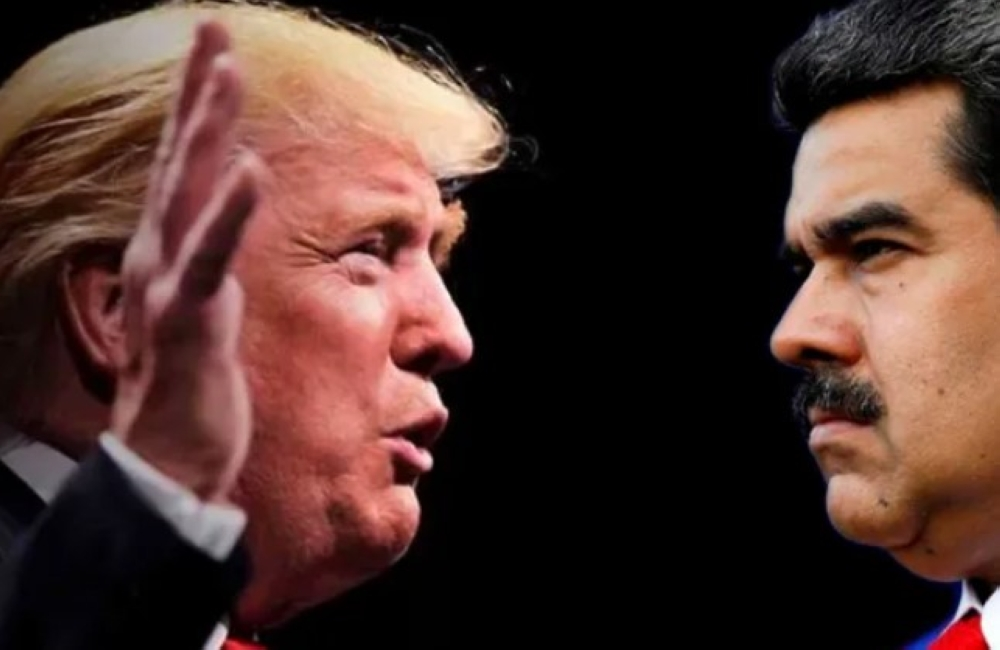
Sheinbaum's direct response came after US President Donald Trump described the military operation as the launch of what he called the "Donor Doctrine." The Mexican president clarified that Latin American countries enjoy full sovereignty, stating, "The American continent does not belong to any doctrine or power, but rather to the people of each of the countries that comprise it," in a clear rejection of the logic of American hegemony.
At a press conference, Trump declared that the United States had moved beyond the traditional "Monroe Doctrine," announcing a new term combining his first name, "Don," with the last name of his predecessor, James Monroe, to become "Donroe." As part of his new national security strategy, Trump asserted that "American dominance in the Western Hemisphere is now unassailable," thus establishing a more assertive approach toward neighboring countries.
Historical background: From Monroe to direct domination
To understand the depth of the current crisis, one must return to the historical roots of the "Monroe Doctrine," launched by the fifth US President, James Monroe, in 1823. The core principle of this doctrine was that Latin America was considered an exclusive sphere of influence for the United States, off-limits to the European colonial powers of the time. Over the decades, this doctrine, in the eyes of many Latin American countries, transformed from a tool for protection against foreign colonialism into a pretext for direct US intervention in the internal affairs of the continent's nations and for supporting regime change in countries whose interests did not align with Washington's.
The repercussions of Maduro's arrest and regional threats
Operation Dawn, the US military operation in Caracas that resulted in the arrest of Maduro and his wife for trial on terrorism and drug trafficking charges, marked a dramatic turning point in international politics. This event not only sent a message to Venezuela, but its repercussions extended to include direct threats to other leftist governments in the region, including Cuba and Colombia.
Regarding Mexico, the American side did not merely brandish the big stick, but Trump demanded that the Sheinbaum government redouble its efforts to combat drug trafficking, putting relations between the two neighboring countries to a difficult test that balances economic partnership with the preservation of national sovereignty.