Recent data from the General Authority for Statistics significant developments in local markets, with a notable increase in sheep prices in Saudi Arabia during February compared to January. This shift comes at a time when consumers and investors in the agricultural and livestock sectors are closely monitoring market activity, particularly with the approach of peak demand seasons. Meanwhile, feed markets have remained relatively stable, reflecting a balance in livestock breeding and production costs.
Historical context and economic importance of the livestock sector
Livestock farming, particularly sheep farming, is an integral part of the cultural and economic heritage of the Arabian Peninsula. Historically, the Kingdom's inhabitants relied on grazing as a primary source of food and trade. With rapid economic development, this sector has transformed into a strategic industry supporting national food security. Saudi Vision 2030 places great emphasis on the agricultural and livestock sector, aiming for self-sufficiency and reduced reliance on imports. Therefore, monitoring market indicators and price fluctuations is crucial for both policymakers and livestock breeders to ensure stable supplies and meet market demands.
Details of sheep prices in Saudi Arabia during February
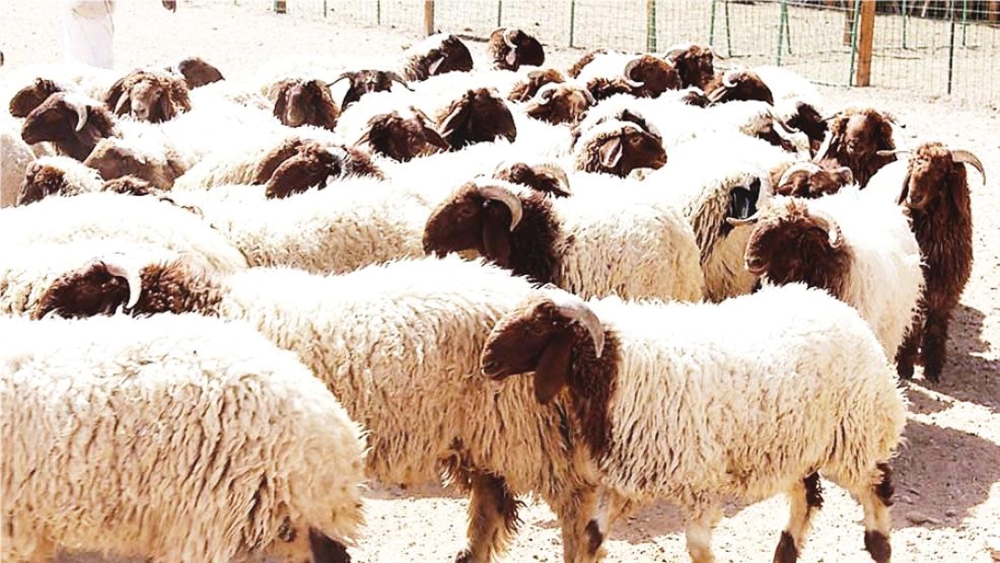
February commodity price averages bulletin sheep prices in Saudi Arabia depending on the breed. The average price of Najdi sheep reached approximately 1,878.6 riyals per head, compared to 1,864.7 riyals in January, marking a 0.7% increase. Meanwhile, the price of Naeemi sheep rose by 1.2% to reach 1,840.5 riyals, compared to 1,819.2 riyals in the previous month.
The price increases weren't limited to local breeds; they also affected other imported and domestic breeds. Prices for Barbary, Swakni, and Harri sheep saw increases ranging from 1.3% to 1.8%, reaching 675.6 riyals, 1342.4 riyals, and 1764.2 riyals respectively. The average price of a local male goat (young goat) also rose by 1.8%, reaching 1219.1 riyals per head, compared to 1197.1 riyals in January.
Stability of feed prices and its positive impact
In a related context, the efforts of relevant authorities played a pivotal role in securing supply chains, leading to relative stability in feed prices during February. The price of alfalfa (per bale) remained stable at 30 riyals, while hay saw a slight increase of 1.7%, reaching 15.7 riyals. Crushed animal feed remained stable at 65.6 riyals with little change, and Rhodes grass held steady at 18.7 riyals with a marginal increase. This stability in production inputs significantly contributes to easing the financial burden on livestock breeders and mitigating sharp increases in final meat prices.
Expected impact on local markets and consumers
This price change carries significant economic implications. Domestically, the gradual rise in livestock prices may lead to a slight increase in the cost of red meat at retail outlets and restaurants, directly impacting Saudi household budgets. However, stable feed prices act as a strong balancing factor, preventing unjustified price spikes. Regionally, the Saudi market reflects the supply and demand dynamics of the Gulf region, as the Kingdom is one of the largest importers and consumers of meat in the area. Government efforts to monitor markets and invest further in modern agricultural technologies are expected to ensure sustainable production and long-term price stability, thereby strengthening the domestic economy and protecting consumer rights.