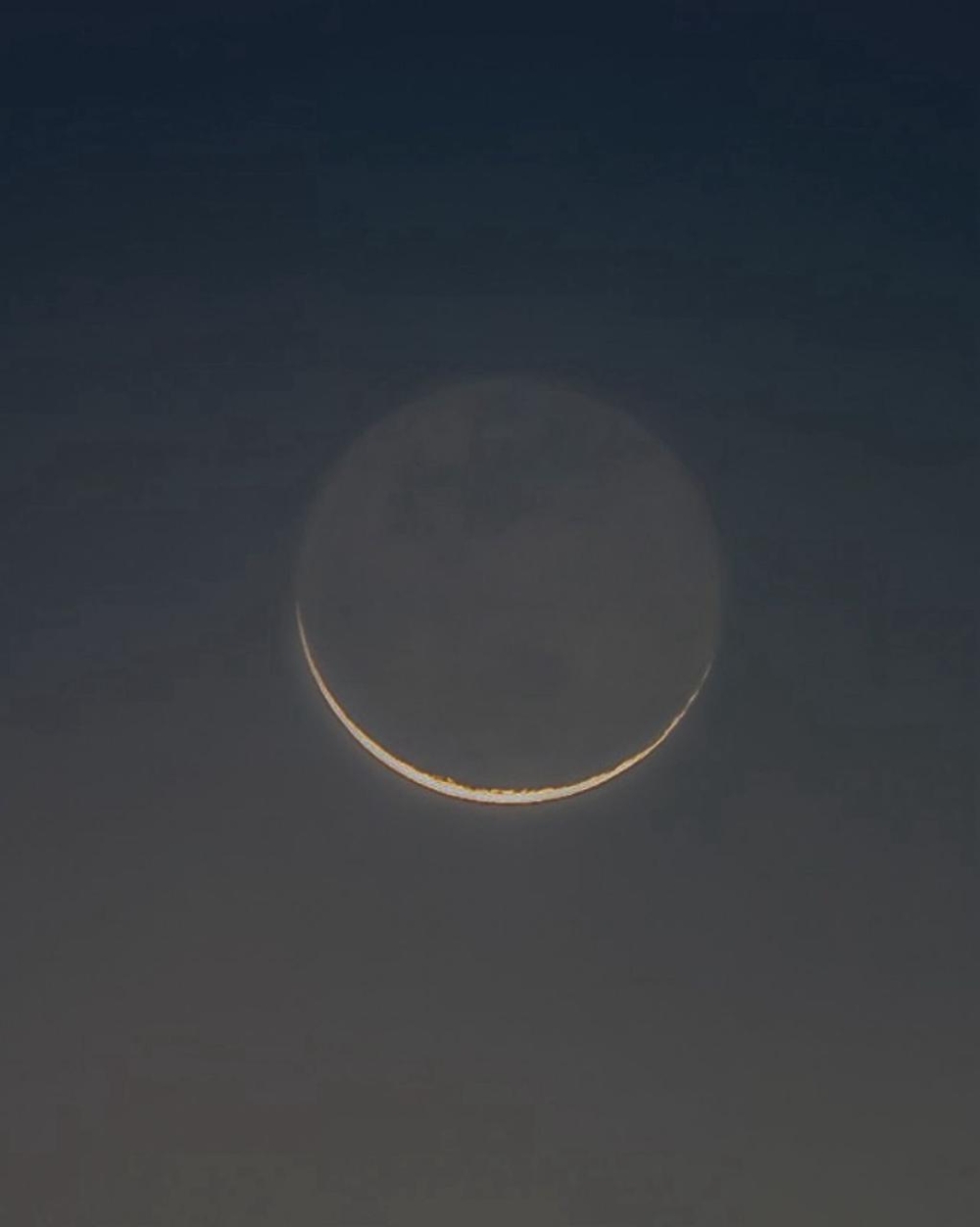
The head of the Jeddah Astronomical Society, Engineer Majid Abu Zahra, explained that the skies of the Arab world will witness an exceptional astronomical event after sunset on Friday, March 20, 2026. The crescent moon of Shawwal clearly visible above the western horizon as darkness falls. This event will occur within a beautiful celestial scene, made even more enchanting by its conjunction with Venus, the brightest planet in the solar system. This will create a natural masterpiece, offering an ideal opportunity for astronomy and photography enthusiasts to capture this moment, especially if the sky is clear of clouds and dust.
The historical and cultural dimensions of the sighting of the crescent moon of Shawwal
The observation of the new moon has long been linked to a deep historical legacy in Arab and Islamic culture. For centuries, the visual and astronomical observation of the new moon has formed the basis for determining the beginnings of the lunar months. The anticipation of this particular crescent holds a special place in the hearts of Muslims, as it heralds the end of the holy month of Ramadan and the arrival of Eid al-Fitr. Historically, observation methods have evolved from relying solely on naked-eye observation in open deserts to utilizing the latest telescopes and advanced astronomical observatories. These advancements enhance the accuracy of calculations and support the legitimate sighting, reflecting the harmony between modern science and deeply rooted traditions.
The impact of the astronomical phenomenon at the regional and international levels
The impact of this crescent moon's appearance extends beyond mere aesthetics, encompassing significant regional and international dimensions. Locally and regionally, the precise determination of the new moon's birth contributes to unifying the celebrations of Eid al-Fitr across Arab and Islamic countries, thus strengthening social and cultural ties among their peoples. Internationally, the observation of the conjunction of the moon and Venus attracts the attention of global observatories and space agencies, as these phenomena offer a valuable opportunity to study the movement of celestial bodies, compare astronomical data, and update the mathematical models used to track the paths of planets and moons in our solar system.
Details of the moon's birth and its celestial path
Regarding the scientific details, Engineer Abu Zahra explained that the moon reached the conjunction phase at dawn on Thursday, March 19, Mecca time. This phase is known as the moment when the moon and sun are close together on approximately the same celestial longitude, before the moon begins its eastward journey against the backdrop of stars. Over time, the angular elongation between the moon and the sun increases, allowing sunlight to reflect off an increasing portion of its surface, gradually making the crescent moon appear and increasing the thickness of its illuminated portion day by day.
As the sun sets today, the crescent moon will be between 36 and 38 hours old, which is enough time for it to be thick and visible to the naked eye. It will remain in the sky for 80 to 90 minutes after sunset, giving observers ample time to follow it.
The enchanting phenomenon of “Earthlight”
One of the most striking visual phenomena that can be observed during this period is the phenomenon of "Earthlight." The dark portion of the Moon appears faintly illuminated, a result of sunlight reflected from the Earth's surface onto the Moon, making the entire lunar disk appear dimly visible within the bright crescent. The Moon is an accurate visual indicator for tracking the movement of celestial bodies, as its position among the stars changes by approximately 13 degrees daily towards the east.
Guidelines for amateur astrophotography enthusiasts
For astrophotography enthusiasts, experts explained that the optimal time to capture stunning images begins 20 to 30 minutes after sunset. At this time, the deep blue of the sky is balanced by the brilliance of celestial bodies. Using a tripod and a long exposure of several seconds is recommended to highlight the details of the moon's dark portion, along with adjusting the ISO appropriately to avoid digital noise. They concluded by stating that the crescent moon has remained throughout history an astronomical time marker, combining precise calculations with breathtaking beauty, in a unique connection that reflects humanity's profound relationship with the cycles of the heavens.