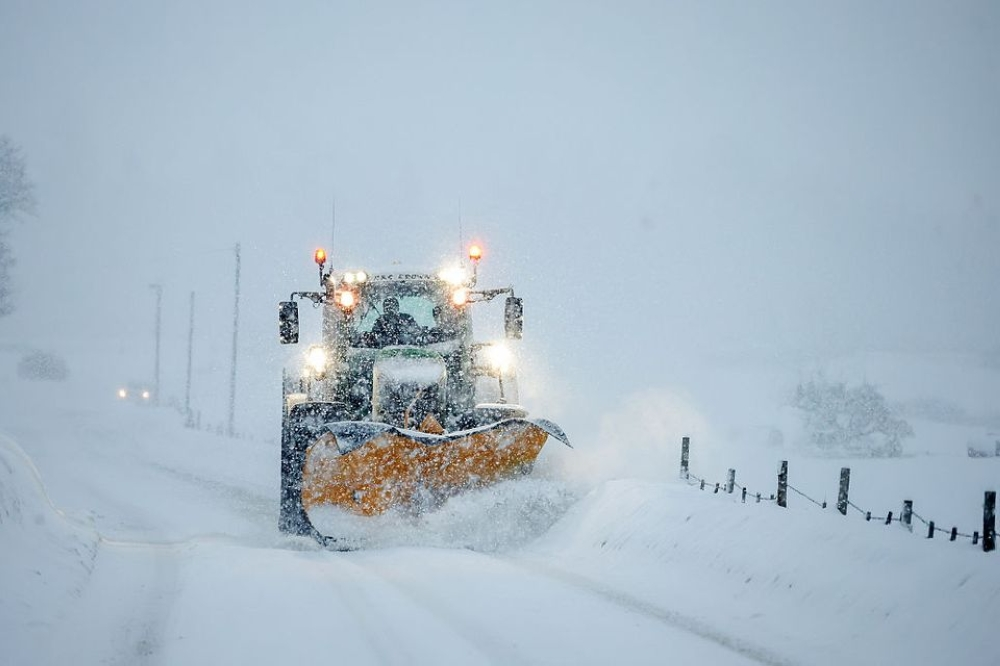
A severe wave of winter weather is sweeping across the European continent, with heavy snowfall and ice formation causing the death of at least 6 people and bringing transport networks to a near standstill in several countries, prompting the declaration of states of emergency in some areas.
General context and developments of the storm
This polar wave arrives at a critical time of year, as Europe experiences a sharp drop in temperatures not seen in some areas for decades. Climate data shows that these weather disturbances are not merely a passing event, but rather reflect extreme weather patterns that directly impact the infrastructure of the continent, posing enormous logistical challenges for emergency and rescue services.
France: Casualties and widespread flight cancellations
In France, the situation was tragic after severe weather caused the deaths of five people in separate accidents. Authorities confirmed horrific collisions in the southwest of the country caused by vehicles skidding on ice, including buses and heavy trucks. In an unprecedented weather event, the city of La Rochelle experienced 30 centimeters of snowfall, a sight not seen by residents for nearly 40 years.
Regarding air transport, French Transport Minister Philippe Tabarrou announced widespread disruptions, with 40% of flights at Charles de Gaulle Airport and 25% at Orly Airport being cancelled to allow for de-icing operations on runways and aircraft, amid strong warnings to citizens to avoid roads in the capital, Paris.
Balkans: Record floods and historic figures
The Balkans were not spared from this storm, with the Bosnian capital, Sarajevo, paying the price for the weather when a woman was killed by a snow-laden tree. In the south of the country, the snow turned to torrential rain, causing rivers to overflow. The Buna River recorded a record level of 218 centimeters, the highest level recorded since historical data collection began in 1923, reflecting the scale of this exceptional phenomenon.
Economic impacts and paralysis in Northern Europe
The storm's effects extended to Britain and the Netherlands, causing economic losses and disruption to daily life:
- In Britain: Temperatures plummeted to -12.5 degrees Celsius, leading to the closure of more than 300 schools in Scotland and disrupting train services.
- In the Netherlands: Amsterdam's Schiphol Airport faced a real crisis with the cancellation of about 600 flights, amid worrying reports that chemicals used to de-icer aircraft were running low.
Expected repercussions
These conditions are expected to negatively impact intra-European trade in the coming days, with disruptions to trucking and supply chains. These events are also intensifying the European debate on the need to strengthen infrastructure to make it more resilient to increasingly frequent extreme weather events.