Details of Senegal's appeal to the Court of Arbitration for Sport
In an unprecedented escalation, the Senegalese Football Federation announced that it has officially authorized its lawyers to file a lawsuit with the Court of Arbitration for Sport (CAS), the highest independent sports judicial body based in Lausanne, Switzerland. This urgent legal action follows the controversial decision by the Confederation of African Football (CAF) to strip Senegal of its continental title and award it to Morocco.
The crisis stems from a decision issued Tuesday evening by the Confederation of African Football's (CAF) Appeals Committee, which ruled that Senegal had forfeited the final match. Based on this decision, the result was officially upheld as a 3-0 victory for the host nation, Morocco, disregarding the actual scoreline of the match, which ended 1-0 in favor of the "Lions of Teranga" after extra time.
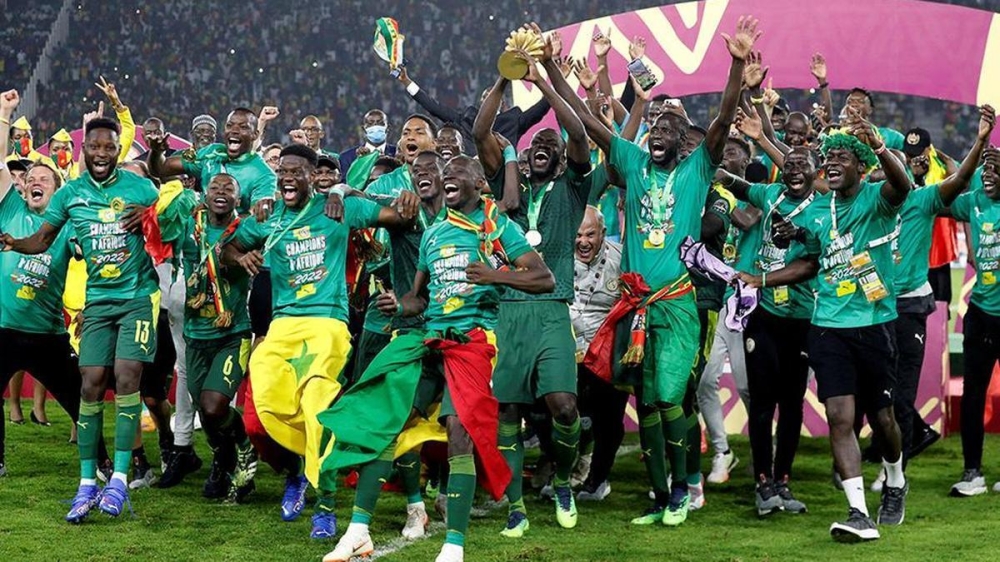
At a press conference held in Dakar on Thursday, the Senegalese Football Federation's executive committee affirmed its complete confidence in the Court of Arbitration for Sport (CAS) as a neutral and independent body capable of delivering justice. The statement emphasized that Senegal will exhaust all legal and institutional means to restore what it termed "sporting justice," asserting that the Senegalese national team is the rightful and sole champion of the 2025 Africa Cup of Nations, a title deservedly earned on the pitch.
Historical context and the role of the Court of Arbitration for Sport in disputes
The African continent has never been immune to complex sporting disputes, and this is where the Court of Arbitration for Sport (CAS) plays a pivotal role. Established in 1984, this court serves as the ultimate and independent authority for resolving international sporting disputes. In the context of African football, CAS has consistently been the last resort for federations and clubs that feel aggrieved by decisions of CAF's disciplinary committees, thus lending significant weight to the current Senegalese case, which could set a historic legal precedent in the tournament's history.
Historically, the Africa Cup of Nations has witnessed numerous contentious moments requiring strict legal interventions, but stripping a champion of their title after the tournament's conclusion is an exceptional event. This context places CAF under intense international scrutiny, making the Court of Arbitration for Sport's anticipated decision a pivotal ruling that could reshape the regulations governing continental tournaments in the future.
The repercussions of the Rabat final crisis and its regional and international impact
The spark for this crisis was ignited during the dramatic final match held on January 18 in the Moroccan capital, Rabat. The encounter witnessed unprecedented chaos, with several Senegalese players temporarily leaving the pitch in protest against a disallowed goal and a penalty awarded to Morocco in stoppage time. Although star player Ibrahim Diaz missed the penalty with a Panenka-style shot, and the players returned to complete the match, which Senegal won with a goal by Pape Gueye in extra time, the repercussions did not end with the final whistle.
The case has taken on broad political and diplomatic dimensions, with the Senegalese government calling for an international investigation into suspected corruption within CAF's leadership. This escalation prompted CAF President Patrice Motsepe to respond swiftly, reaffirming the independence of the disciplinary committees and emphasizing that no country receives preferential treatment.
Domestically and regionally, the decision sparked widespread anger in Senegal, reflected in reactions at the highest political levels. Senegalese President Bassirou Diomêne Faye posted a picture of himself on social media holding the championship trophy, a clear message of defiance expressing deep national resentment. This intersection of sport and politics underscores the immense importance of football in Africa, where the game transcends mere entertainment to become a symbol of sovereignty and national pride, making the final ruling in this case highly significant for sporting and diplomatic relations across the continent.