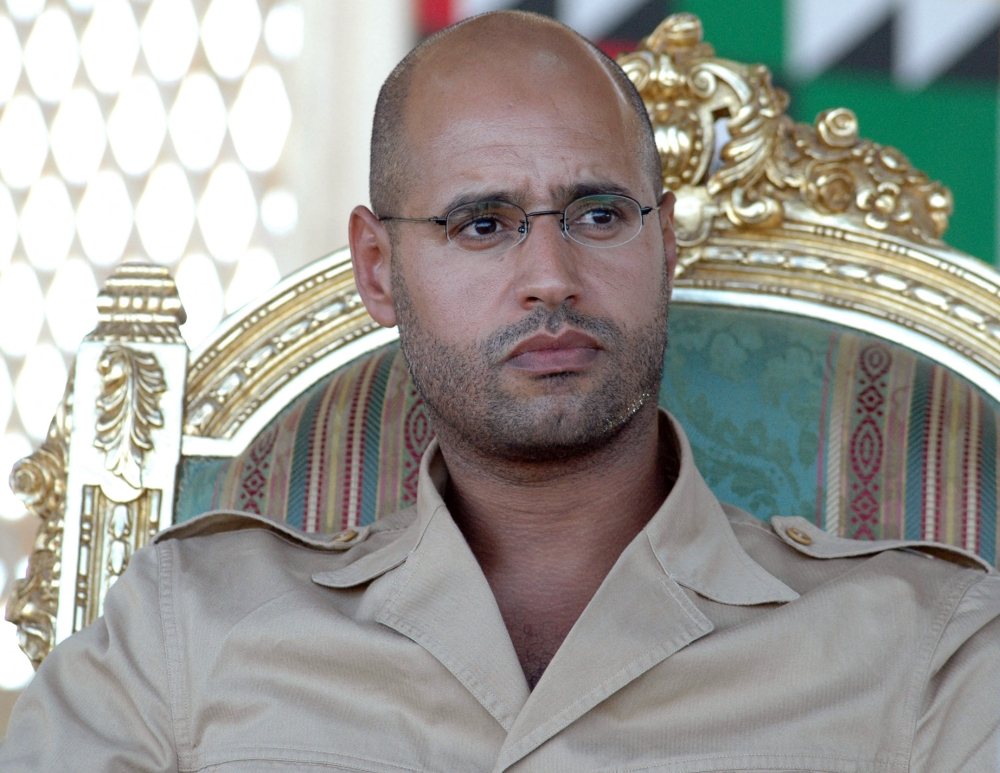
The fate of Saif al-Islam Gaddafi remains shrouded in mystery, as does his continued influence on the Libyan scene
The name of Saif al-Islam Gaddafi, the second son of the late Libyan leader Muammar Gaddafi, continues to generate widespread controversy and remains a central figure in Libya's complex political landscape. Despite his years-long absence from the public eye, his sporadic appearances and declared political ambitions make him an indispensable player in any future settlement for the country. So who is Saif al-Islam, and how did he transform from a potential heir apparent and the reformist face of the regime into a figure wanted by international justice and a formidable force in the power struggle?
Historical background: The reformist figure who became a defender of the regime
Before the outbreak of the February 17, 2011 revolution, Saif al-Islam Gaddafi was presented to the world as the moderate and forward-looking face of Libya. He held a doctorate from the London School of Economics and headed the Gaddafi Foundation for Development, which was involved in human rights and humanitarian issues, such as the case of the Bulgarian nurses. For years, he cultivated an image of a man open to the West and capable of leading economic and political reforms in the country, making him the most likely successor to his father. However, this reformist role completely collapsed with the start of the protests. In a notorious speech, he threatened the protesters with "civil war and bloodshed," transforming into one of the most prominent defenders of his father's regime until its final moments.
Significance and impact: From prison to running for president
Following the fall of Tripoli and the death of his father, Saif al-Islam was captured in November 2011 by an armed brigade in the city of Zintan, southwest of the capital. Since then, a new chapter has unfolded in his complex life. While the International Criminal Court issued an arrest warrant for him on charges of crimes against humanity, Libyan authorities in Tripoli tried him in absentia and sentenced him to death in 2015. However, the brigade holding him in Zintan refused to hand him over to any authority, whether in Tripoli or The Hague. In 2017, his release was announced under a general amnesty law issued by the parliament based in eastern Libya, a decision that further complicated the legal and political ambiguity surrounding his status.
The drama reached its peak in November 2021 when Saif al-Islam unexpectedly appeared in Sabha to submit his candidacy papers for the then-planned presidential elections. This candidacy sparked a sharp division both within Libya and internationally. While his supporters, a significant segment of the former regime's loyalists, saw it as a lifeline to end the chaos, his opponents viewed it as a return to the past and a threat to the democratic transition. Although the elections were postponed indefinitely, Saif al-Islam's move demonstrated that he still possessed a popular base and the ability to influence Libya's future, and that any political solution that ignored him was doomed to failure.