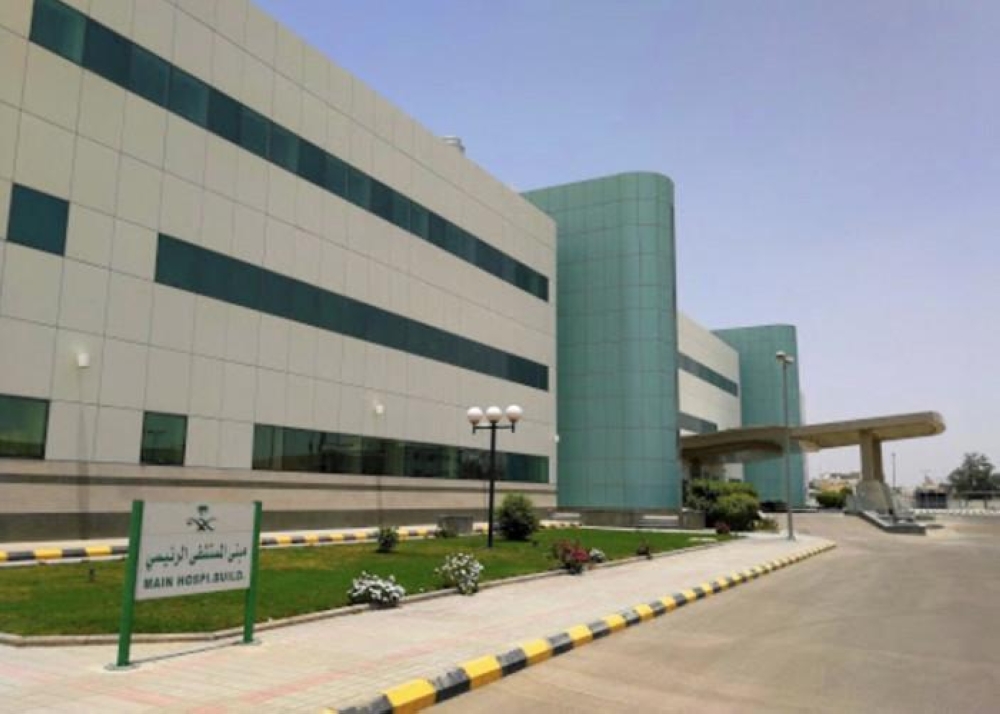
A specialized medical team at King Faisal General Hospital in Al-Ahsa Governorate achieved a new medical milestone by successfully saving the life of a 41-year-old woman who arrived at the emergency department suffering from severe uterine bleeding . This critical condition led to a sharp drop in blood pressure , a significant increase in heart rate, and clear instability in her vital signs, necessitating urgent and professional medical intervention to ensure her safety.
Rapid response to deal with a case of severe uterine bleeding
The Al-Ahsa Health Cluster explained that the severity of the case necessitated the immediate activation of the rapid response team upon the patient's arrival. Medical teams promptly began resuscitation procedures and intensive blood transfusions to compensate for the blood loss. Detailed medical and laboratory tests revealed a sharp drop in hemoglobin levels, accompanied by significant uterine enlargement and the presence of uterine fibroids, factors that further complicated the medical condition.
Medical development in Al-Ahsa hospitals
This success comes within the context of the comprehensive healthcare reform underway in the Kingdom of Saudi Arabia, as part of the goals of Vision 2030, which aims to improve the quality of healthcare and facilitate access to it. Historically, complex cases often required urgent transfer to specialized hospitals in major cities. However, with the modern equipment provided to hospitals in Al-Ahsa Governorate, particularly King Faisal General Hospital, it has become possible to manage critical and complex cases locally with high efficiency. Advanced technologies, such as interventional radiology and state-of-the-art operating rooms, provide an ideal environment for medical staff to deliver life-saving care in critical moments.
Treatment steps and precise surgical intervention
The patient was treated according to the intensive blood transfusion protocol, with supportive therapies administered. The physicians were able to initially stop the bleeding with a delicate, conservative transcervical procedure, which stabilized the patient and allowed for further intervention. Subsequently, urgent arrangements were made for uterine artery embolization. Radiological examinations revealed uterine fibroid hyperplasia and prolapsed uterine fibroids. After discussing treatment options, a conservative surgical intervention was decided upon, and a fibroid resection was successfully performed the following day, with all necessary precautions taken to prevent recurrence of bleeding.
The positive impact of integrated healthcare
This medical achievement not only saved the patient's life but also has a far-reaching positive impact at the local and regional levels. Locally, this success strengthens community confidence in healthcare services within Al-Ahsa Governorate and underscores the ability of national medical professionals to handle even the most critical cases. Regionally, this integrated approach between the emergency, obstetrics and gynecology, hematology, interventional radiology, anesthesiology, and laboratory departments serves as a model for effective medical crisis management. Providing this high level of care reduces the burden on the central healthcare system and demonstrates the effectiveness of decentralization in delivering advanced medical services.
Ongoing treatment follow-up
The health cluster confirmed that the patient's condition stabilized completely after the surgery, and she was readmitted to receive the necessary treatment under the supervision of specialized teams. She was discharged from the hospital in stable condition with a detailed follow-up treatment plan in place. This case reflects the high level of development and preparedness within the Al-Ahsa Health Cluster , ensuring the provision of the best levels of healthcare to citizens and residents alike.