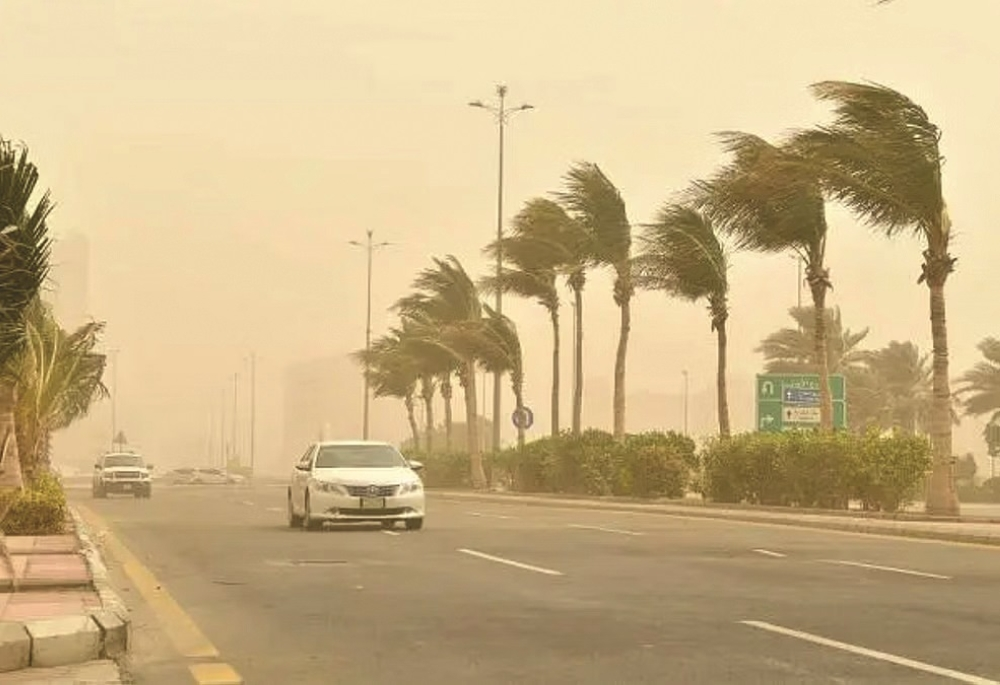
The National Center for Meteorology in Saudi Arabia issued an advanced weather alert on Sunday for the Al-Jawf region, warning of strong to very strong winds in the city of Sakaka and the governorate of Dumat Al-Jandal. The center explained that this weather condition will lead to a significant decrease in horizontal visibility, requiring caution.
According to the center's report, active surface wind speeds are expected to range between 40 and 49 kilometers per hour, a speed sufficient to stir up significant dust and sand. The center specified the expected timeframe for the impact, stating that the weather event will begin at 9:00 AM and continue until 8:00 PM on Sunday, affecting most of the daytime and disrupting daily activities.
The climatic context of the Al-Jawf region
The Al-Jawf region is located in the northern part of Saudi Arabia and is characterized by its continental desert climate, marked by significant temperature variations between summer and winter, as well as between day and night. Due to its open geography, the region is prone to strong winds and dust storms, particularly during seasonal transitions. These phenomena are known locally for their ability to drastically and suddenly reduce visibility, posing a challenge to daily life and transportation.
The importance and expected effects of the warning
This warning is of paramount importance on several levels, given the direct consequences it could have:
- At the local level: Drivers on highways and main roads connecting Sakaka to Dumat al-Jandal and other cities in the region are advised to exercise extreme caution and reduce their speed due to the expected decrease in visibility. The center also urges citizens and residents, especially those with respiratory illnesses and allergies, to remain indoors and avoid direct exposure to dust and sand. Outdoor activities and construction work may be affected by these weather conditions.
- At the regional level: These wind patterns are often part of broader atmospheric pressure systems affecting northern Arabia. Although the warning focuses on Al-Jawf, the movement of air masses may affect neighboring areas to varying degrees. These warnings play a vital role in coordinating safety measures across regional transportation and aviation networks.
The National Center for Meteorology continues its close monitoring of the weather situation, stressing the importance of following the updates and reports issued by it and adhering to the directives of the concerned authorities, such as the Civil Defense and Road Security, to ensure everyone’s safety.