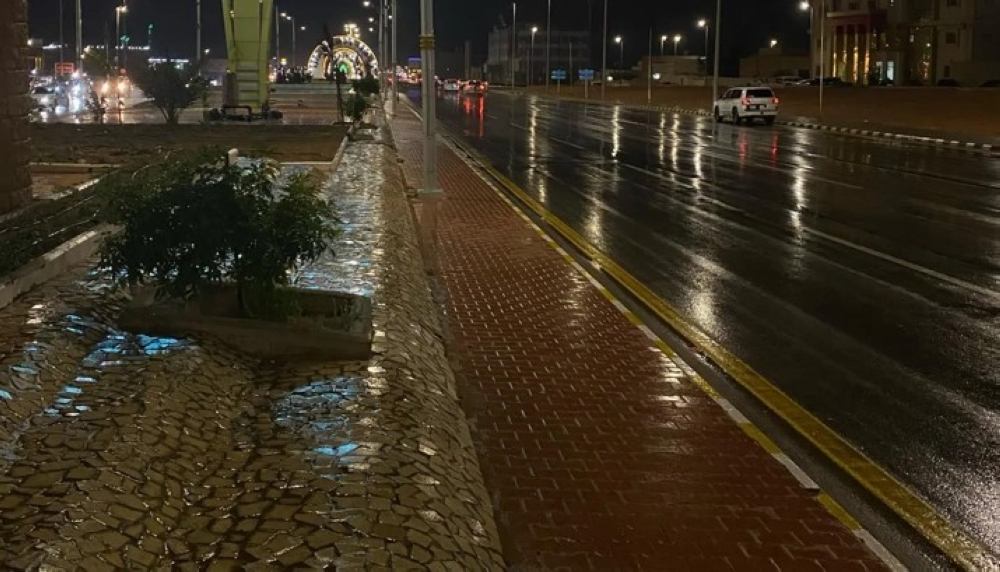
The city of Tarif and its surrounding areas in the Northern Borders region experienced moderate rainfall on Monday, saturating the ground, as part of a period of atmospheric instability affecting large parts of northern Saudi Arabia. This rainfall heralds a promising spring season, while authorities urged citizens and residents to exercise caution while driving on highways.
Details of the National Center for Meteorology report
The National Center for Meteorology, in its daily weather report, indicated that weather maps show continued chances of light to moderate rainfall in parts of the Northern Borders, Al-Jawf, and Tabuk regions. The report not only mentioned the rain but also warned of strong surface winds that could stir up dust and sand, causing near-zero horizontal visibility, especially on highways and in open areas of those provinces.
Geographical and climatic context of the region
The province of Tarif holds special geographical and climatic significance, being one of the coldest cities in the Kingdom during winter and considered the gateway to northern Saudi Arabia. At this time of year, the region is typically affected by low-pressure systems originating from the Mediterranean Sea, leading to rapid weather fluctuations that combine rainfall with strong winds. These fluctuations are a natural characteristic of the transitional desert climate in northern Arabia, necessitating continuous monitoring of weather forecasts.
Weather conditions in the rest of the Kingdom
Meanwhile, the northern regions were not the only areas experiencing notable weather phenomena. The meteorological report indicated a continued likelihood of dense fog forming during the night and early morning hours over the southern and western highlands. The forecast also included parts of the Madinah, Makkah, Al-Baha, Asir, and Jazan regions, which could affect traffic flow in mountainous areas and on slopes.
Environmental impact and safety recommendations
These rains are of great environmental and economic importance to the Northern Borders region, as they contribute to the revitalization of the area's renowned wild vegetation, promising a good grazing season and stunning scenery that will attract visitors in the coming weeks. However, relevant authorities, including Civil Defense and Highway Patrol, have stressed the importance of adhering to safety instructions, avoiding low-lying areas and wadis (dry riverbeds), and reducing speed when visibility is reduced due to dust or fog, to ensure everyone's safety.