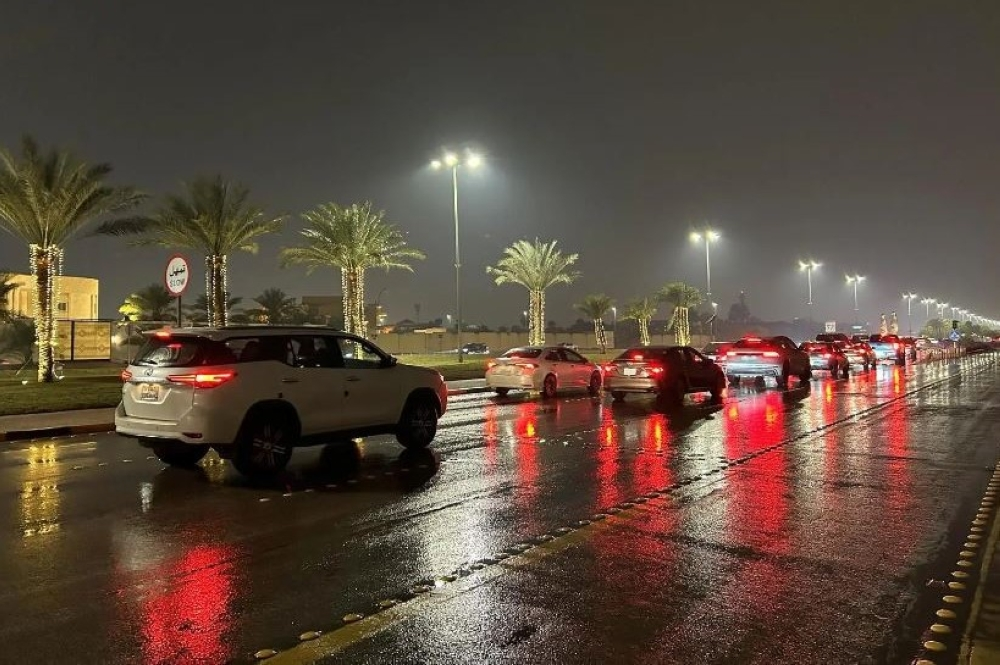
The city of Sakaka and the governorate of Dumat al-Jandal in the Al-Jawf region of northern Saudi Arabia experienced light to moderate rainfall today, accompanied by pleasant weather that refreshed the area. The rain extended to the outskirts of Sakaka and some centers within Dumat al-Jandal. The National Center for Meteorology forecasts indicate a continued chance of rain in the coming hours.
General context of the rainfall situation
These rains come amidst the weather fluctuations experienced by most regions of the Kingdom during the transitional period between winter and spring, a time known climatologically as one of atmospheric instability. Northern Saudi Arabia, including the Al-Jawf region, is affected by low-pressure systems originating from the Mediterranean basin, which bring rain clouds and humidity, creating favorable conditions for rainfall known locally as "rains of goodness" due to their positive impact on wildlife and agriculture.
The National Center of Meteorology had issued follow-up reports on the weather situation, warning of the formation of fog of varying intensity during the early morning hours, which led to a decrease in horizontal visibility in some parts, which necessitated raising the level of caution and vigilance among road users.
The importance of rainfall for the Al-Jawf region and its impact
These rains are of particular importance to the Al-Jawf region, one of the Kingdom's most important food baskets, renowned for its olive groves, date palms, and diverse fruit orchards. The seasonal rainfall directly replenishes groundwater reserves, upon which agriculture heavily depends, and also improves soil quality and reduces airborne dust, positively impacting public health and the environment.
Locally, residents welcomed the rainfall, which contributes to the growth of grazing plants vital to the livestock sector. Meanwhile, relevant authorities, such as Civil Defense and Traffic Police, are raising their level of preparedness to deal with any emergencies that may arise from the rain, such as water accumulation on roads or the flow of water in valleys and streams. They are urging citizens and residents to exercise caution and stay away from dangerous areas.
Regionally, this rainfall pattern is part of a broader climatic system affecting parts of the Levant and northern Arabia, highlighting the interconnectedness of weather patterns in the region. Monitoring and analyzing these climatic phenomena is crucial for long-term agricultural and water planning and natural resource management.