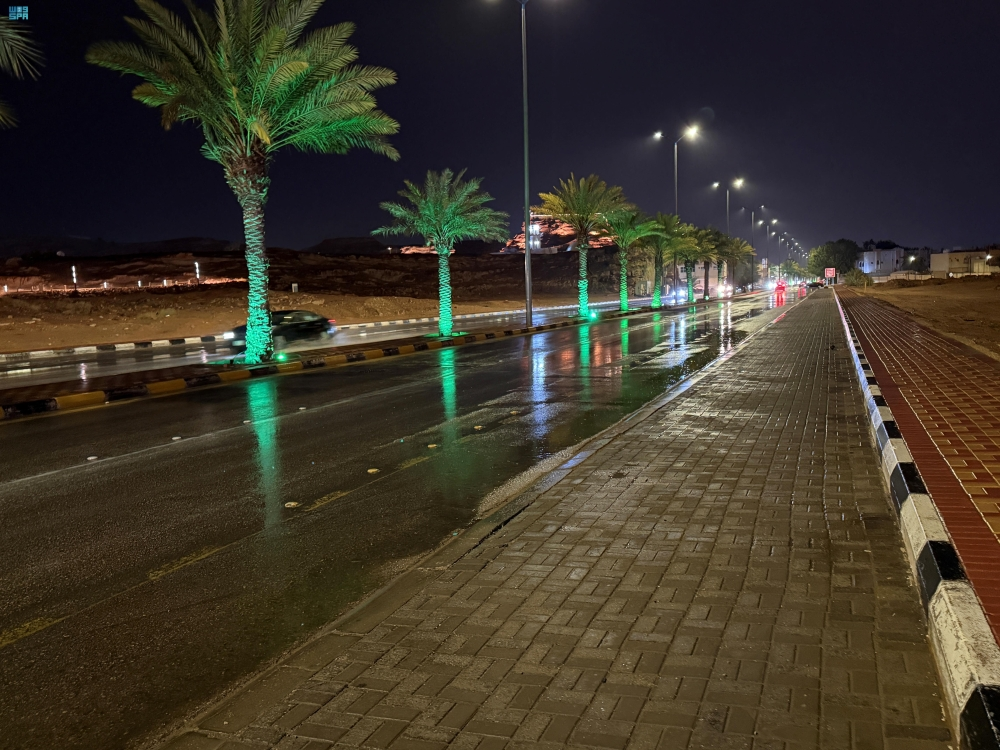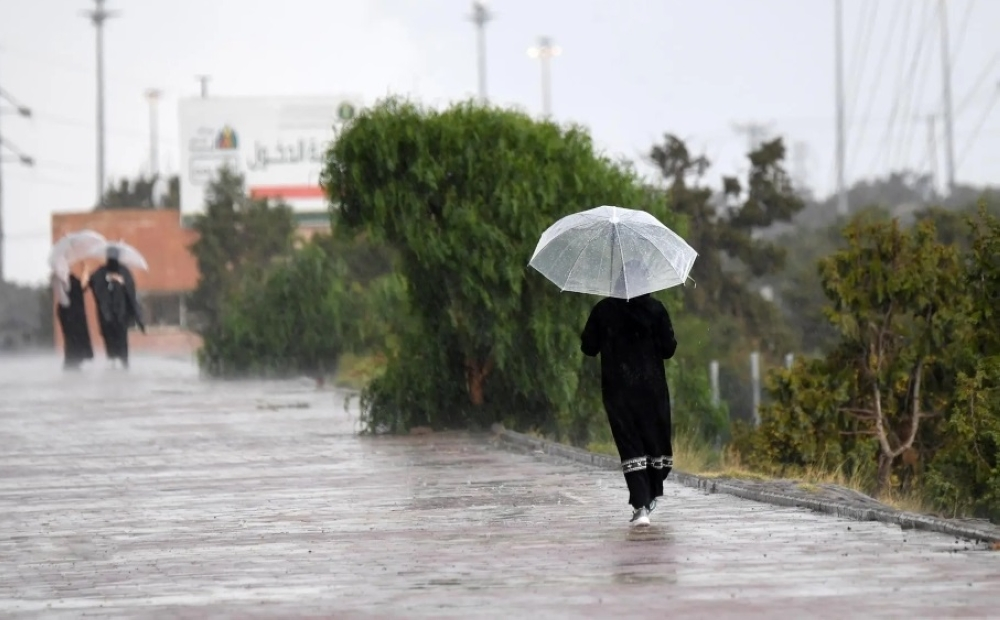
Northern regions of Saudi Arabia experienced a sharp drop in temperatures early Sunday morning, January 25th, with the city of Tarif recording the lowest temperature, nearing zero degrees Celsius. This is a clear indication of the deepening cold air mass currently affecting the Kingdom. This cold wave coincides with severe weather fluctuations, including thunderstorms and strong surface winds.
Details of recorded temperatures
According to data from the National Center for Meteorology, Tarif was not the only area experiencing extreme cold. Al-Qurayyat recorded a low of 1 degree Celsius, while temperatures in both Sakaka and Tabuk reached 3 degrees Celsius. In Arar, the minimum temperature remained at 4 degrees Celsius, while Hail and Rafha recorded 6 degrees Celsius, prompting residents to take necessary heating measures, especially during the night and early morning hours.
Rainfall conditions and expected weather phenomena
The National Center for Meteorology's report indicated that the expected weather conditions for today, God willing, point to continued chances of moderate to heavy thunderstorms. The center warned that these storms may lead to flash floods in valleys and ravines, and will be accompanied by hail. This weather pattern is expected to be concentrated over parts of the Qassim, Northern Borders, and Eastern Provinces, as well as the northern parts of the Riyadh region.
In a related context, temperatures are witnessing a noticeable decrease accompanied by active winds that stir up dust and sand, which may cause almost zero horizontal visibility on highways and open areas in the aforementioned parts. These effects extend to include parts of the Tabuk and Madinah regions, especially the coastal areas.
The climatic and geographical context of the region
The northern regions of the Kingdom, specifically Tarif and Qurayyat, are considered the northern gateway to the polar air masses that affect the Arabian Peninsula during winter. Historically, Tarif is known as one of the coldest cities in Saudi Arabia, having recorded record-breaking sub-zero temperatures in previous seasons, making preparations by its infrastructure and residents routine and essential during January and February.
Sea conditions and navigation
Regarding maritime navigation, the report indicated rough sea conditions in the Red Sea, with northwesterly to northerly surface winds in the northern and central parts, and southeasterly to southwesterly winds in the south, reaching speeds of up to 50 km/h with the formation of thunderstorms. Wave heights ranged from one to two and a half meters, creating choppy sea conditions in areas of thunderstorms. In the Arabian Gulf, surface winds were active, reaching speeds of up to 55 km/h with thunderstorms, raising waves to two and a half meters, necessitating caution from seafarers and fishermen.