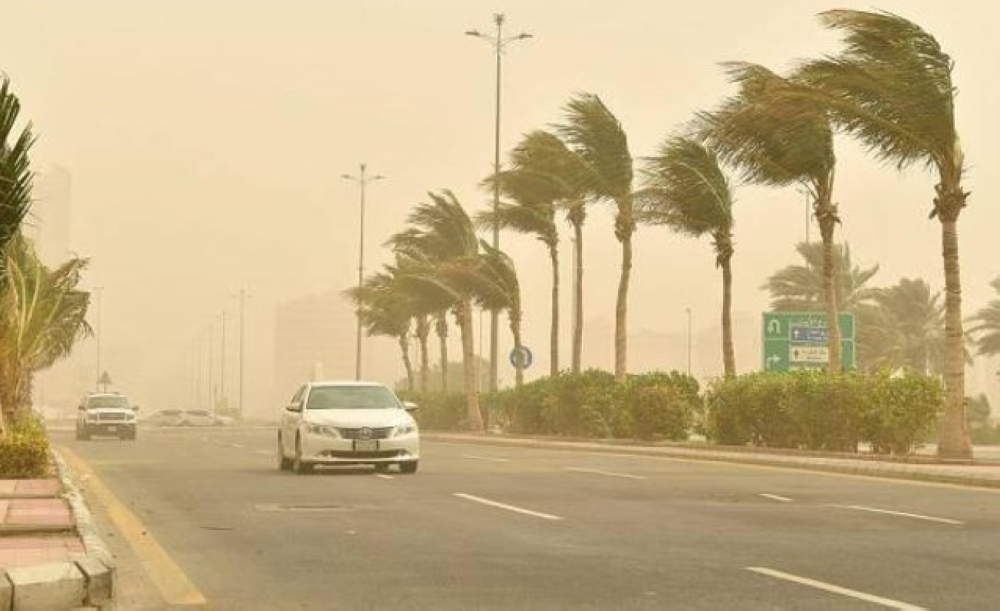
The National Center for Meteorology issued a detailed report on the expected weather conditions in Saudi Arabia, warning of significant weather fluctuations beginning Tuesday and continuing until Thursday (January 20-22). The forecast indicates that the Kingdom will be affected by a cold air mass, leading to a noticeable drop in temperatures, accompanied by active surface winds that may reduce horizontal visibility in several regions.
Details of the temperature drop and affected areas
The center explained in its statement that the northern regions of the Kingdom will be at the forefront of this cold wave. Tabuk, Al-Jawf, the Northern Borders, Hail, and the northern part of the Madinah region are expected to experience a sharp drop in minimum temperatures. Weather forecasts indicate that temperatures may reach or fall below freezing, ranging between 2 degrees Celsius and -2 degrees Celsius, necessitating the taking of necessary precautions to protect against the effects of the severe cold, especially during the night and early morning hours.
The impact of the cold air mass will not be limited to the north, but will gradually extend on Wednesday and Thursday to include the Qassim region, and the northern parts of the Riyadh and Eastern regions, where minimum temperatures in these areas are expected to reach levels ranging from 1 to 4 degrees Celsius.
Surface winds and their geographical effects
Regarding wind patterns, the National Center for Meteorology warned of active surface winds stirring up dust and sand. This activity will begin on Tuesday in the Al-Jawf and Northern Borders regions, then expand Tuesday evening and through Wednesday to include the Hail, Qassim, Riyadh, Eastern Province, and Najran regions. The winds will extend their impact on Wednesday and Thursday to the eastern parts of the Asir and Al-Baha regions, as well as the Makkah and Madinah regions, including their coastal areas.
Climate context and important recommendations
These weather fluctuations are part of the typical winter climate in Saudi Arabia, where the region experiences polar air masses that cause a significant drop in temperatures. The Kingdom's open, desert geography also contributes to increased surface wind speeds, facilitating the stirring up and dispersal of dust and sand over long distances, which directly impacts air quality and horizontal visibility on highways.
Under these conditions, adhering to public safety guidelines is crucial. Experts advise drivers to exercise extreme caution while driving in areas with heavy dust to avoid traffic accidents. Those with respiratory conditions and asthma are also advised to minimize going out in dusty weather. Regarding heating, relevant authorities consistently emphasize the need to use safe heating methods and ensure adequate ventilation in homes to prevent cases of suffocation, which can be more common in such cold weather. The center urges everyone to follow its daily reports and continuous updates on its official platforms to ensure everyone's safety.