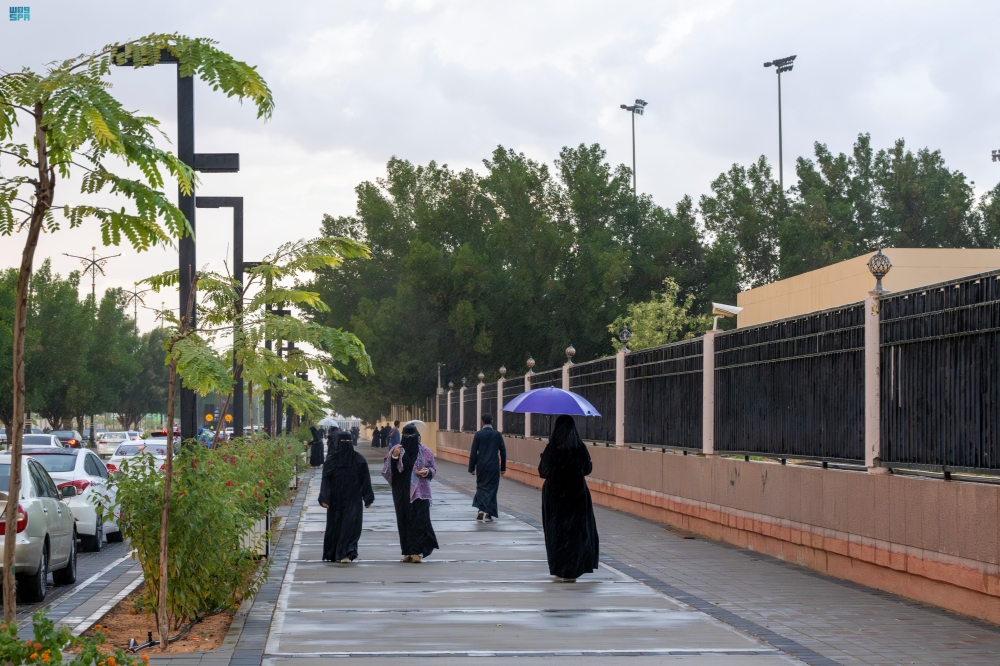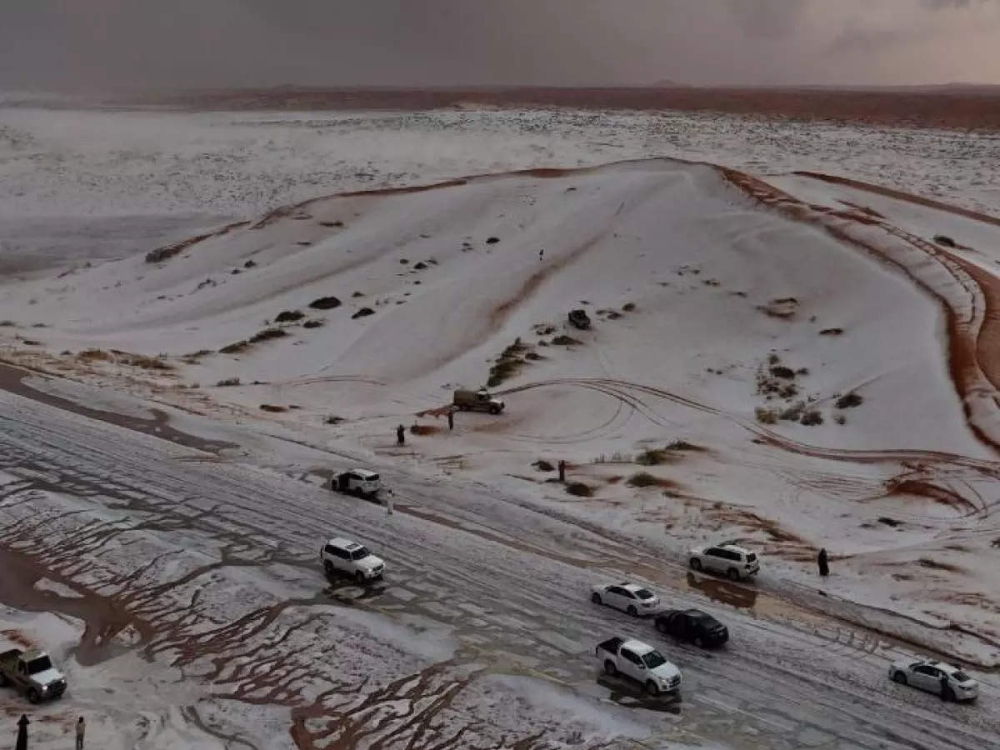
The severe cold wave continues to directly impact Saudi Arabia, with the city of Tarif in the Northern Borders region recording the lowest temperature this morning, Wednesday, at -3 degrees Celsius, reflecting the peak of this year's winter season. Tarif was not the only city to experience freezing temperatures; Qurayyat recorded -2 degrees Celsius, while Arar and Rafha reached -1 degree Celsius, and Sakaka recorded a slightly above-zero temperature.
Temperature variations across the Kingdom
The cold air mass extended its reach to wide areas, with the minimum temperature in Hail reaching 2 degrees Celsius and in Qaisumah 4 degrees Celsius. In the central and northwestern regions, Tabuk and Dawadmi recorded 5 degrees Celsius, while the minimum temperature in the capital, Riyadh, and Buraidah reached 6 degrees Celsius, necessitating the wearing of heavy winter clothing and caution when going out in the early morning hours.
Climate context: Why is Tarif the coldest?
The city of Tarif is historically known as one of the coldest cities in Saudi Arabia and the Arabian Peninsula, due to its high altitude and open geographical location, which makes it a corridor for cold northerly winds coming from Siberia and Eastern Europe. Such cold waves recur annually in January and February, with temperatures dropping below freezing, often leading to frost formation and the freezing of water in outdoor pipes. This necessitates that residents take special precautions to protect their property and livestock.
Weather forecast: Frost, dust, and rain
The National Center for Meteorology explained in its weather report for today that the weather will be cold to very cold in the Tabuk, Al-Jawf, Hail, and Northern Borders regions, with a high chance of frost in the early morning hours. Meanwhile, active winds stirring up dust and sand continue to affect horizontal visibility in parts of the Qassim, Riyadh, Eastern Province, and Najran regions, with their effects extending to the eastern parts of the southwestern highlands, as well as the Makkah and Madinah regions.
The center also indicated the possibility of light rain accompanied by dense fog in parts of the Jazan and Asir regions, calling on those using highways and highlands to exercise caution due to low visibility.
Sea conditions in the Arabian Gulf and the Red Sea
In terms of maritime navigation, the Arabian Gulf is experiencing a disturbance in sea conditions, with surface winds being northwesterly to westerly at a speed of up to 55 km/h, with wave heights ranging from one and a half to two and a half meters, and may exceed this in the central and southern parts, making the sea turbulent and unsuitable for small boats.
As for the Red Sea, northwesterly winds are active in it at a speed of up to 45 km/h towards the Gulf of Aqaba and the Bab al-Mandab Strait, with wave heights reaching up to two meters in those areas, and the sea state is generally light to moderate.