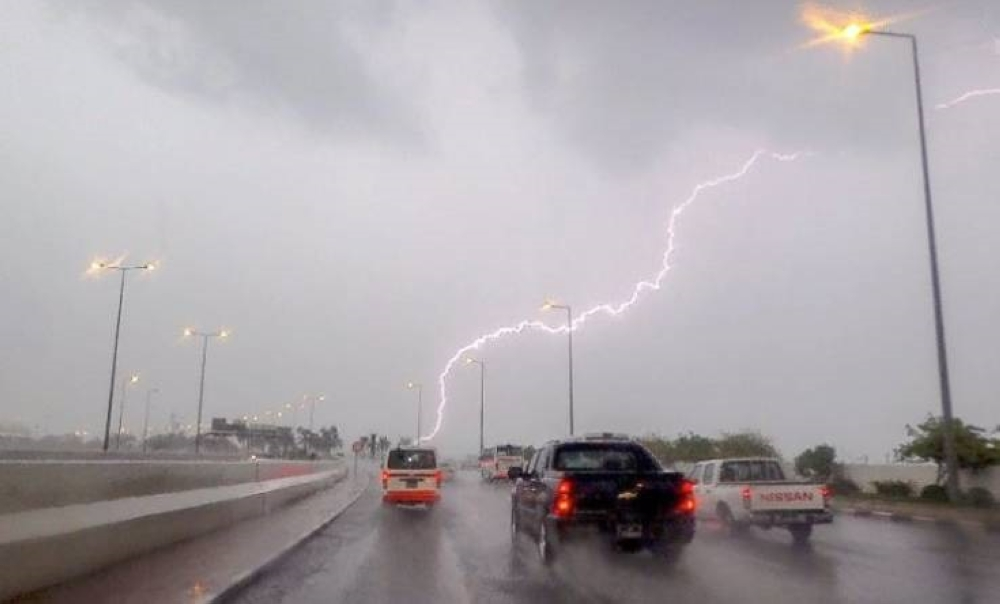
The National Center for Meteorology in Saudi Arabia issued an urgent and comprehensive warning, alerting large parts of the Kingdom to a severe polar air mass. According to the official report, this harsh weather system will begin tomorrow, Saturday, and its effects will continue until next Tuesday, with the country expected to experience a sharp and significant drop in temperatures, reaching below freezing in several regions.
Weather details and affected areas
According to meteorological data, the direct impact of the polar air mass will cover a wide geographical area, starting in the northern regions and gradually moving towards the central and eastern parts of the country. The most affected areas include Al-Jawf, the Northern Borders region, Tabuk, Hail, and Al-Qassim, extending to the capital, Riyadh, as well as the northern parts of the Eastern Province. Accurate forecasts indicate that minimum temperatures will reach critically low readings, ranging between 2 degrees Celsius above zero and 2 degrees below zero, necessitating extreme caution.
Sea disturbances and dust-raising winds
The low-pressure system's impact is not limited to colder temperatures; it also coincides with strong surface winds that will stir up dust and sand, particularly on Sunday and Monday, concentrated along the coastal areas of Tabuk, Medina, and Mecca. Authorities have warned of severe sea conditions, with waves expected to reach heights of up to 2.5 meters, posing a real threat to maritime navigation and the safety of fishermen and beachgoers in those areas.
What is the "Azraq" wave? A climatic and historical context
This cold wave coincides with the start of what is locally and popularly known as the "Aziraq" season in the Kingdom. This period is climatologically classified as one of the harshest and coldest periods of winter in the Arabian Peninsula. It was named "Aziraq" because bodies and faces used to turn blue from the intense cold. This period is usually characterized by clear skies, which allow the earth's heat to escape at night, thus exacerbating the feeling of frost. Astronomically, it coincides with the peak of the winter solstice, when the nights are longest and the days are shortest.
The end of "Al-Murabba'aniyah" and the arrival of "Shubat"
In a related context, weather expert Dr. Khaled Al-Zaaq explained that the Kingdom is currently experiencing the final days of the forty-day "Al-Murabba'aniyah" season, noting that we are witnessing the fourth day of the third and final star of this period. The regions are preparing to welcome the "Shubat" season in about ten days, a season known in popular tradition by names reflecting its intensity, such as "Muqarqa' Al-Biban" (the one who rattles the doors) and "Muqta' Al-Rabat" (the one who cuts the ropes), referring to the strong and unstable winds that characterize this transitional period between winter and spring.
Important recommendations for public safety
In light of these data, the National Center of Meteorology renewed its call to all citizens and residents to follow the daily reports and adhere to the instructions of the Civil Defense, especially with regard to the safe use of heating appliances to avoid suffocation or fires, and to exercise caution when driving on highways in open areas that may experience a decrease in horizontal visibility due to dust and sandstorms.