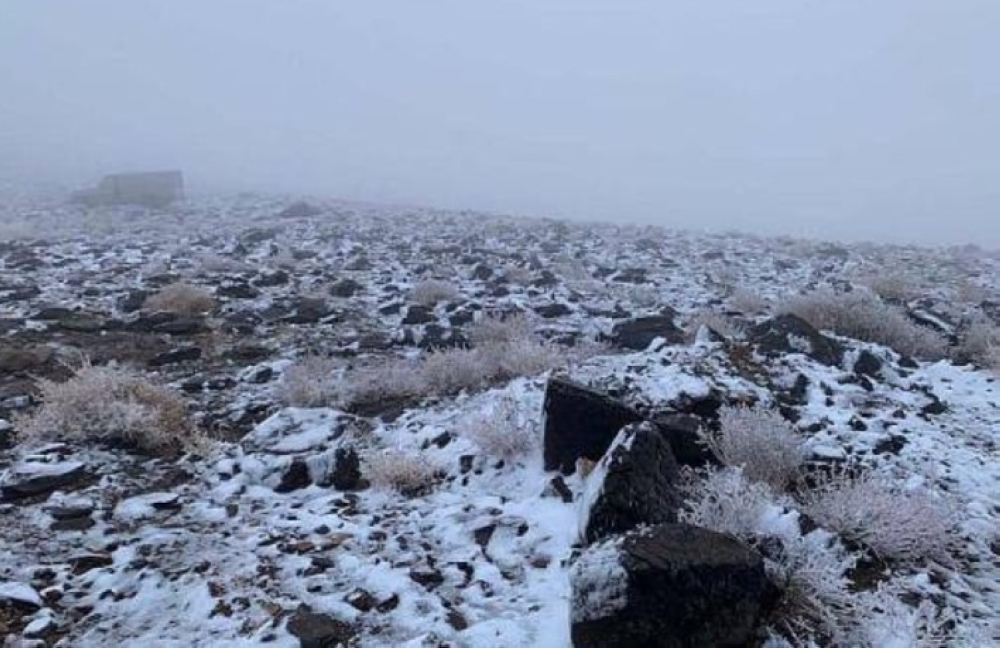
The National Center for Meteorology in Saudi Arabia issued an official yellow alert, warning that large parts of the Kingdom will be affected by a strong cold wave accompanied by frost formation, as part of its continuous monitoring of weather developments and fluctuations in the country during the current winter season.
The report issued by the center explained that the weather system will begin to have a noticeable impact during the early morning hours of Thursday, specifically from 1:00 AM to 8:00 AM. A significant and sharp drop in temperatures is expected, with minimum temperatures ranging between 0°C and -3°C, necessitating caution.
Regions and cities affected by the cold wave
The warning covered six major administrative regions, where frost and severe cold are expected to cover the following cities and governorates:
- Eastern Region: Includes Hafr Al-Batin and Qaryat Al-Ulya.
- Riyadh region: extends to include Thadiq, Huraymila, Rumah, Zulfi, Ghat, Majmaah, and Shaqra.
- Northern borders: Al-Uwaiqilah, Rafha, Tarif, and Arar.
- Al-Qassim region: Al-Asyah, Al-Thamiriya, Al-Shamasiya, Al-Ammar, Al-Mudhnib, Buraydah, Unayzah, and Uyun Al-Jawa.
- Hail region: Al-Shanan, Baqaa, and Hail city.
- Al-Jawf region: Dumat Al-Jandal and Sakaka.
climatic context and the impact of air masses
This cold wave is part of the typical winter weather patterns in Saudi Arabia, particularly in the northern and central regions. These areas are usually affected by the passage of dry polar air masses from the north, leading to a sharp drop in temperatures, especially during the night and early morning hours. The automated early warning system of the National Center of Meteorology is a vital tool for alerting the public. The "yellow alert" indicates the possibility of a weather phenomenon affecting a specific area, although it may not necessarily be very dangerous if handled responsibly.
Expected effects and safety guidelines
These cold waves and frost formations have multiple effects beyond simply feeling cold. On the agricultural front, frost poses a threat to crops in agriculturally active regions like Qassim, Hail, and Al-Jawf, requiring farmers to take preventative measures to protect their crops. On the health and social front, sub-zero temperatures necessitate wearing heavy winter clothing, especially for children and the elderly.
At such times, relevant authorities, such as the Civil Defense, emphasize the need to follow safety guidelines when using various heating methods, whether kerosene, coal, or electric heaters, to ensure good ventilation and avoid suffocation or fire incidents, to ensure that this wave passes safely for everyone.