The Saudi Water Authority announced that connecting to the public sewage network is a mandatory regulatory procedure for all properties within the service area. The Authority emphasized that this is not merely an administrative measure, but a fundamental pillar of the Kingdom's strategy to protect public health, preserve the environment, and enhance the quality of life for residents, in line with the objectives of Saudi Vision 2030.
Historical background and national context
This step is part of the comprehensive infrastructure development plan in the Kingdom of Saudi Arabia. For decades, many residential areas relied on traditional solutions such as septic tanks, which posed increasing environmental and health challenges with rapid urban expansion. Among the most significant challenges was the risk of untreated wastewater seeping into groundwater aquifers, threatening to contaminate freshwater sources, in addition to the spread of foul odors and insects, and the resulting damage to public health and property. Therefore, the government has invested billions of riyals in establishing and expanding modern sewage networks and advanced treatment plants, aiming to achieve comprehensive coverage that ensures the safe and efficient disposal of wastewater.
Importance and expected effects
Mandatory connection to the sewage network represents a multifaceted transformation. Locally, this measure directly contributes to eliminating sources of pollution within residential areas, reducing the spread of waterborne diseases and improving the urban landscape. It also enhances property values due to the availability of a comprehensive and reliable infrastructure. Nationally, this step supports environmental sustainability goals by enabling wastewater treatment and reuse for purposes such as irrigating green spaces and industrial applications, thus alleviating pressure on the Kingdom's scarce water resources. Internationally, this commitment reflects the Kingdom's dedication to adhering to the highest global standards in public health and environmental management, and to contributing to the achievement of the United Nations Sustainable Development Goals, particularly Goal 6, which focuses on ensuring the availability and access to water and sanitation for all.
Implementation mechanism and costs
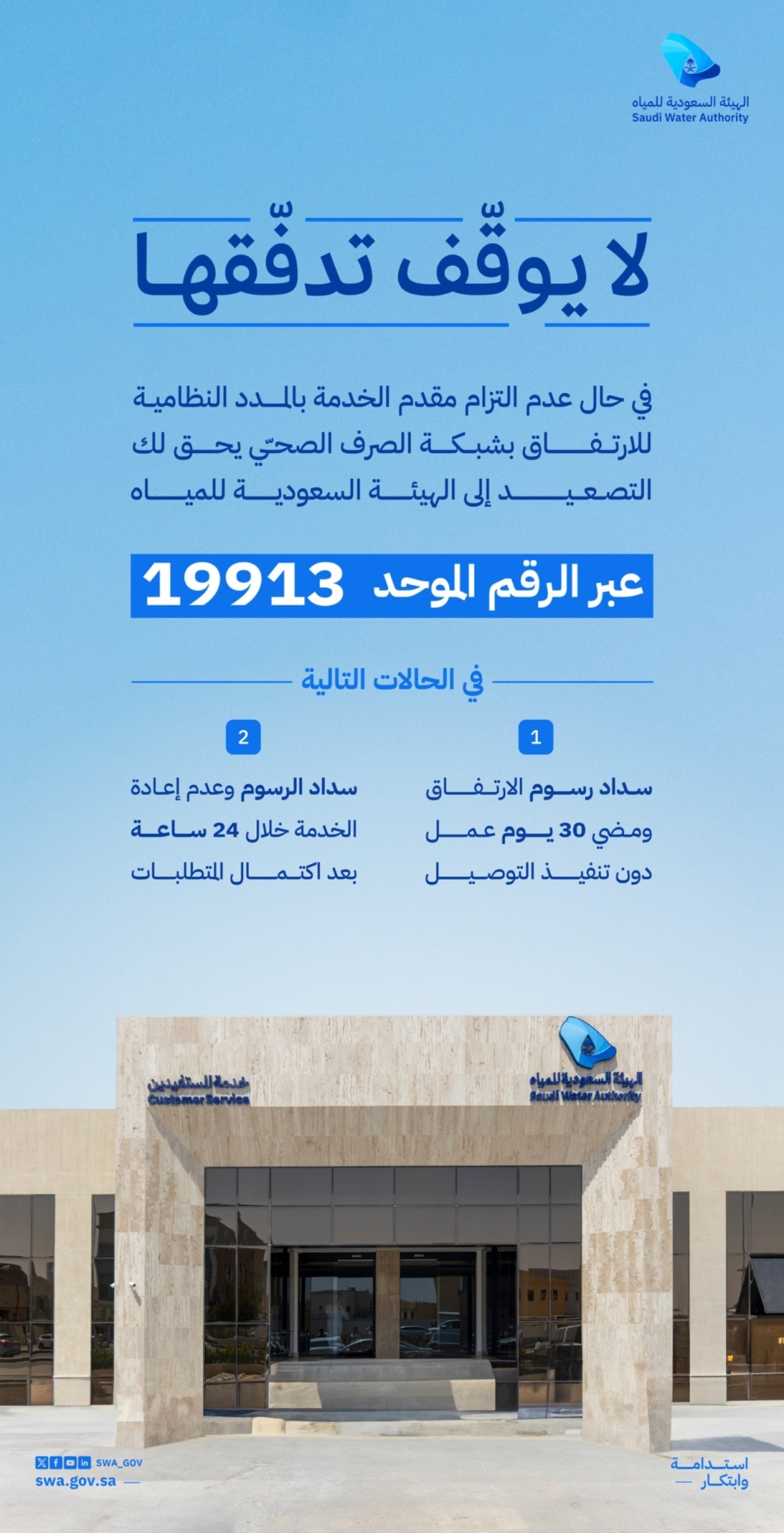
The Authority clarified that the connection process is conducted according to transparent and organized procedures. The process begins by notifying beneficiaries of the service's availability in their areas through multiple official channels, including text messages and electronic notifications, to ensure that everyone receives the information. Regarding the fees, these were determined based on clear regulations approved by the Council of Ministers on November 30, 1441 AH (corresponding to 2020 CE), taking into account factors such as property classification, area, and connection diameter. To facilitate the process for citizens, the Authority has made it possible to pay the full amount upon invoice issuance or through an easy installment plan agreed upon with the service provider before implementation. To ensure a prompt response to any inquiries, the Authority has dedicated a unified call center (19913) to serve beneficiaries around the clock.