A qualitative leap towards sustainability: Vision 2030 is reshaping the environmental landscape in the Kingdom
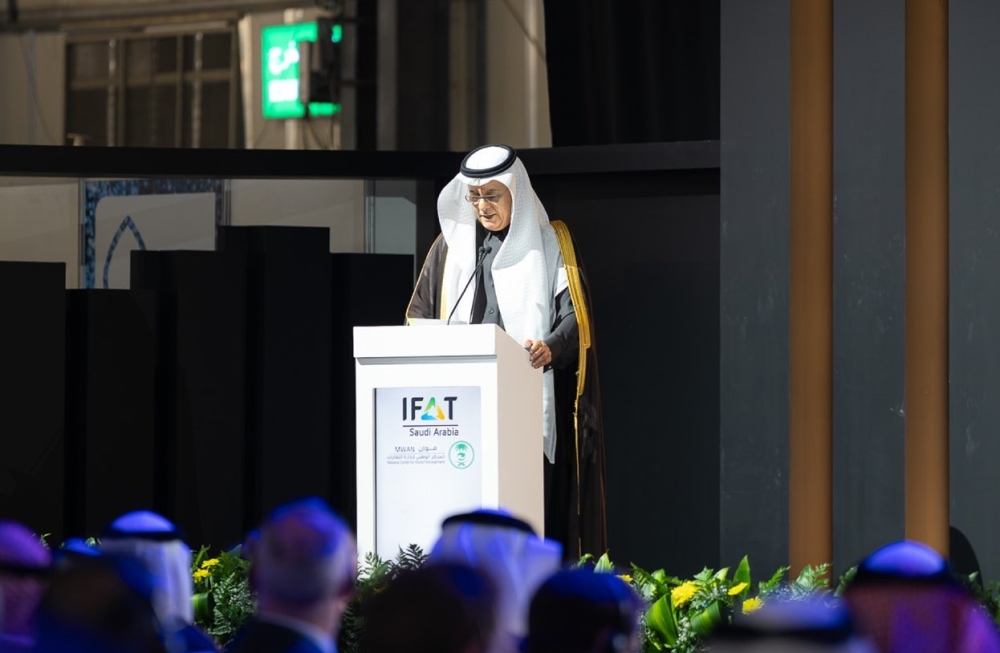
His Excellency the Minister of Environment, Water and Agriculture, Engineer Abdulrahman bin Abdulmohsen Al-Fadhli, affirmed that the Kingdom’s ambitious Vision 2030 has formed the cornerstone for rebuilding and developing the environmental system in Saudi Arabia, transforming the concept of environmental protection from a mere commitment into an integrated development framework that supports public health and keeps pace with the aspirations of sustainable economic growth. His remarks came during his opening address at the IFAT Saudi Arabia 2024 Conference and Exhibition, hosted by the capital, Riyadh, with the participation of thought leaders, decision-makers, and investors in the circular economy from around the world.
Historical background: From environmental challenges to green leadership
Historically, the Kingdom, like other resource-dependent nations, has faced significant environmental challenges, including water scarcity, desertification, and the impacts of climate change. However, the launch of Vision 2030 in 2016 marked a strategic turning point, placing environmental sustainability at the heart of its development goals. The Kingdom shifted from focusing on piecemeal solutions to environmental problems to adopting comprehensive, long-term solutions aimed at achieving a delicate balance between economic growth and preserving ecosystems for future generations.
Tangible achievements on the ground
Al-Fadhli explained that this transformation has resulted in tangible achievements, with the water sector undergoing a qualitative leap into a fully integrated and efficient system. Water production capacity has exceeded 16 million cubic meters per day, relying primarily on seawater desalination, to which the private sector contributes approximately 4.4 million cubic meters per day. The Kingdom also operates one of the world's largest water transmission networks, reusing about 33% of treated water, thus enhancing water resource efficiency and supporting environmental sustainability.
Within the framework of major national initiatives, the Minister highlighted the pivotal role of the “Saudi Green” initiative and the National Environment Strategy, which have contributed to the rehabilitation of more than 500,000 hectares of degraded land and the planting of over 151 million trees. Significant progress has also been made in protecting biodiversity by increasing the percentage of terrestrial and marine protected areas to nearly 18% of the Kingdom’s total area, with ambitious plans to reach 30% in line with the Vision’s objectives.
Waste management: From challenge to economic opportunity
The Minister highlighted the waste management sector, which is considered one of the most important pillars of environmental and economic sustainability. With the volume of waste in the Kingdom exceeding 130 million tons annually, managing it is no longer merely an operational challenge, but has become a strategic opportunity to promote the circular economy. In this context, the Kingdom has worked to establish a national regulator for the sector and develop a comprehensive legislative framework, in addition to launching more than 500 investment opportunities worth billions of riyals, supported by a robust infrastructure comprising more than 900 facilities, with the aim of transforming waste into value-added resources.
Local, regional and international impact
These efforts have an impact not only at the local level, improving quality of life and creating new jobs in the green economy, but also extend to the region and the world. Through initiatives such as the Green Middle East Initiative, the Kingdom is solidifying its position as a regional leader in climate action. Internationally, these transformations contribute to achieving the Sustainable Development Goals and international climate commitments, enhancing the Kingdom's image as an active and responsible partner in the global sustainability journey.