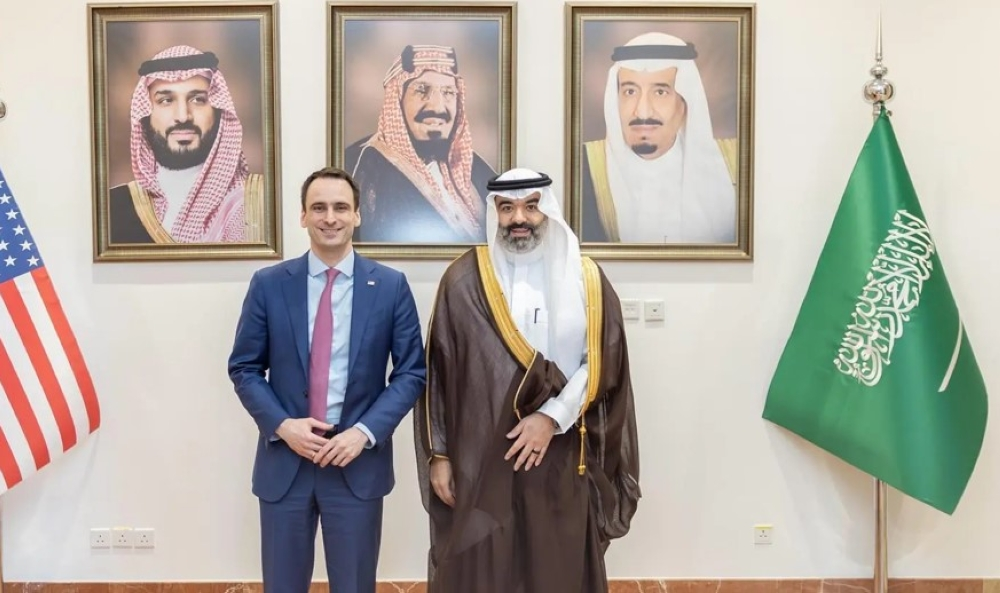
In a move reflecting the depth of the strategic relationship between Riyadh and Washington, and their shared vision for the future, His Excellency the Saudi Minister of Communications and Information Technology, Engineer Abdullah bin Amer Al-Swaha, received Mr. Michael Kratsios, Assistant to the US President and Director of the Office of Science and Technology Policy at the White House, at the Ministry's headquarters in Riyadh. The meeting provided an important platform to explore new avenues for expanding bilateral partnerships in vital sectors that form the backbone of the new global economy.
Vision 2030 as a key driver of digital transformation
This meeting comes within the context of Saudi Arabia's ongoing efforts to achieve the goals of Vision 2030, which aims to diversify national income sources and reduce dependence on oil. The digital economy is a key pillar of this ambitious vision, with the Kingdom investing heavily in developing its digital infrastructure, fostering innovation, supporting startups, and cultivating national talent in advanced technology fields. Cooperation with the United States, a global leader in technology, is vital to accelerating this transformation.
Dimensions of the partnership and areas of cooperation
Discussions between the two sides focused on several key areas, including innovation policies, artificial intelligence applications, and emerging technologies such as 5G and the Internet of Things (IoT), as well as strengthening the digital economy, technology, and space sectors. The two parties discussed ways to expand existing partnerships to build national capabilities and empower Saudi talent, thereby supporting the growth of the digital economy and enhancing the competitiveness of both countries in the global technology race. This cooperation is not limited to technology imports but aims to localize knowledge and create a stimulating environment for joint research and development.
Expected impact at the local, regional, and international levels
Domestically, this partnership is expected to create quality jobs for Saudi youth, drive growth in non-oil sectors, and enhance the Kingdom's position as a regional hub for technology and innovation. Regionally, the success of Saudi Arabia's digital transformation experience will inspire other countries in the region to follow suit, thus strengthening digital economic integration in the Middle East.
Internationally, this collaboration underscores the strength and evolution of the strategic alliance between Saudi Arabia and the United States, extending it beyond the traditional energy and defense sectors to encompass new dimensions. It also opens up vast opportunities for American companies to invest in the promising Saudi market and fosters shared opportunities for transitioning to the smart era, ultimately benefiting the global economy by promoting innovation and stability in the technology sector.