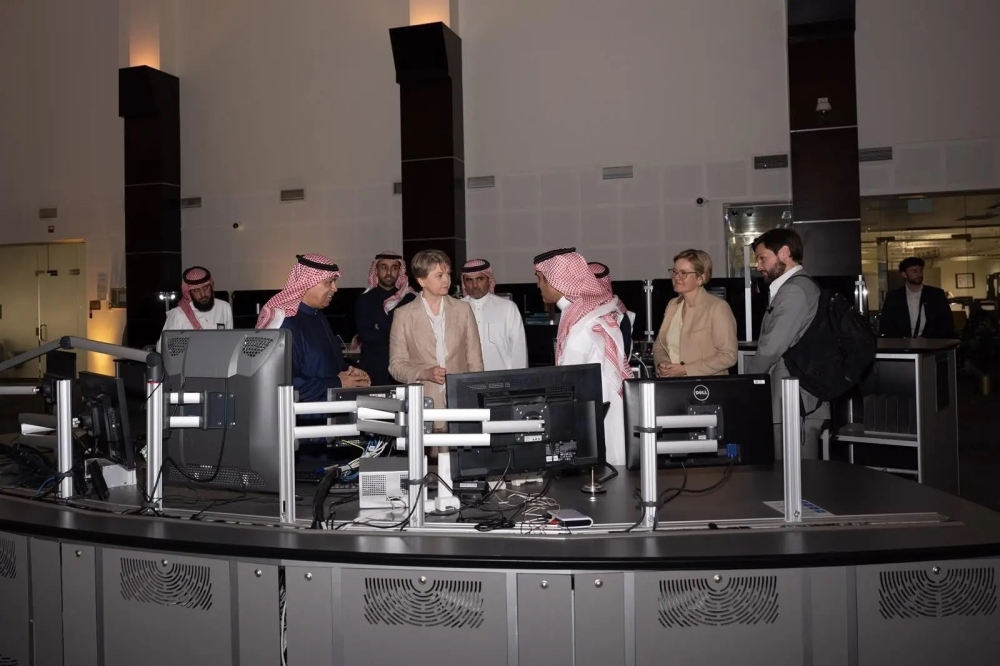
The Minister of Transport and Logistics and Chairman of the Board of Directors of the General Authority of Civil Aviation (GACA), Engineer Saleh bin Nasser Al-Jasser, met with the UK's Minister of State for Foreign, Commonwealth and Development Affairs, Yvette Cooper, to discuss the Kingdom of Saudi Arabia's pioneering efforts in airspace management. This significant meeting took place at GACA's headquarters in Riyadh, where Al-Jasser received the British Minister and her accompanying delegation. Also present was GACA President, Abdulaziz bin Abdullah Al-Duailij. The meeting addressed several topics of mutual interest in the air transport sector and highlighted the advanced mechanisms adopted by the Kingdom to ensure the smooth and efficient flow of air traffic.
The roots of Saudi-British cooperation in the aviation sector
Historically, the Kingdom of Saudi Arabia and the United Kingdom have enjoyed close strategic relations spanning decades across various sectors, most notably civil aviation and air transport. These relations have witnessed significant development through bilateral agreements aimed at exchanging expertise and developing airport infrastructure. Within the framework of Saudi Vision 2030, the Kingdom seeks to solidify its position as a global logistics hub connecting three continents, making cooperation with international partners like the UK a vital step for sharing technological knowledge and developing national capabilities. This ongoing collaboration reflects both countries' commitment to enhancing the safety and security of civil aviation at both the regional and international levels.
Latest airspace management technologies in Riyadh
Following the official talks, the President of the General Authority of Civil Aviation and the British Foreign Secretary toured the regional air traffic control center at King Khalid International Airport in Riyadh. The visiting delegation was briefed on the mechanisms for monitoring air traffic and managing operational processes around the clock. They were also shown the advanced technological systems used in air traffic control, which are operated by qualified Saudi nationals working according to the highest internationally recognized professional standards. These technologies directly contribute to enhancing safety and efficiency in air traffic, reflecting the significant technological advancements in the Kingdom's aviation sector.
Strategic dimensions for enhancing air navigation efficiency
This meeting and joint cooperation are of paramount importance and will have a far-reaching impact on several levels. Locally, it contributes to enhancing the efficiency of Saudi airports and increasing their capacity, in line with the National Aviation Strategy, which aims to reach 330 million passengers annually by 2030. Regionally, it strengthens the Kingdom's role as a safety net for air traffic in the Middle East, especially given the geopolitical challenges that necessitate sound crisis management and advanced contingency plans. Internationally, the Kingdom's adoption of the latest air navigation standards reinforces the confidence of the international community and global airlines in Saudi airspace, thus supporting global trade and tourism.
Business continuity and crisis management
The visit program included a comprehensive presentation by the Saudi Air Navigation Services Company (SANS), highlighting the company's vital role in regulating air traffic within the Kingdom's airspace. The presentation focused on the integrated operational system that ensures the highest levels of safety and operational efficiency, as well as reviewing crisis management plans and procedures that guarantee operational continuity under all circumstances. At the conclusion of the visit, both sides agreed to continue their joint coordination and explore ways to enhance cooperation and exchange expertise in the field of air navigation, serving the mutual interests of the two friendly nations.