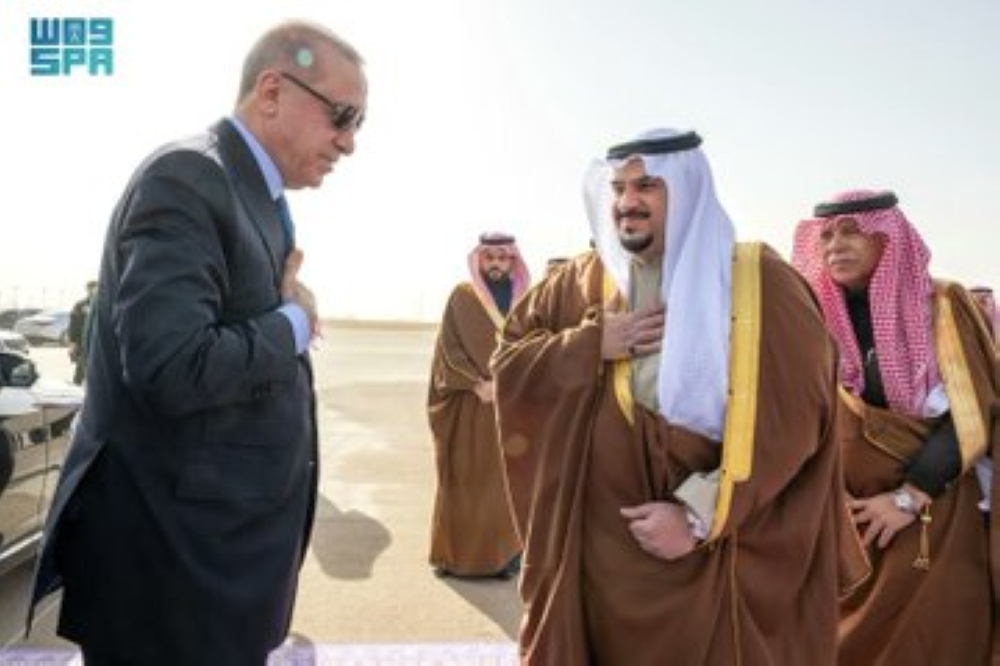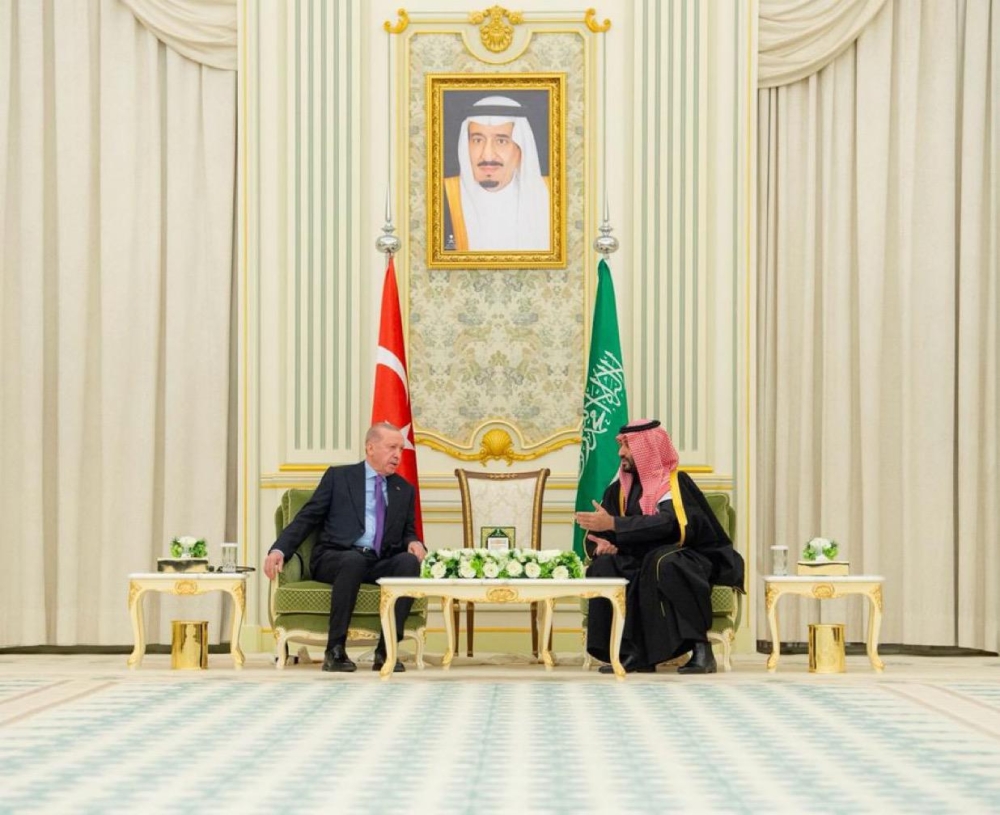
A joint statement was issued at the conclusion of Turkish President Recep Tayyip Erdoğan's visit to the Kingdom of Saudi Arabia, affirming the deep historical ties and fraternal bonds between the two countries and establishing a new phase of comprehensive strategic partnership. Crown Prince Mohammed bin Salman bin Abdulaziz Al Saud, Deputy Prime Minister, held official talks with President Erdoğan, during which they reviewed ways to enhance bilateral cooperation across all sectors and exchanged views on regional and international issues of mutual interest.
Historical background: From coolness to strategic rapprochement
This visit comes as the culmination of a rapprochement that began between Riyadh and Ankara in recent years, following a period of strained relations. Relations received a significant boost with high-level reciprocal visits, including Crown Prince Mohammed bin Salman's visit to Turkey in June 2022 and President Erdoğan's visit to the Kingdom in July 2023. This shift reflects a shared understanding by the two regional powers of the importance of coordination and cooperation in addressing the growing geopolitical and economic challenges in the region, and their pursuit of building a bloc capable of promoting stability and achieving the common interests of their peoples.
Promising economic cooperation within the framework of Vision 2030 and the Turkish Century
On the economic front, the statement commended the strong ties between the two countries, and both sides agreed on the need to further strengthen them, particularly by aligning investment opportunities offered by Saudi Arabia’s Vision 2030 and Turkey’s Vision 2030. Emphasis was placed on the importance of increasing the volume of non-oil trade, activating the Saudi-Turkish Business Council , and expediting negotiations for a free trade agreement between the Gulf Cooperation Council (GCC) countries and Turkey. The statement also welcomed the growing Saudi investments in Turkey and the vital role of Turkish companies in major infrastructure projects in the Kingdom, reflecting mutual trust and a strong commitment to translating political relations into tangible economic gains.
Global energy security and addressing climate change
The statement emphasized the pivotal role of both countries in stabilizing global energy markets. The Turkish side commended the Kingdom's leading role in enhancing the reliability of oil markets. Both parties agreed to strengthen cooperation in the areas of renewable energy, electricity interconnection, clean hydrogen, and energy efficiency. Regarding climate issues, the statement stressed the commitment to the Paris Agreement, with Saudi Arabia welcoming Turkey's hosting of the Conference of the Parties (COP31) in 2026, demonstrating a shared vision for achieving sustainable development.
Defense and security coordination to preserve the stability of the region
On the defense and security front, both sides agreed to activate signed agreements and develop defense relations in a way that serves the interests of both countries and contributes to achieving regional security and stability. Cooperation included combating terrorism, extremism, and their financing, fighting organized crime, and enhancing cybersecurity, which represents a clear message of their determination to work together to confront cross-border security threats.
A unified stance on pressing regional issues
The statement adopted identical positions on the most prominent regional issues, reflecting an expected impact on the geopolitical dynamics in the Middle East:
- The Palestinian issue: Both sides expressed their deep concern about the humanitarian catastrophe in Gaza, and stressed the need for an immediate ceasefire and ensuring unhindered access for humanitarian aid, while emphasizing their full support for the two-state solution and the establishment of an independent Palestinian state with East Jerusalem as its capital.
- Regarding Yemen: The statement affirmed full support for the legitimate Yemeni government and the necessity of preserving Yemen's sovereignty, unity, and territorial integrity. The position was decisive in emphasizing the need to confront any support for internal entities aiming to destabilize Yemen's security and stability , in a clear indication of the rejection of foreign interference and separatist projects.
- Sudan, Syria and Somalia: Support for the unity and sovereignty of these countries was emphasized, and any attempts to divide them or create parallel entities outside the framework of legitimacy were rejected, and support was given to political solutions led by the people of these countries.
The statement concludes that the growing Saudi-Turkish partnership is not only beneficial to both countries, but also aims to be a fundamental pillar of stability, peace and prosperity in the Middle East region and the entire Islamic world.