The Kingdom of Saudi Arabia has achieved a new milestone in its journey towards enhancing food security and self-sufficiency, with the Ministry of Environment, Water and Agriculture announcing a significant leap in table egg production during 2024. Official figures revealed that domestic production exceeded 8.4 billion eggs, reflecting the rapid development witnessed by the agricultural sector in the Kingdom.
Rapid growth and strategic geographic distribution
Statistical data showed a remarkable annual growth in production operations, reaching 6.4% compared to the previous year, 2023. This growth is a direct result of successful operational and investment plans aimed at increasing the efficiency of agricultural projects and meeting the growing demand in the local market.
In terms of geographical distribution of production, the Riyadh region led the way, securing first place with a massive output of nearly 3.2 billion eggs, confirming its position as an agricultural powerhouse in the Kingdom. The Makkah region came in second with a production of 1.5 billion eggs, followed by the Eastern Province, which contributed approximately 1.1 billion eggs to the national food supply, demonstrating a high degree of production integration across the Kingdom's various regions.
Quality and Saudi GAP standards
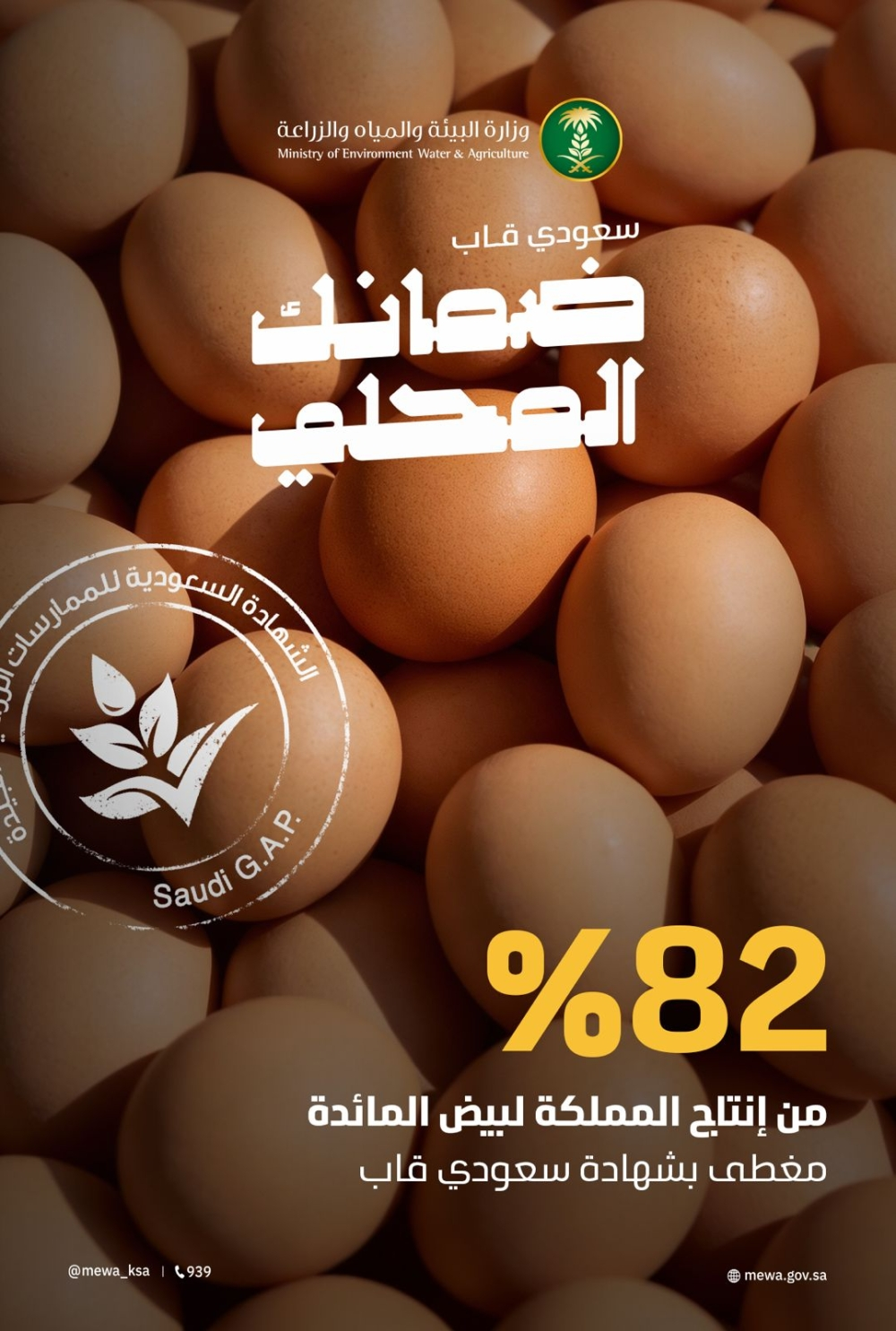
The achievement was not limited to production quantities alone, but also included a qualitative shift in quality standards. The Ministry confirmed that 82% of this massive production is covered by the Saudi GAP quality mark. This percentage is a strong indicator of producers' commitment to applying good agricultural practices, ensuring consumers have access to safe and reliable food products and significantly reducing health risks associated with food safety.
Strategic and economic dimensions
This achievement is particularly significant when viewed within the context of the Kingdom's Vision 2030 and the National Agricultural Strategy. Increasing domestic production of table eggs directly contributes to reducing reliance on imports, thereby strengthening the trade balance and protecting the local market from the volatility of global prices and international supply chains.
This growth also reflects the success of government policies supporting the private sector, through the provision of soft loans via the Agricultural Development Fund, and the localization of modern technologies in poultry farms, which has contributed to raising production efficiency and reducing waste.
The future of food security
The Ministry of Environment, Water and Agriculture, through expanding the application of the approved quality mark, seeks to strengthen consumer confidence in national products and encourage more investors to enter this vital sector. These integrated efforts aim to protect natural resources and ensure the long-term sustainability of the food security system, positioning the Kingdom as a leading model in the region for food self-sufficiency.