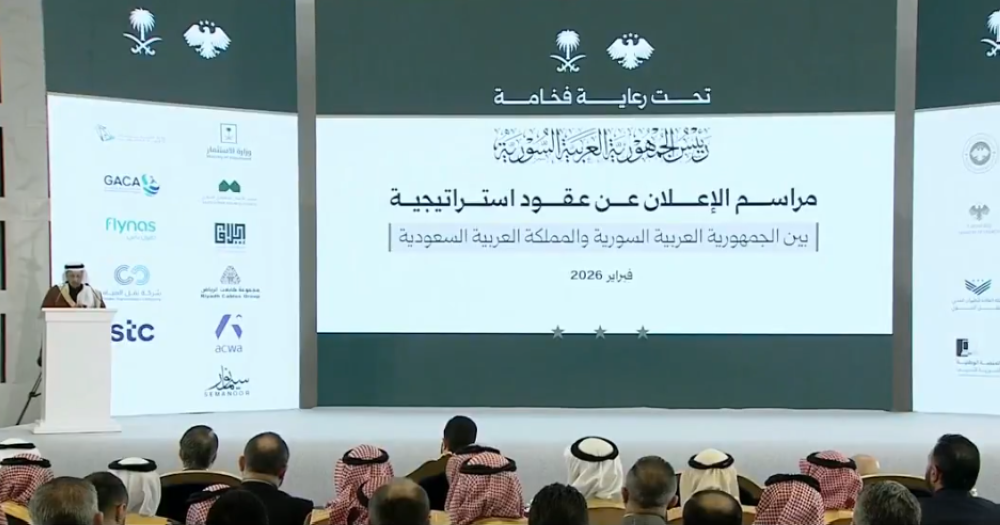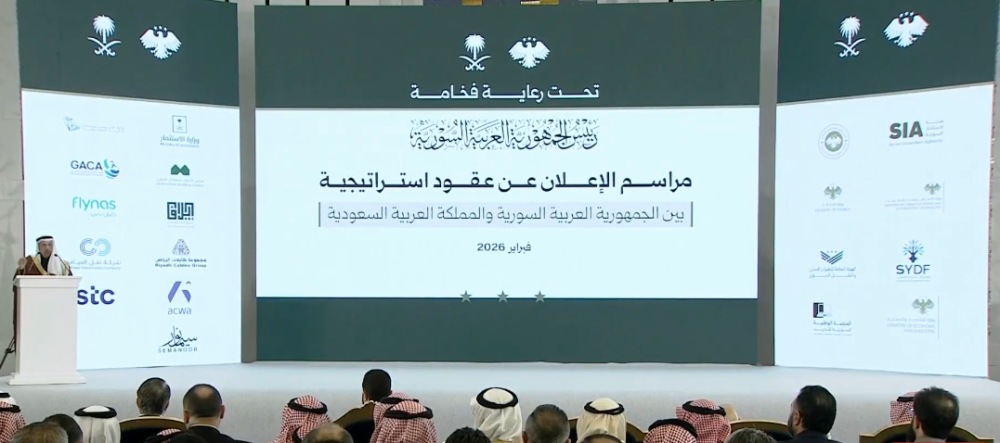
In a historic move reflecting the profound shifts in regional relations, the Syrian capital, Damascus, witnessed the signing of five major strategic agreements between leading Saudi companies and Syrian government entities. This step culminates a visit by a high-level Saudi delegation, headed by the Minister of Investment, aimed at exploring investment cooperation opportunities and activating economic partnerships between the two countries.
Details of the agreements and their vital areas
The agreements covered vital sectors that would contribute to the reconstruction of Syria's infrastructure and boost its economy. According to informed sources, the list of agreements included the following:
- Telecommunications sector: The “Silk Link” agreement between Saudi Telecom Company (stc) and the Syrian Ministry of Communications and Technology, which aims to develop the infrastructure of telecommunications and internet networks in Syria.
- Aviation and Air Transport Sector: Two agreements were signed in this field; the first between an investment fund and Syrian Airlines to develop and operate Aleppo and Damascus International Airports, and the second to establish a joint airline between Saudi Arabia’s Flynas and Syrian Airlines.
- Industry sector: An agreement between Riyadh Cables Company and the Syrian Sovereign Fund, to enhance cooperation in the field of manufacturing industries and the supply of basic materials for projects.
- Energy and Water Sector: A strategic agreement under which the Saudi companies ACWA Power and Water Transport Technologies will develop desalination and water transport projects in Syria, a sector that suffers from major challenges.
Historical background and regional context
These agreements come within a broader context of the political rapprochement that Saudi-Syrian relations have witnessed recently. After years of diplomatic estrangement that began with the outbreak of the Syrian crisis in 2011, relations were officially normalized with the reopening of embassies and Syria's reinstatement to its seat in the Arab League in May 2023. This economic shift represents a practical manifestation of the political reconciliation and reflects Saudi Arabia's desire to play a pivotal role in the stabilization and reconstruction phase in Syria, in line with its regional vision based on development and economic partnerships.
Importance and expected effects
On the Syrian domestic front, these investments are of paramount importance, as they are expected to contribute to the rehabilitation of devastated infrastructure, create job opportunities, and improve essential services for citizens in vital sectors such as energy, water, and transportation. For Saudi Arabia, this move is an extension of its ambitious investment policy within the framework of Vision 2030, which seeks to diversify the Saudi economy and enhance the regional and international influence of its companies. Regionally, this cooperation sends a powerful message about the beginning of a new era in the region, one based on economic integration rather than conflict, and may encourage other Arab countries to increase their investments in Syria, thus accelerating its economic recovery and reintegration into the Arab world.