Official announcement from the Supreme Court
The Supreme Court of Saudi Arabia issued an official statement today, calling upon all Muslims throughout the Kingdom to look for the crescent moon of Ramadan 1447 AH on the evening of Tuesday, the 29th of Sha'ban 1447 AH, corresponding to February 17, 2026. This announcement comes in preparation for the holy month, which Muslims around the world eagerly await.
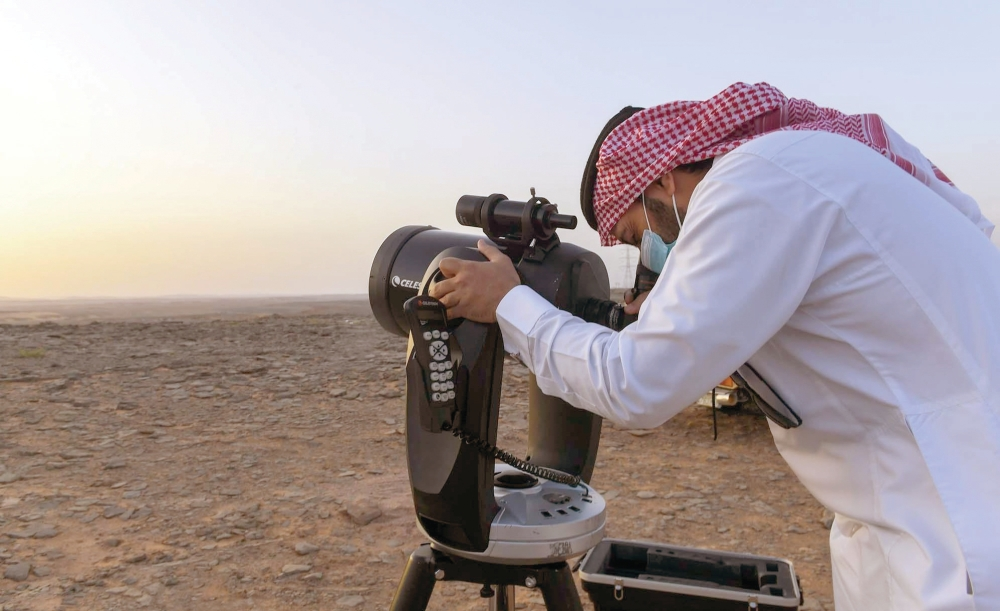
In its statement, the court requested that anyone who sights the crescent moon with the naked eye or through binoculars report it to the nearest court and register their testimony, or contact the nearest center for assistance in reaching the nearest court. The court also urged those capable of sighting the crescent to pay attention to this matter, join the committees formed in their regions for this purpose, and consider the reward and merit in participating, as it constitutes cooperation in righteousness and piety and benefits all Muslims.
The historical and religious context of the sighting process
The sighting of the new moon is based on a long-established Islamic tradition dating back to the Sunnah (Prophetic tradition), as the Islamic lunar calendar relies on the sighting of the new moon to determine the beginning of each month. This process is particularly important for determining the start and end of Ramadan (Eid al-Fitr), as well as the month of Dhu al-Hijjah, which is associated with the Hajj pilgrimage and Eid al-Adha. Saudi Arabia, by virtue of its religious significance and the presence of the Two Holy Mosques within its borders, is considered a primary authority in this matter for many Muslim countries.
This process combines the traditional Islamic method of visual sighting with modern scientific methods, such as astronomical observatories and advanced telescopes, to ensure accuracy and reliability in determining the start of the new moon. Official moon-sighting committees are deployed throughout the Kingdom, particularly in areas with clear skies and far from urban light pollution.
Local and international importance and impact
Domestically, this announcement marks the official start of final preparations for Ramadan in Saudi Arabia. Once the new moon is sighted, daily life changes: mosques begin holding Taraweeh prayers, streets are decorated, markets become bustling, and working hours in both the public and private sectors adjust to suit the nature of this holy month, characterized by fasting, worship, and social gatherings.
Regionally and internationally, the announcement by the Saudi Supreme Court is followed closely by millions of Muslims worldwide. Many Islamic countries and Islamic organizations in the West rely on Saudi Arabia's announcement to determine the start of Ramadan, thus unifying Muslims in this important religious observance. While some countries may rely on their own astronomical calculations or local sightings, Saudi Arabia's decision remains highly significant in determining the beginning of Ramadan for a large part of the Muslim world.