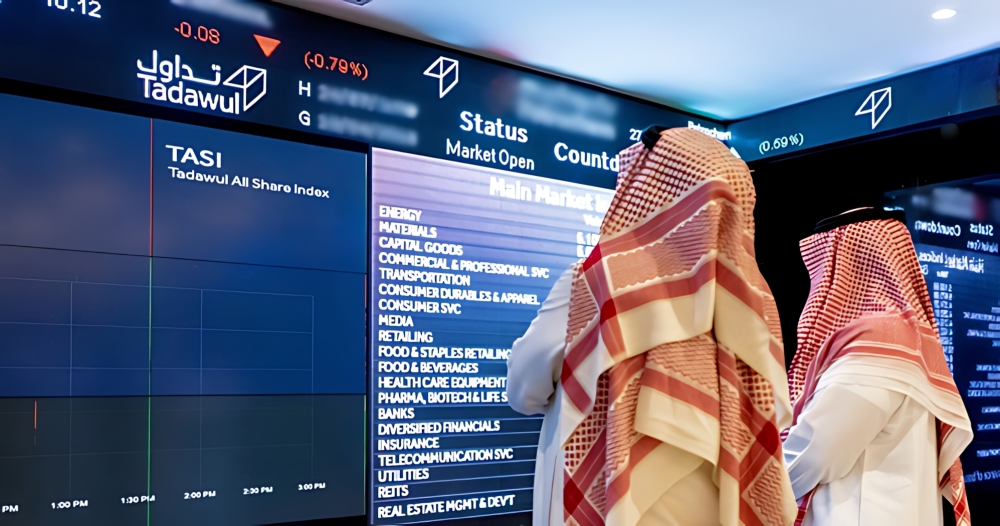
The Saudi Stock Exchange's main index (TASI) opened Tuesday's trading session on a positive note, rising 0.3% to reach 11,306 points. The first few minutes of trading saw active activity, with a turnover of SAR 338 million and nearly 17 million shares traded. The total market capitalization of the Saudi Stock Exchange (Tadawul) reached approximately SAR 9.415 trillion, according to official data released by Tadawul.
Main and parallel market performance details
The performance of stocks on the main market reflected widespread optimism, with 179 companies seeing their share prices rise, while only 56 companies experienced declines out of a total of 268 listed companies. Leading the list of top gainers were companies in vital industrial sectors such as Eastern Pipes, Saudi Pipes, Southern Cement, Al Masar Al Shamel, and Anabeeb. Conversely, companies like Enaya, Liva, Banan, Amac, and Astra Industrial recorded the largest declines at the start of the session.
On the parallel market (Nomu), the index followed the main market's lead, rising 0.14% to 23,775 points. Trading value on Nomu reached approximately SAR 472,000, reflecting positive momentum with 16 companies rising and 4 declining out of 125 listed companies.
The economic context and the importance of the "Tadawul" market
This positive performance comes within the context of Saudi Arabia’s ongoing efforts to diversify its economy as part of Vision 2030. The Saudi stock market, the largest in the Middle East and North Africa region, is a key platform for corporate financing and achieving the Vision’s objectives by attracting both domestic and foreign investment. Over the past few years, the market has undergone significant structural and regulatory developments, most notably its inclusion in global emerging market indices such as MSCI and FTSE Russell, which has enhanced its liquidity and depth, making it a prime destination for international investors.
Local and regional impacts of positive performance
Domestically, the index's rise reflects investor confidence in the resilience of the Saudi economy and its capacity for growth, moving away from over-reliance on oil revenues. The market's strong performance also encourages more family-owned and private companies to go public and offer their shares to the public, thus broadening the market base and creating new investment opportunities. Regionally, the Tadawul All Share Index (TASI) is often seen as a leading indicator for other Gulf markets, as any positive or negative movement in Riyadh tends to have similar repercussions in the markets of Dubai, Abu Dhabi, and Qatar, given the economic and financial interdependence among the GCC countries.