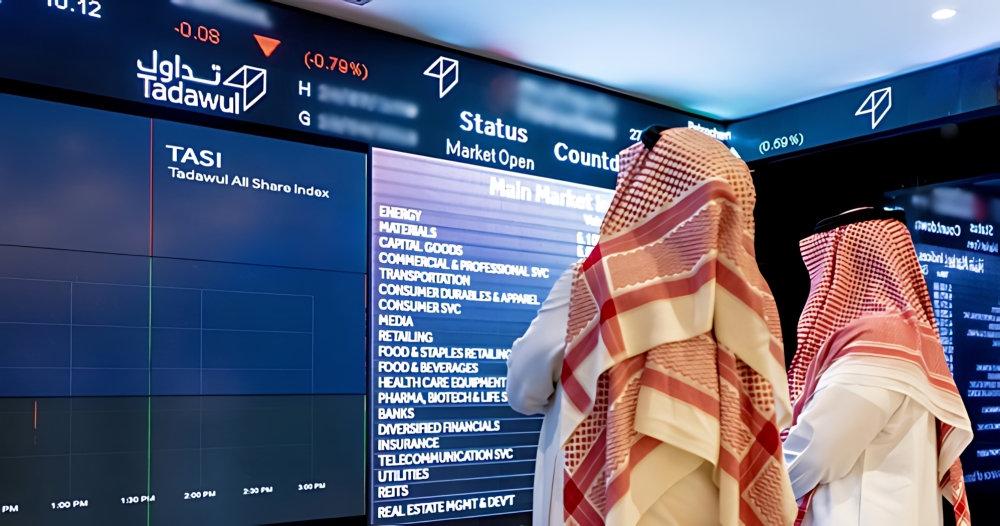
The Saudi Stock Exchange's main index (TASI) recorded a notable decline at the start of trading on Monday, falling by nearly 1% to settle at 11,057 points. Trading volume in the first few hours reached approximately 492 million riyals, with nearly 21 million shares traded, reflecting a cautious sentiment among investors at the start of the week. The total market capitalization stood at 9.346 trillion riyals.
Market performance analysis and key sectors
Data from the Saudi Stock Exchange (Tadawul) showed a predominantly red trading screen, with 230 companies experiencing a decline in share price, compared to only 25 companies seeing an increase out of a total of 268 companies listed on the main market. This widespread decline indicates selling pressure across most sectors. Among the top gainers in early trading were companies such as Enaya, Bonyan REIT, Saudi Electric Industries, Derayah REIT, and Amana Insurance. Conversely, the list of the biggest losers was dominated by leading and heavily weighted companies in the market, including Amac, Gulf Training, Sumou, Etihad Etisalat, and Almarai.
General context of the Saudi financial market
This performance comes within the broader context of the Saudi stock market, which is the largest and most liquid in the Middle East and North Africa region. Tadawul plays a pivotal role in achieving the goals of Saudi Vision 2030, which aims to diversify the economy and attract foreign investment. In recent years, the Saudi market has witnessed significant structural developments, most notably its inclusion in global emerging market indices such as MSCI and FTSE Russell. This has increased foreign capital inflows, enhanced market depth and transparency, and made it more closely aligned with global markets.
Influencing factors and future expectations
The performance of the Tadawul All Share Index (TASI) is influenced by a range of local and international factors. Globally, oil prices remain the primary driver of market sentiment, given the Saudi economy's close ties to the energy sector and the significant weighting of Saudi Aramco in the index. Monetary policy decisions by major central banks, particularly the US Federal Reserve, also directly impact borrowing costs and global investor sentiment. Locally, markets are awaiting quarterly corporate earnings reports and any economic developments that could affect various sectors. Today's decline suggests that investors may be reassessing their positions amidst the prevailing uncertainty surrounding the global economy and growth prospects.
Performance of the parallel market “Growth”
On the parallel market, Nomu, dedicated to small and medium-sized enterprises (SMEs), the index opened at 23,745 points, with subdued trading volume reaching approximately one million riyals. Shares of eight companies rose, while two declined, out of a total of 125 listed companies, reflecting a mixed performance compared to the main market.