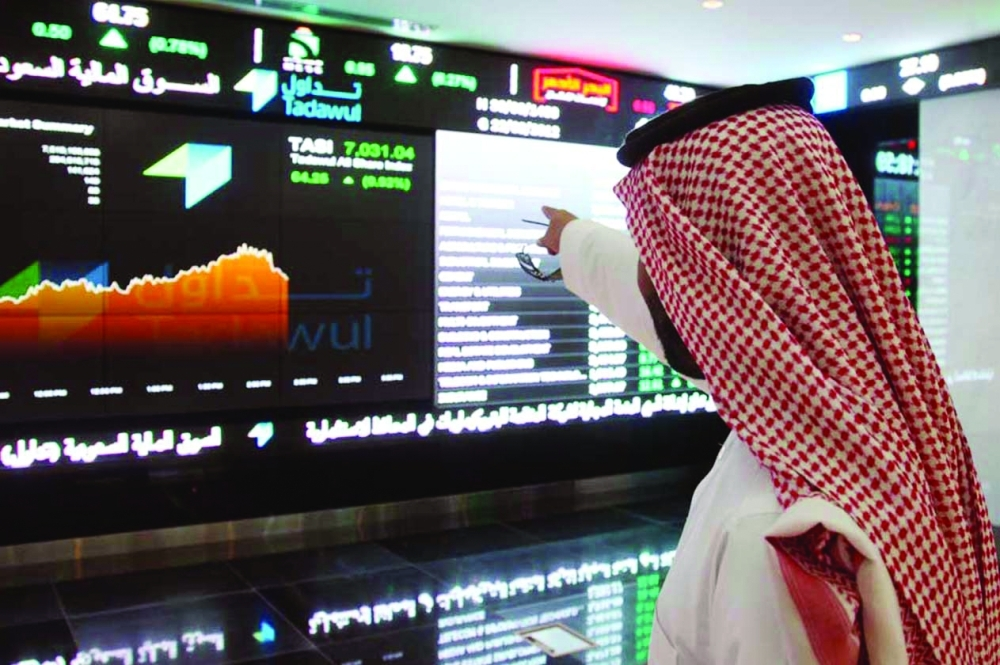
The Saudi Stock Exchange's main index (TASI) closed in the red on Wednesday, declining 0.5% to settle at 10,540 points. Selling pressure weighed on the index, with total trading value reaching approximately SAR 2.72 billion, reflecting a cautious and watchful stance among market participants.
According to data released by the Saudi Stock Exchange (Tadawul), the volume of shares traded during the session reached approximately 123.5 million shares, while the market capitalization of listed shares remained stable at SAR 8.839 trillion. This decline is within the context of normal market movements influenced by supply and demand factors, as well as global and local economic influences that impact investor decisions.
Market context and regional positioning
The movements of the Saudi stock market are of particular importance given its status as the largest financial market in the Middle East and North Africa region, and a true reflection of the performance of the Saudi economy, which is undergoing massive structural transformations within the framework of Vision 2030. The market is typically influenced by multiple factors, including global oil prices, interest rates, and the performance of leading sectors such as banking and petrochemicals. The liquidity level recorded today is considered an important indicator for monitoring the risk appetite of both institutions and individuals.
Company and sector performance
In terms of company performance, the trading screens were predominantly red, with 207 companies closing lower, indicating a widespread decline across most listed sectors. Conversely, only 51 companies out of the 266 listed on the general index managed to post gains.
The top performing stocks were led by MIS, Al Masar Al Shamel, Naqi, Al Yamamah Steel, and Al Jouf, which bucked the market trend and attracted buying liquidity. Conversely, selling pressure was heavier on the shares of Kayan Saudi, Makkah Construction, Tadawul Group, Saudi Cable, and Gulf Training, which topped the list of decliners.
Parallel market (growth)
As for the parallel market (Nomu), which serves as an alternative platform for companies seeking listing with more flexible criteria, it mirrored the downward trend of the main market. The Nomu index closed down 0.3% at 23,193 points. Trading volume in this market reached approximately SAR 33.8 million, with 2.5 million shares traded, while the market capitalization stood at SAR 42 million.
The parallel market session witnessed mixed performance, with the shares of 22 companies rising, while the shares of 40 companies declined out of a total of 126 listed companies, reflecting the high volatility that the shares of small and medium-sized companies may experience in this market.