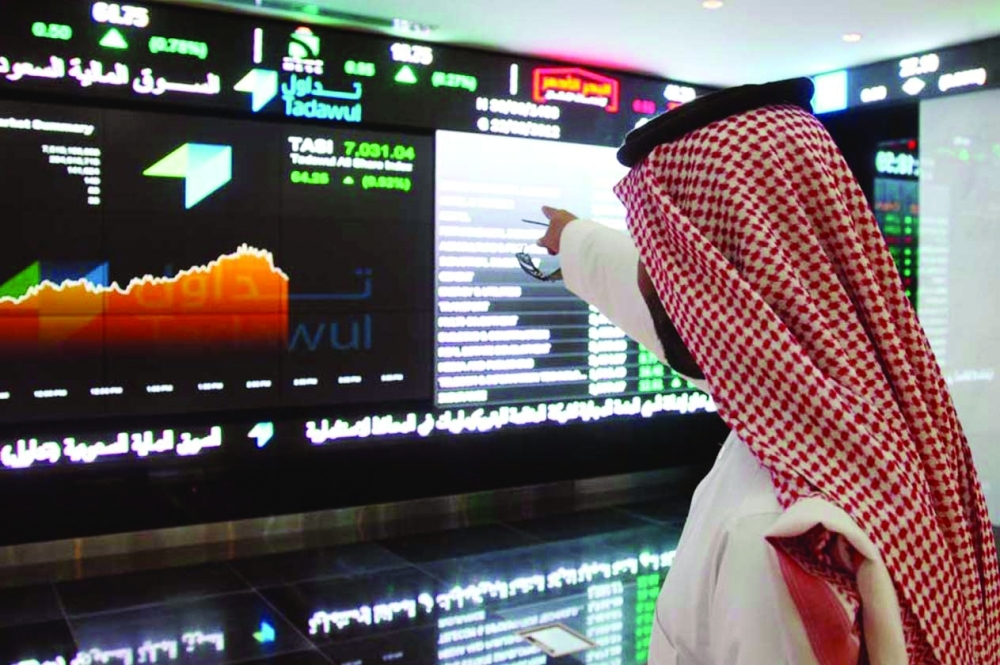
The Saudi Stock Exchange's main index (TASI) closed Tuesday's trading session with a notable decline, falling by nearly 1%, reflecting a volatile market performance. Total trading value reached approximately SAR 3.19 billion, a level that reflects investors' anticipation of future market trends.
According to data released by the Saudi Stock Exchange (Tadawul), the session saw trading volumes of 164.7 million shares, while the total market capitalization of listed shares remained stable at SAR 8.792 trillion. This performance comes at a time when global and local markets are anticipating several economic developments that often influence investment portfolio decisions.
Company and sector performance
The session witnessed widespread selling pressure across most sectors, with 237 companies closing lower, indicating a broad decline, compared to only 24 companies out of the 266 listed on the general index that saw their shares rise. The top gainers were SEDCO Capital REIT, Chubb, Raya, Al Yamamah Steel, and Tihama. Conversely, the worst performers were Al Masar Al Shamel, Raoum, Gulf Training, Naqi, and Gulf General.
Parallel market (growth)
In a related development, the parallel market (Nomu) was not immune to the decline, with its index closing down 1% at 23,040 points. Liquidity in the parallel market reached approximately SAR 18.7 million, with 2.83 million shares traded, for a total market capitalization of SAR 42 million. Of the 126 listed companies, 43 saw their market capitalization decrease, while 27 experienced increases.
The importance of the Saudi financial market and its regional standing
The movements of the Saudi stock market are of particular importance given its position as the largest financial market in the Middle East and North Africa region in terms of market capitalization and liquidity. The Saudi Stock Exchange (Tadawul) is a true reflection of the Saudi economy, the largest in the region, and an active member of global emerging market indices such as MSCI and FTSE Russell.
This daily performance comes within the context of the economic activity the Kingdom is witnessing under Vision 2030, which aims to diversify income sources and strengthen the role of the financial sector. The financial market plays a pivotal role in attracting foreign investment and providing financing channels for national companies, making monitoring its daily indicators vital for analysts and investors to assess the health of the macroeconomy and capital flows.