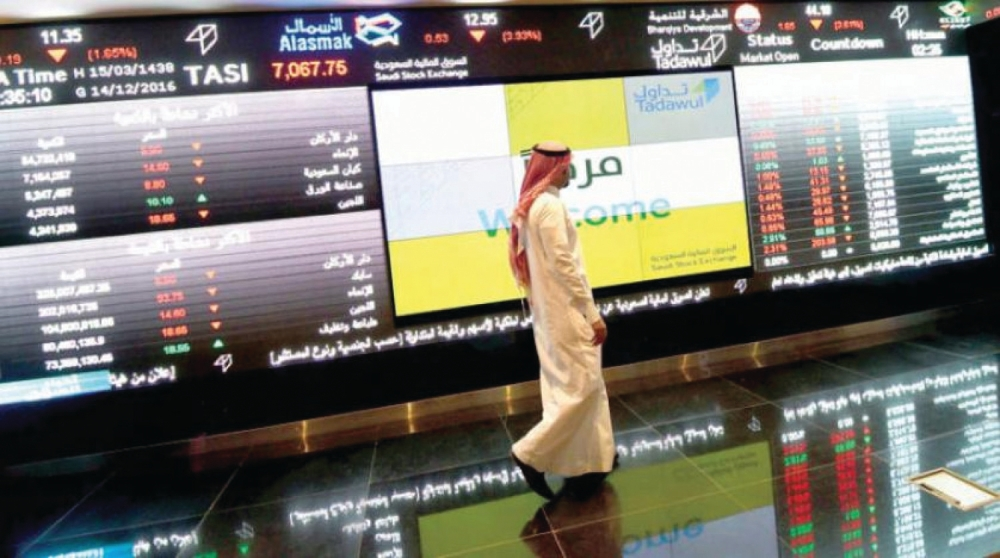
The Saudi stock market's main index (TASI) closed significantly lower today, with the general index declining by 185.05 points to settle at 10,364.03 points. Trading volume reached approximately SAR 2.5 billion, reflecting a cautious and watchful stance among market participants.
According to the Saudi Press Agency's daily economic bulletin, 170 million shares were traded across multiple transactions. Market data revealed a widening decline, with 237 companies experiencing a drop in their market capitalization, while only 20 companies managed to register gains, indicating selling pressure across most market sectors.
Details of the most active and influential companies
In terms of company performance, the shares of "Sadr," "Naqi," "Burgerizer," "Al-Kimiya," and "Sadr" topped the list of the biggest gainers. Conversely, the shares of "Etihad Al-Ahli," "UCIC," "Al-Taamir," "Al-Babtain," and "Al-Tatweer Al-Ghadaiya" were the biggest losers, with gains and losses ranging between 9.87% and 4.61%.
In terms of liquidity and trading activity, shares of Saudi Aramco, Al Rajhi Bank, stc, Alinma Bank, and Saudi Export Development Company (SADARAT) were the most actively traded by value, reflecting the significant weight of these leading companies in the overall market index. In terms of trading volume, SADARAT and Americana shares topped the list.
The importance of the Saudi financial market and its economic role
The movements of the Saudi stock market are of particular importance as it is the largest financial market in the Middle East and North Africa region in terms of market capitalization. The market plays a pivotal role in the Kingdom's Vision 2030, which aims to diversify income sources and attract foreign investment. The general index is typically influenced by macroeconomic factors, including fluctuations in global oil prices, interest rates, and the performance of vital sectors such as energy, petrochemicals, and banking.
Fluctuations in the index are considered a natural part of the cycles of financial markets, as it is affected by supply and demand factors and global economic indicators that cast a shadow on both emerging and developed markets.
Parallel market performance (growth)
In a related development, the parallel market (Nomu) was not immune to the decline, with its index closing down 147.19 points at 23,371.82 points. Trading volume on Nomu reached approximately SAR 20 million, with over 3 million shares traded. The parallel market serves as a vital platform for small and medium-sized enterprises (SMEs), offering diverse investment opportunities with a higher growth potential compared to the main market.