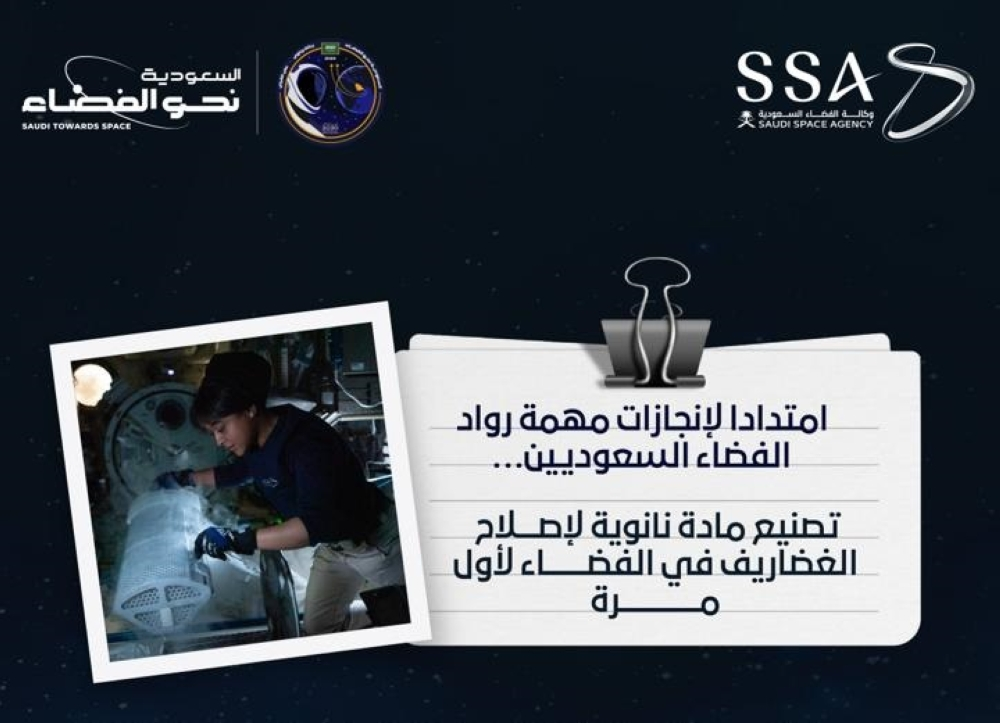
في خطوة تعكس التقدم المتسارع للمملكة العربية السعودية في مجالات العلوم والفضاء، أعلنت وكالة الفضاء السعودية عن تحقيق إنجاز علمي نوعي تمثل في تصنيع مادة نانوية مخصصة لإصلاح الغضاريف في بيئة الجاذبية الصغرى، وذلك ونشرت نتائجه في مجلة "نيتشر" (Nature) العريقة، التي تُعد واحدة من أبرز الدوريات العلمية على مستوى العالم.
سياق المهمة التاريخية SSA-HSF1
يأتي هذا الإنجاز كأحد الثمار المباشرة للمهمة التاريخية التي أطلقتها المملكة نحو الفضاء (SSA-HSF1) في مايو 2023، والتي شهدت إرسال رائدي الفضاء السعوديين ريانة برناوي وعلي القرني إلى محطة الفضاء الدولية. لم تكن هذه الرحلة مجرد زيارة عابرة، بل كانت مهمة علمية بحثية متكاملة تضمنت تنفيذ 14 تجربة علمية رائدة، بالتعاون مع وكالة ناسا وشركاء دوليين، ركزت في مجملها على خدمة البشرية وحماية كوكب الأرض، وتأتي ضمن استراتيجية المملكة لتعزيز مكانتها في قطاع الفضاء العالمي.
تفاصيل الإنجاز العلمي والطبي
أوضحت الوكالة أن البحث العلمي، الذي قاده فريق دولي بمشاركة العالم يوبينج تشين وماري آن سنو، ركز على تطوير مواد حيوية متقدمة لهندسة الأنسجة. وقد تولت رائدة الفضاء السعودية، ريانة برناوي، الجانب التنفيذي للتجربة على متن محطة الفضاء الدولية، حيث قامت بجمع البيانات ومراقبة تفاعلات المواد في بيئة الجاذبية الصغرى.
وتكمن أهمية إجراء هذه التجارب في الفضاء في أن انعدام الجاذبية يزيل تأثيرات الترسيب والحمل الحراري التي تحدث على الأرض، مما يسمح للبلورات والمواد النانوية بالنمو بشكل أكثر انتظاماً ودقة. وقد أظهرت النتائج المنشورة تفوقاً ملحوظاً في جودة ودقة تصنيع المادة النانوية في الفضاء مقارنة بمثيلاتها المصنعة في المختبرات الأرضية.
أثر الإنجاز محلياً وعالمياً
يحمل هذا الاكتشاف أبعاداً استراتيجية وطبية هامة:
- على الصعيد الطبي: يفتح هذا الإنجاز الباب واسعاً أمام تطوير علاجات متقدمة لإصلاح الغضاريف المتضررة، وهي مشكلة طبية شائعة ومعقدة العلاج. كما يدعم التوجهات المستقبلية نحو "الطب التجديدي" وتصنيع الأنسجة البشرية، مما قد يسهم مستقبلاً في حل أزمات نقص الأعضاء المتاحة للزراعة.
- على الصعيد الوطني: يعزز هذا النجاح من تحقيق مستهدفات رؤية المملكة 2030، التي تولي اهتماماً كبيراً بالبحث والابتكار، وتحويل قطاع الفضاء من مجرد قطاع استكشافي إلى قطاع منتج للمعرفة والحلول التطبيقية التي تخدم جودة الحياة.
تصريحات وتطلعات مستقبلية
وفي تعليقها على هذا الحدث، قالت رائدة الفضاء ريانة برناوي: "تنفيذ التجربة في الفضاء أتاح تصنيع مادة نانوية متقدمة، وإنتاج بيانات موثوقة تدعم تطوير أبحاث علمية تسهم في تحسين حياة الإنسان وخدمة البشرية".
وأكدت وكالة الفضاء السعودية أن هذه المخرجات تعكس الدور التكاملي والفعال بين العلماء على الأرض ورواد الفضاء في المدار، مشيرة إلى أن المملكة ماضية في تعظيم العائد العلمي لرحلات الاستكشاف المأهولة، لترسيخ دورها كشريك فاعل في المجتمع العلمي الدولي.