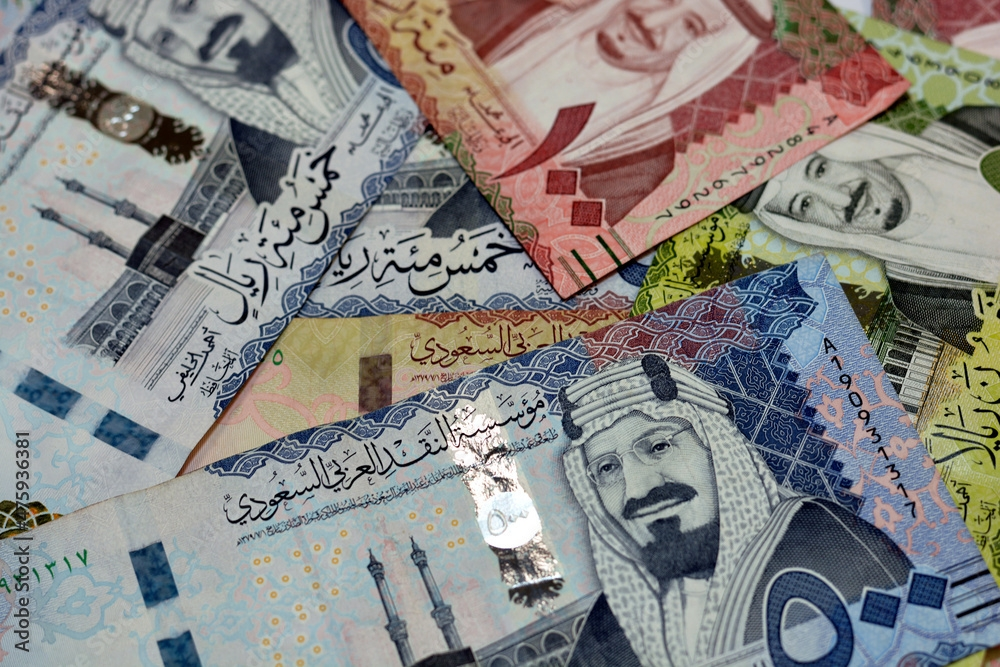
The financial and banking markets witnessed significant developments at the close of trading, with the Saudi riyal its steady rise against the Egyptian pound. The exchange rate surpassed the 14-pound mark in several banks operating in the sector for the first time since the beginning of the year. This increase follows a series of notable rises that began in mid-February, bringing the total increase to approximately 10% by the end of the trading week ending March 12.
The economic context of the movements in the price of the riyal against the Egyptian pound
The roots of these rapid exchange rate fluctuations lie in the monetary policies and recent structural reforms adopted by the Central Bank of Egypt. The country has moved towards a flexible exchange rate system with the aim of eliminating the parallel market (black market) and unifying the official exchange rate. Historically, the Egyptian economy has been closely linked to foreign currency inflows. Saudi Arabia is one of Egypt's most important and largest trading partners in the region, as well as the primary destination for Egyptian workers abroad. This strategic shift towards a flexible exchange rate has naturally led to the repricing of all foreign and Arab currencies to reflect their true and fair value based on actual supply and demand mechanisms in the official market.
Economic repercussions and exchange rate effects regionally and locally
This record increase carries significant economic implications and has varying effects across several levels. Domestically, this change directly and immediately impacts the cost of performing Umrah and Hajj pilgrimages for Egyptian citizens, given that these rituals are directly linked to spending in Saudi currency. Conversely, this increase has a positive aspect: it encourages and increases remittances from Egyptians working in Saudi Arabia through official channels, thus contributing to the revitalization and support of the country's foreign currency reserves. Regionally, the stability of financial transactions within the official banking sector enhances investor confidence and supports the dynamics of trade and joint investment flows between Cairo and Riyadh, two of the largest economies in the Arab world.
Details of Saudi Riyal exchange rates in Egyptian banks
The following is a comprehensive and detailed review of Saudi currency exchange rates in the most prominent public and private banks operating in Egypt at the end of trading:
Prices at the Central Bank and government banks
The official exchange rate at the Central Bank of Egypt was recorded at approximately 13.96 Egyptian pounds for buying and 14.00 Egyptian pounds for selling, reflecting the general market average. At the two largest state-owned banks, the National Bank of Egypt and Banque Misr, the rate remained stable at 13.92 Egyptian pounds for buying and 13.99 Egyptian pounds for selling.
Prices in private and Islamic banks
In the private sector, Commercial International Bank (CIB) recorded a buying price of EGP 13.94 and a selling price of EGP 13.99. At Bank of Alexandria, the price was EGP 13.92 for buying and EGP 13.96 for selling. Suez Canal Bank set its price at EGP 13.91 for buying and EGP 14.00 for selling.
Among Islamic banks, Faisal Islamic Bank recorded a buying price of 13.91 Egyptian pounds and a selling price of 13.98 Egyptian pounds. Abu Dhabi Islamic Bank topped the list of banks offering the highest price, at 13.99 Egyptian pounds for buying and 14.02 Egyptian pounds for selling. Finally, the National Bank of Kuwait recorded a buying price of 13.81 Egyptian pounds and a selling price of 14.12 Egyptian pounds, making it the bank with the highest selling price among the aforementioned banks.