A record response time reflects the efficiency of ambulance services
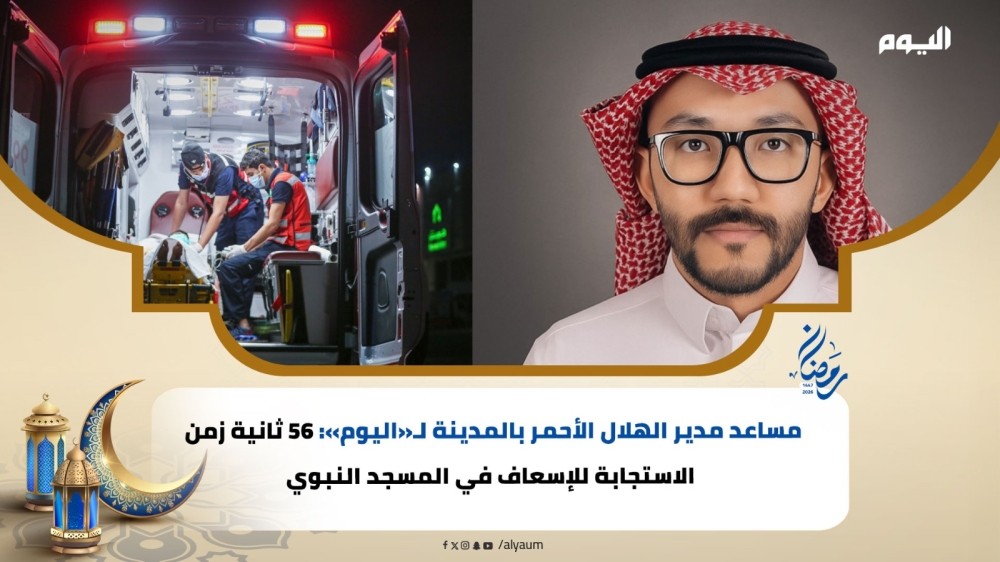
Omar Hashim Niaz, Assistant Director General of the Saudi Red Crescent Authority's Madinah branch for ambulance operations, affirmed that the Authority operates within an integrated system aimed at protecting lives and enhancing the safety of visitors to the Prophet's Mosque. In an exclusive interview, Niaz revealed a record response time of just 56 seconds for an emergency incident within the mosque, an indicator reflecting the efficiency of pre-planning, the readiness of ambulance teams, and coordination with relevant authorities, especially during peak seasons such as the holy month of Ramadan.
General context: Ongoing efforts to serve the pilgrims
The Kingdom of Saudi Arabia, as the Custodian of the Two Holy Mosques, places paramount importance on ensuring the safety and well-being of the millions of Muslims who flock to Mecca and Medina annually to perform Hajj, Umrah, and visit the holy sites. Health and ambulance services are an integral part of this comprehensive system. The Saudi Red Crescent Authority serves as the first line of defense in responding to medical emergencies, working around the clock to develop its operational plans to accommodate the high population density, utilizing the latest technologies and global best practices in emergency medicine and crowd management.
The importance and impact of the event
Achieving a response time of less than one minute in a complex and crowded environment like the Prophet's Mosque is not just a statistic; it is a testament to a high level of professionalism and coordination. Locally , this achievement reinforces the confidence of citizens and visitors in the ability of government agencies to handle any emergency efficiently and effectively. Regionally and internationally , it sends a reassuring message to the Muslim world that pilgrims receive the highest levels of emergency healthcare, further solidifying the Kingdom's position as a safe and reliable destination for religious pilgrimages, which aligns with the goals of Saudi Vision 2030 aimed at enhancing the Hajj and Umrah experience.
Details of the operational plan for the month of Ramadan
Niaz explained that the operational plan for Ramadan focuses on reducing response times by enhancing proactive deployment within the Prophet's Mosque and the surrounding central area. This is achieved through:
- Strategic distribution: Dividing Medina into 10 ambulance sectors to ensure comprehensive coverage, with a focus on the Prophet’s Mosque and Al-Hijrah sectors due to the high density.
- Rapid intervention teams: Using teams on foot, motorcycles and specialized electric vehicles to quickly reach cases within crowded areas that are difficult for traditional ambulances to access.
- Qualified human resources: The plan is implemented by 97 ambulance units staffed by more than 474 qualified paramedics, supported by more than 1,500 male and female volunteers who contribute to field support, health awareness and crowd management.
Readiness during peak times
Operational readiness is raised to its highest levels during peak times, such as Taraweeh and Tahajjud prayers, the last ten nights of Ramadan, the 27th night of Ramadan, the completion of the Quran recitation, and Eid prayers. This is achieved by increasing the number of field teams and deployment points within the Haram and its courtyards, and activating flexible deployment plans managed in real time from the operations room to ensure that ambulance teams are dispatched to the nearest location of the incident as quickly as possible.