A pioneering Saudi innovation to combat climate change
In a move reflecting Saudi Arabia's leadership in environmental innovation, King Abdullah University of Science and Technology (KAUST) continues to solidify its position as a key scientific driver in addressing climate change. This is being achieved through the development of advanced technological solutions aimed at efficiently reducing industrial emissions, most notably a portable carbon capture technology that represents a significant breakthrough in this vital field.
Global context and Saudi green initiatives
This achievement comes at a critical time as the world faces increasing climate challenges, with carbon capture, utilization, and storage (CCUS) technologies becoming increasingly important for achieving the goals of the Paris Climate Agreement. KAUST’s efforts align directly with ambitious national initiatives such as Saudi Vision 2030 and the Saudi Green Initiative, which aim to diversify the economy away from oil, lead the next green era, and achieve net-zero carbon neutrality by 2060. This technology is a practical application of the Kingdom’s circular carbon economy concept.
The technology's mechanism of operation and its unique design
Since 2020, the university has been leading advanced research in cryogenic carbon capture (CCC) technology, which has seen remarkable progress, enabling it to move from research laboratories to field applications. Dr. Sai Shrinivas Sridhara, the initiative's technical director at KAUST, explained that the research team developed an intelligent concept for portable capture units, designed as modular cabins resembling Lego bricks, making them easy to stack and install on ships or in industrial facilities.
These innovative units allow for the simultaneous capture of carbon dioxide and sulfur dioxide during weeks-long voyages, with final treatment and purification processes completed on land. This approach offers a dual benefit: it reduces the space required for onboard recovery systems and eliminates the need for traditional chemical scrubbers used on ships powered by heavy fuel oil, the most commonly used fuel in maritime transport.
Expected impact and importance of the project
Domestically, the project supports the Kingdom's goals of reducing its carbon footprint and developing a knowledge-based economy. Regionally, this innovation positions Saudi Arabia at the forefront of green technology development, reinforcing its status as a regional hub for sustainability. Internationally, the technology offers a promising solution for the maritime transport sector, which contributes approximately 3% of global greenhouse gas emissions and faces increasing pressure from the International Maritime Organization (IMO) to adopt sustainable solutions.
The project has garnered increasing international attention, particularly after KAUST's participation in global summits such as the "Enabling the Age of Intelligence 2025" summit in Kuala Lumpur. In November 2024, the university, in partnership with the Saudi Electricity Company, launched a groundbreaking research project—the first of its kind globally—to apply a freezing technology capable of simultaneously capturing multiple pollutants and greenhouse gases.
From research to market: Promising business readiness
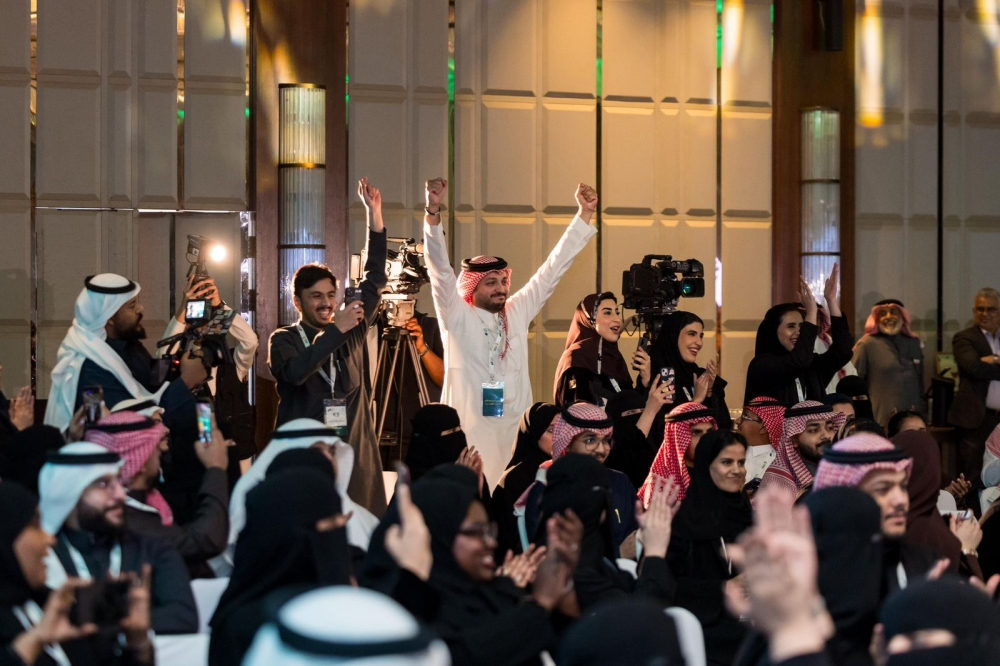
The project reached Level 6 on the Technology Maturity Scale (TRL 6) at the Rabigh Power Plant, enabling the acquisition of valuable operational experience that contributed to the development of the technology and its transformation into a comprehensive solution. The technology is now ready for local commercial deployment, and the next step is to demonstrate full commercial viability through a pilot system capable of capturing approximately 30 tons of carbon dioxide daily at a power generation plant. KAUST affirms that its strategy extends beyond scientific innovation to include supporting startups and enhancing the Kingdom's position in environmental sustainability, which resulted in the initiative receiving two prestigious awards in 2025.