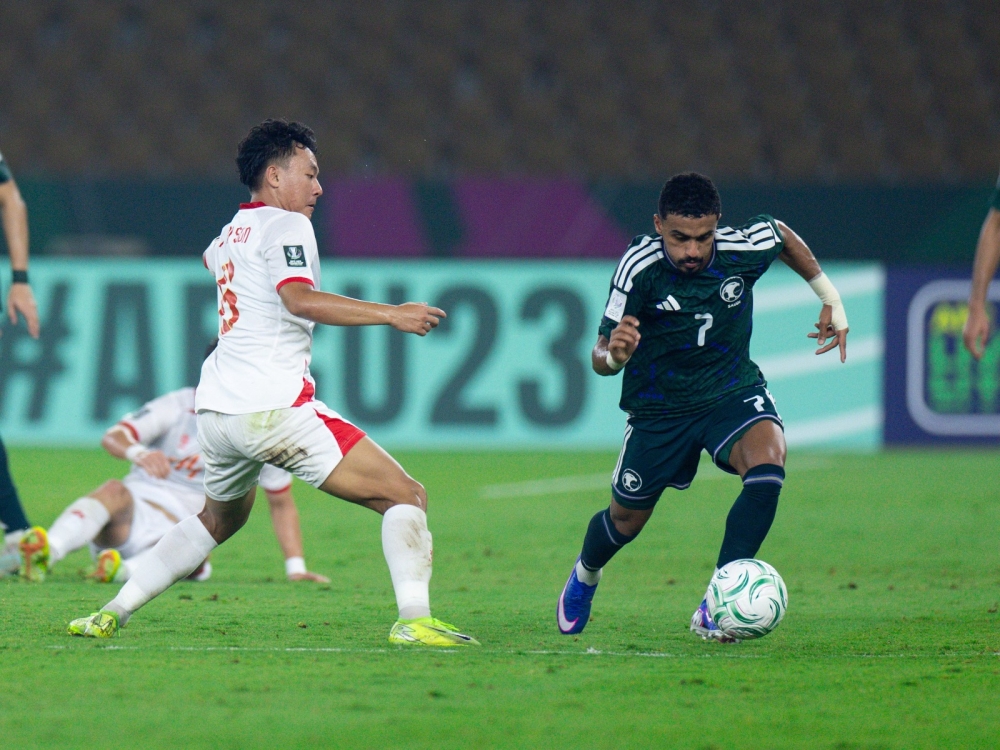
In an unexpected surprise for Saudi sports fans, the Saudi Olympic team bid farewell to the AFC U-23 Championship early, after suffering a bitter defeat against their Vietnamese counterparts by a score of one goal to nil, in the decisive match that brought them together on Monday evening at Prince Abdullah Al Faisal Sports City Stadium in Jeddah, as part of the final round of Group A.
The only goal of the match, which eliminated Saudi Arabia, came courtesy of Vietnamese player Nguyen Dinh Pac, who found the net in the 64th minute, ending the Saudi team's hopes in this edition of the tournament. With this result, the Vietnamese national team confirmed its complete dominance in the group, qualifying for the next round with a perfect record after winning all three of its matches, demonstrating the remarkable development of Vietnamese football at the youth level in recent years.
In the same group, Jordan joined Vietnam in the next round after securing a 1-0 victory against Kyrgyzstan, bringing their points tally to six and guaranteeing them second place in the group and the second qualifying spot. Meanwhile, Saudi Arabia experienced a dramatic run in the tournament. They began with a promising 1-0 win against Kyrgyzstan, but their campaign became complicated with a 2-3 loss to Jordan, and a final defeat against Vietnam sealed their fate.
This exit is particularly significant and impactful, given that the Saudi Olympic team is the primary feeder for the senior national team, and hopes are always pinned on them to compete for continental titles, not just participate, especially since the tournament was held on home soil in Jeddah. This elimination underscores the urgent need to review the team's tactics and identify the errors that led to dropped points in crucial matches, particularly as Saudi football is experiencing a massive sporting movement and unprecedented support for the sports sector within the framework of the Kingdom's Vision 2030, which aims to position national teams among the world's elite.
This event also highlights the rapid development of East Asian teams, specifically Vietnam, which has become a force to be reckoned with in continental age-group championships, posing new challenges for Arab and Gulf teams to maintain their gains and develop their technical systems to keep pace with the rising level of competition in the Asian continent.