Strict standards to enhance the quality of education
The National Institute for Professional Development in Education in Saudi Arabia has announced the launch of a new regulatory framework aimed at enhancing the quality and effectiveness of workshops offered to educators. This step is part of a comprehensive strategy to ensure that professional development activities are effective and impactful. The institute has stipulated that all workshops must be at least two hours long and will implement a rigorous review and accreditation process to guarantee that they achieve their intended objectives.
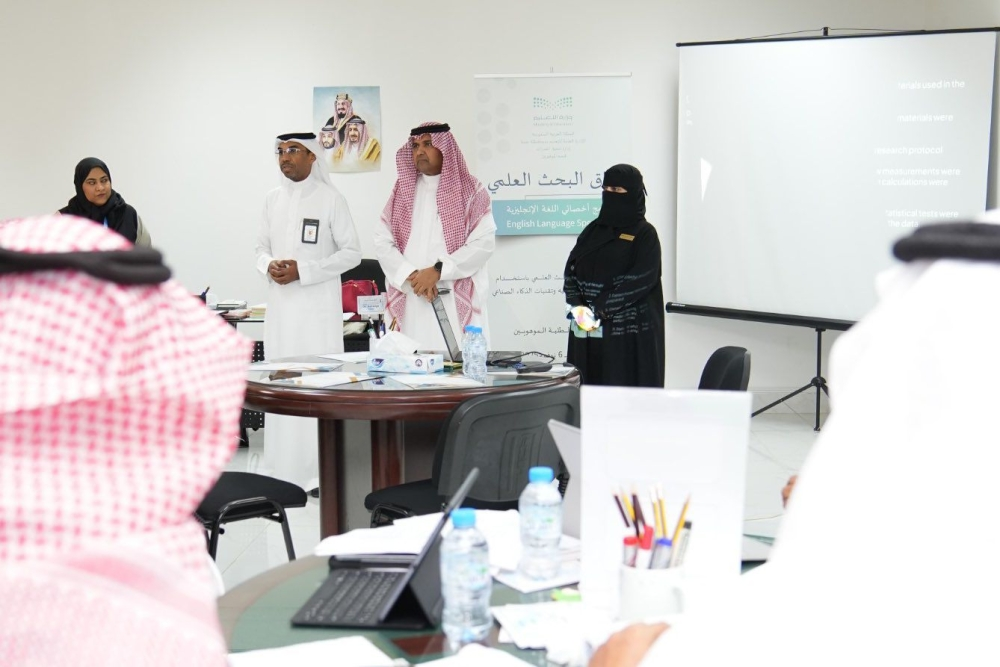
The guide defines a workshop as an interactive, hands-on activity that brings together individuals with shared interests or specializations, with the aim of enabling them to acquire specific skills and exchange experiences. A workshop typically includes discussion sessions, practical activities, and knowledge presentations, facilitated by a qualified trainer to foster constructive interaction among participants, and usually concludes with the development of action plans or practical recommendations.
General context: Investment in human capital
These new regulations fall within the broader context of the Kingdom's efforts to achieve the goals of Vision 2030 , which places human capital development and improving the quality of education at the heart of its priorities. Since its establishment, the National Institute for Professional Development in Education has been working to unify and organize efforts to train teachers and educational leaders, moving them from fragmented initiatives to an integrated and sustainable system that ensures all those working in the education sector have access to high-quality professional development opportunities. These new standards are a crucial step to ensure that investment in teacher training translates into tangible improvements in teaching practices within classrooms.
The importance of the event and its expected impact
At the local level, these standards are expected to revolutionize the way workshops are planned and delivered. Instead of focusing on quantity, the emphasis will shift to quality and impact. The minimum workshop duration (two hours) will ensure ample time for in-depth content and skill application, rather than short, ineffective sessions. Furthermore, the rigorous accreditation process will eliminate substandard programs and boost teachers' confidence in the training activities offered to them.
Regionally, this step positions the Kingdom among the leading countries in teacher professional development, offering a model that can be adopted by other education systems in the region seeking to develop their teaching staff. Internationally, these measures align with global best practices that emphasize the importance of continuous, standards-based training to enhance teacher competency and improve student learning outcomes.
Details of the new accreditation standards
The institute revealed a set of regulatory and professional requirements for accrediting workshops, to ensure their quality and effectiveness. These requirements include:
- Justification for implementation: Clear justifications must be provided for implementing the workshop, specifying its objectives and the expected benefits for the participants.
- Specialization and field: The workshop topic should be related to the field of work of the implementing body and within the educational and pedagogical fields.
- Duration: Adherence to the minimum workshop duration of two hours.
- Intellectual property protection: Compliance with the copyright protection system and the principles of using generative artificial intelligence.
A precise evaluation mechanism to ensure quality
The institute established precise relative weights for evaluating workshop plans submitted for accreditation, distributed across eight main criteria:
- The title (5%): must accurately reflect the content of the workshop.
- Objectives (5%): They must be clear, measurable, and relevant to the educational field.
- Implementation plan (15%): includes identifying the target group, organizing activities, and identifying the necessary resources.
- Content (20%): It must be scientifically and linguistically accurate, relevant to the objectives, and appropriate for the available time.
- Activities (20%): They should be interactive and encourage active participation.
- Evaluation (10%): Appropriate tools must be provided to measure the extent to which the workshop objectives have been achieved.
- Outputs (15%): There should be a clear mechanism for documenting the workshop's outputs and recommendations.
- References (10%): All references used must be documented in an APA style.
This precise mechanism demonstrates the institute’s commitment to ensuring the highest levels of quality, transforming workshops from mere routine events into rich and impactful learning experiences that directly contribute to developing teacher performance and improving students’ learning journey in the Kingdom.