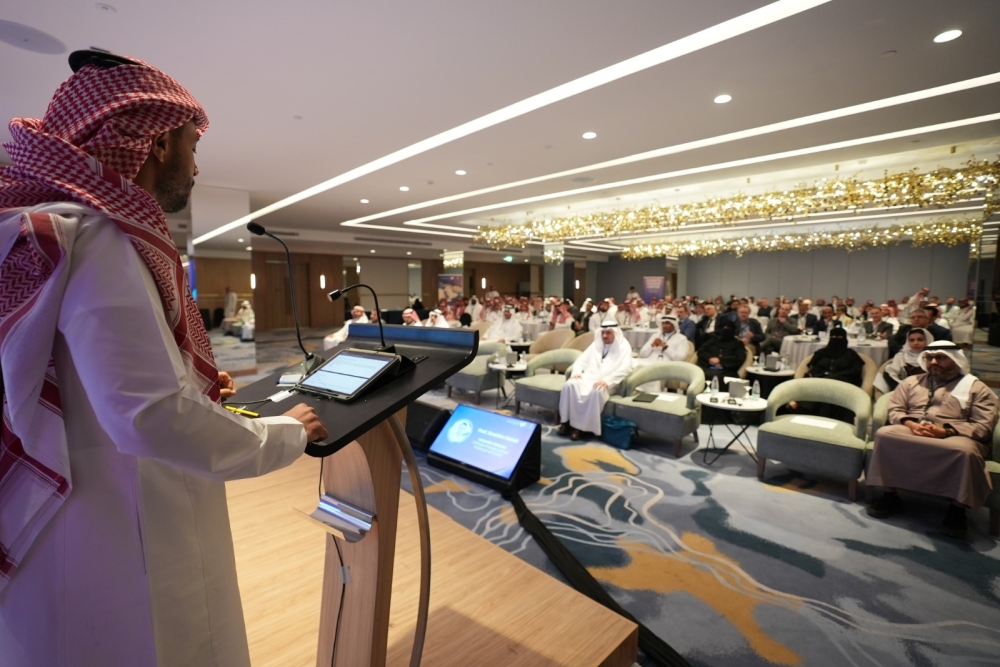
The CEO of the National Center for Meteorology in Saudi Arabia, Dr. Ayman bin Salem Ghulam, announced a significant scientific achievement: the completion of 30 specialized scientific studies through the Regional Center for Climate Change. The most prominent of these achievements is the development of a numerical climate model with an accuracy of up to 4 kilometers, a step that represents a qualitative leap in the Kingdom's ability to understand and analyze climatic phenomena with unprecedented detail.
Strategic background within the framework of the Kingdom's Vision 2030
This scientific advancement comes within the context of the comprehensive national transformation underway in the Kingdom as part of Vision 2030 , which prioritizes environmental sustainability and addressing the challenges of climate change. With the launch of ambitious initiatives such as “Green Saudi Arabia” and “Green Middle East,” the urgent need has emerged for a scientific and research infrastructure capable of providing accurate data to support decision-making and guide environmental investments. The establishment of the Regional Center for Climate Change, hosted within a world-class research environment like King Abdullah University of Science and Technology (KAUST), represents a direct response to this need, providing researchers with the advanced computing capabilities and support necessary for conducting complex simulations and modeling.
The importance and impact of high-resolution climate modeling
The greatest significance of achieving 4-kilometer accuracy lies in the models' ability to simulate weather and climate phenomena on a local scale, something that lower-resolution global models cannot do. This level of detail allows for a deeper understanding of the potential impacts of climate change on specific regions within the Kingdom, whether coastal cities, agricultural areas, or mountain ranges. Dr. Ghulam explained that this achievement would not have been possible without the generous support the initiative received from the wise leadership, which included providing financial resources, qualified human resources, and advanced technological infrastructure.
Key studies to address climate challenges
The first phase of the center's work included a set of qualitative studies addressing the most prominent climate challenges in the region, including:
- Heavy rainfall: A study of extreme rainfall scenarios and ways to mitigate their risks, supporting flood management plans and protecting urban infrastructure.
- Drought scenarios: Analyzing potential drought hotspots and their impacts on water resources and food security, and providing scientific insights for adaptation plans and resource management.
- Afforestation impact: Assessing the climatic impact of large-scale afforestation initiatives on local temperatures, humidity, and rainfall patterns.
- Sea level rise: Modeling potential impacts on the Kingdom’s coasts on the Red Sea and the Arabian Gulf, to support coastal protection plans.
- El Niño and La Niña phenomena: A detailed and accurate study of the impact of these global phenomena on the Kingdom’s climate.
Local, regional and international impact
Domestically, the findings of these studies will enhance the Kingdom's preparedness for extreme weather events and support strategic planning in vital sectors such as energy, water, agriculture, and urban planning. Regionally, this achievement reinforces the Kingdom's position as a leading center of climate knowledge in the Middle East, opening avenues for cooperation with neighboring countries facing similar climate challenges. Internationally, this high-resolution data offers a valuable contribution to the global scientific community, filling a knowledge gap in understanding climate dynamics in the Arabian Peninsula. Ghulam emphasized that the achievements of this first phase represent a solid scientific foundation for moving to more advanced stages and strengthen the center's role as a national knowledge hub supporting climate decision-making.