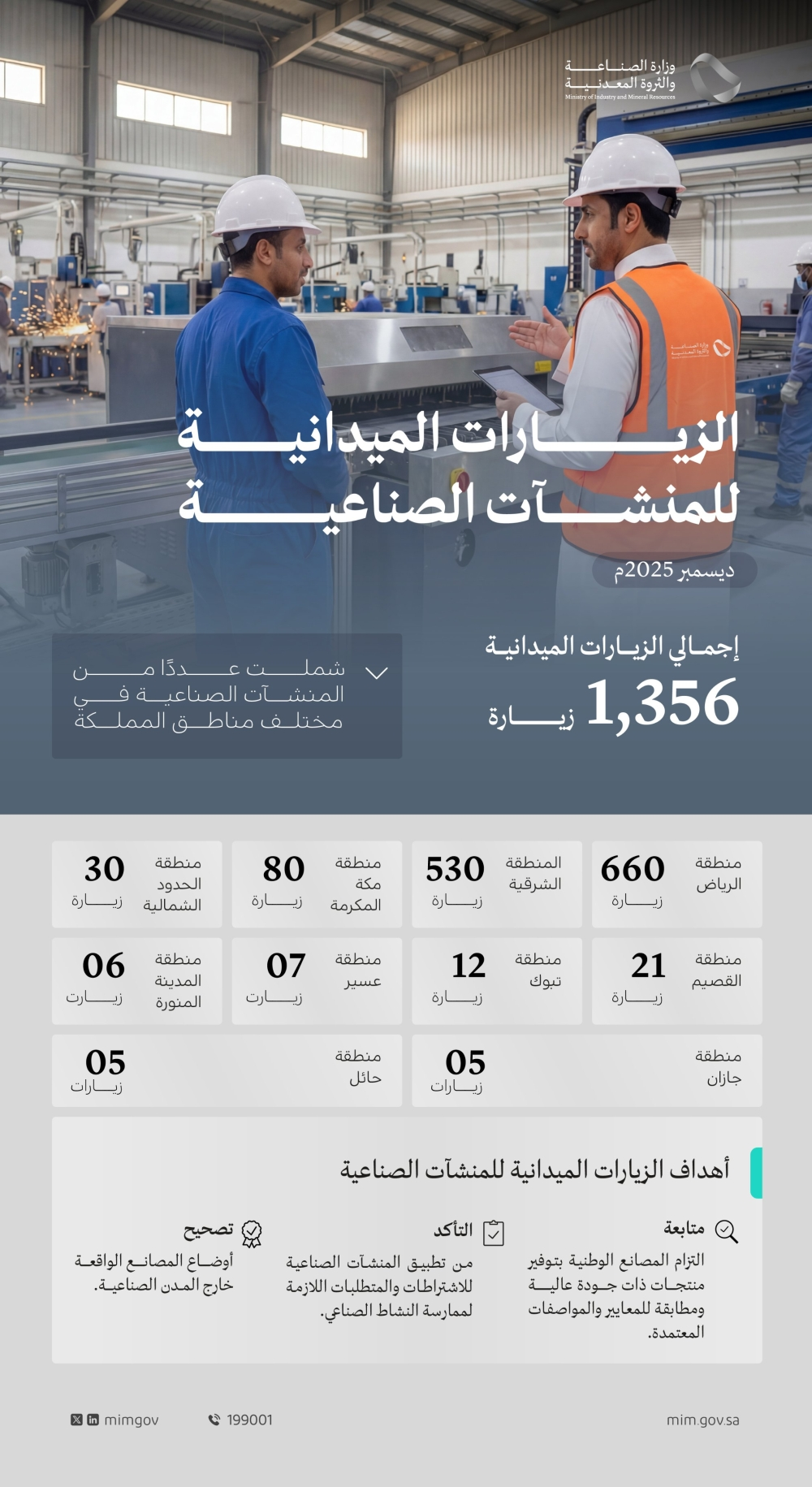
In a move reflecting the Kingdom of Saudi Arabia’s commitment to enhancing the industrial investment environment and ensuring compliance with the highest standards, the Ministry of Industry and Mineral Resources, through the Industrial Services and Compliance Agency, conducted 1,356 intensive field visits to industrial facilities across the Kingdom during December 2023. These inspection tours aimed to ensure that factories comply with the requirements and conditions necessary for practicing industrial activity, and to take regulatory measures against violating facilities, thereby ensuring fair competition and enhancing sector governance.
The general context within Vision 2030
These regulatory efforts are part of a broader framework aligned with the objectives of Saudi Vision 2030, which aims to diversify the Kingdom's economic base and reduce its reliance on oil. The industrial sector is a cornerstone of this vision, as the Kingdom aspires to become a leading industrial power and a global logistics hub. By strengthening oversight and ensuring compliance with regulations, the Ministry is working to build a robust and sustainable industrial sector, capable of competing globally and attracting foreign direct investment, thereby contributing to economic growth and creating new job opportunities for Saudi citizens.
Distribution of visits and their strategic importance
The Ministry's official spokesperson, Jarrah bin Mohammed Al-Jarrah, explained that the visits covered all regions of the Kingdom, with a particular focus on major industrial centers. The Riyadh region topped the list with 660 visits, followed by the Eastern Province with 530, reflecting the industrial weight of these two regions. The tours also included 80 visits in the Makkah region, 30 in the Northern Borders region, and 21 in Qassim, in addition to visits in Tabuk, Asir, Madinah, Jazan, and Hail. This geographical distribution ensures the uniform application of standards throughout the country.
Expected impact on the national economy
These field visits have a multifaceted positive impact. Locally, they contribute to raising the quality of national products, enhancing consumer confidence, and supporting the “Made in Saudi Arabia” brand. They also ensure a safe and healthy working environment for factory workers. Regionally and internationally, a well-regulated industrial sector committed to global standards strengthens the competitive reputation of Saudi products in export markets and makes the Kingdom a more attractive investment destination for international investors seeking a clear and stable regulatory environment.
Continuity of oversight and licensing requirements
The Minister of Industry and Mineral Resources affirmed that the Ministry will continue its periodic inspection campaigns to ensure ongoing compliance and rectify the situations of non-compliant factories, particularly those located outside approved industrial cities. It is worth noting that the Ministry requires all industrial facilities to obtain a package of essential licenses before commencing operations, including industrial licenses, environmental permits, location permits, and safety licenses. The Ministry also imposes additional requirements on sensitive sectors such as the food and pharmaceutical industries, which necessitate approval from the Saudi Food and Drug Authority, in addition to quality conformity certificates from the Saudi Standards, Metrology and Quality Organization (SASO) for products subject to its technical regulations.