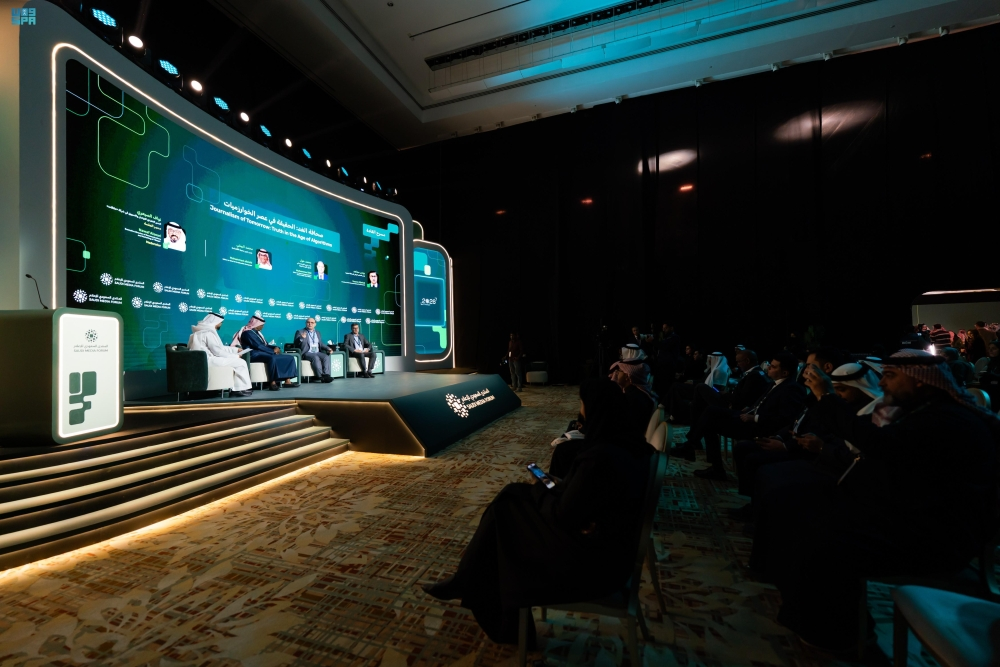
In the heart of the Saudi capital, Riyadh, the 2024 Saudi Media Forum a select group of experts and specialists to discuss one of the most pressing issues of the digital age, in a pivotal dialogue session entitled “Journalism of Tomorrow: Truth in the Age of Algorithms .” The session aimed to explore the future of journalism in light of the increasing dominance of modern technologies, particularly artificial intelligence and algorithms, which have become the backbone of news content creation and distribution.
Background and importance of the Saudi Media Forum
The Saudi Media Forum, organized by the Saudi Journalists Association, is a leading platform at both the local and regional levels. It was launched as an annual gathering that brings together thought leaders, media professionals, and experts to keep pace with the rapid transformations in the sector. The forum's significance stems from its alignment with the goals of Saudi Vision 2030 , which aims to develop a vibrant and influential media sector capable of competing globally. Since its inception, the forum has been committed to addressing the fundamental issues facing the media, from digital transformation to the sustainability of media institutions and the impact of emerging technologies.
Challenges and opportunities of algorithmic journalism
The session was moderated by journalist Nawaf Al-Sayari, and featured Mohammed Al-Bishi, Mohammed Zahid Gul, and Younes Mujahid, who presented diverse and insightful perspectives on the future of media. Mohammed Al-Bishi that "tomorrow's journalism" is inextricably linked to technology, noting that economic newsrooms, which rely heavily on accurate figures and data, face a double challenge. He explained that while algorithms contribute to accelerating the delivery of content to the target audience, they have also increased the risks of journalistic work by facilitating the unprecedented spread of fake and misleading news.
Community awareness and media governance
For his part, Mohammed Zahid Gul an optimistic perspective, pointing to the growing public awareness and ability to distinguish between misleading and AI-generated content. He added that the same technological tools used to create fake information can also be used to detect it, creating a technological race between creators of misleading content and institutions striving to maintain credibility. Similarly, Younes Mjahed emphasized the responsibility of media institutions, calling for clear editorial policies and effective governance to manage their interaction with algorithms. He stressed that understanding the "philosophy" of these algorithms and how they operate is no longer a luxury, but a professional necessity for both journalists and media organizations.
Local and regional impact of the debate
These discussions come at a crucial time, as the Arab world undergoes a profound digital transformation, accompanied by growing challenges related to digital sovereignty and credible content. The Saudi Media Forum is bringing these issues to the forefront of regional dialogue, reinforcing the Kingdom's role as a thought leader in the development of Arab media. Adopting clear strategies for engaging with artificial intelligence not only ensures the survival of media institutions but also enhances their ability to deliver accurate and impactful content, maintaining public trust, which is the cornerstone of any successful media operation.