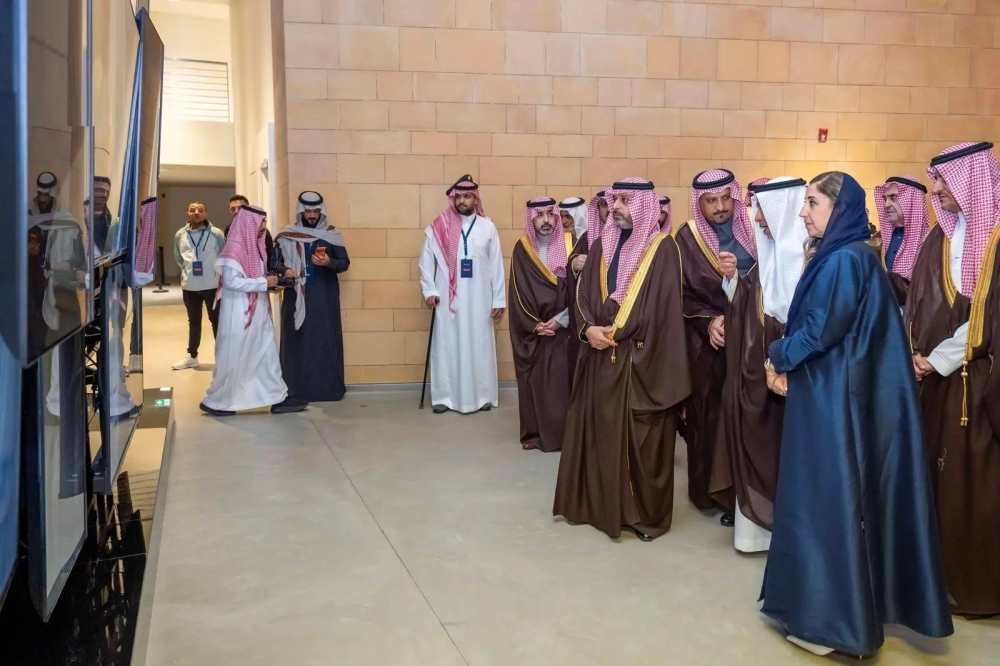
In a strategic move aimed at integrating cultural life into the fabric of Saudi cities, the Ministry of Culture, under the patronage of His Highness Prince Badr bin Abdullah bin Farhan, Minister of Culture, “Culture and Arts in the Urban Landscape” . The launch ceremony was held on Monday at the Diriyah Center for Future Arts, in the presence of a number of officials, including the Deputy Minister of Culture, Mr. Hamed bin Mohammed Fayez, and the Deputy Minister of Municipal and Rural Affairs and Housing, Engineer Ehab Ghazi Al-Hashani.
This national guide aims to be a primary reference for those concerned with planning and implementing cultural and artistic interventions in public spaces, in order to improve the urban landscape and enhance the quality of life in the Kingdom’s cities, in line with the Kingdom’s Vision 2030 related to culture and urban lifestyle.
General context and the Kingdom's Vision 2030
The launch of this guide comes within the context of a comprehensive national transformation led by Vision 2030, which places “quality of life” as one of its most important programs. Since the establishment of the Ministry of Culture in 2018, the Kingdom has worked to redefine the role of culture and the arts as essential elements in social and economic development. Culture is no longer a luxury, but rather a driving force for more vibrant and humane cities. These initiatives seek to transform public spaces from mere functional areas into interactive spaces that tell the stories of a place, reflect its identity, and inspire its residents and visitors alike, making Saudi cities attractive destinations for citizens, residents, and tourists.
The importance of the guide and its expected impact
The guide's significance lies in its provision of a unified and clear methodology for integrating the arts into urban planning. Locally , it is expected to contribute to creating more beautiful and interactive urban environments, fostering community engagement and encouraging walking and social activities in public spaces. Regionally and internationally , this initiative reinforces the Kingdom's position as a leading cultural hub and highlights its commitment to human-centered sustainable development. Transforming cities into open-air art galleries reflects a growing cultural maturity and positions Saudi Arabia on the map of global creative cities, directly supporting the tourism and entertainment sectors.
Strategic partnership for integrated efforts
During the ceremony, the Deputy Minister of Culture delivered a speech on behalf of His Highness the Minister, emphasizing that the guide is “the fruit of an integrated partnership between the Ministry of Culture and the Ministry of Municipal and Rural Affairs and Housing, to chart a practical course for cultural activities in public spaces.” He added, “Our cities hold a collective memory encompassing public spaces imbued with profound meaning. These spaces can be transformed into vibrant experiences, fostering a connection between people and their surroundings, and transforming the place into a destination, a story, and a creative space.”.
For his part, the Deputy Minister of Municipal and Rural Affairs and Housing affirmed in his speech that “the Kingdom’s Vision 2030 has introduced a comprehensive vision for the city; a city that balances function and beauty, and efficiency and spirit.” He explained that the Ministry has worked to redefine urban planning to prioritize people and treat public spaces as opportunities for interaction, belonging, and cultural expression. He noted that the guide translates this approach from concept to methodology, and from initiative to sustainability, by providing a promising national framework that links culture and urban development.
A practical methodology for urban development
The guide offers a practical, step-by-step approach to implementing cultural interventions, starting with understanding the community and the space, moving through selecting the appropriate artistic intervention, and culminating in implementation and impact measurement. It targets municipalities, development authorities, major projects, and practitioners in the cultural sector, enabling them to integrate the arts into the development of parks, streets, squares, and public spaces. Designed to be flexible and applicable across the Kingdom, the guide respects the unique character, cultural diversity, and architectural style of each city, giving cities a language to express themselves and providing people with a space where they feel connected to their surroundings.