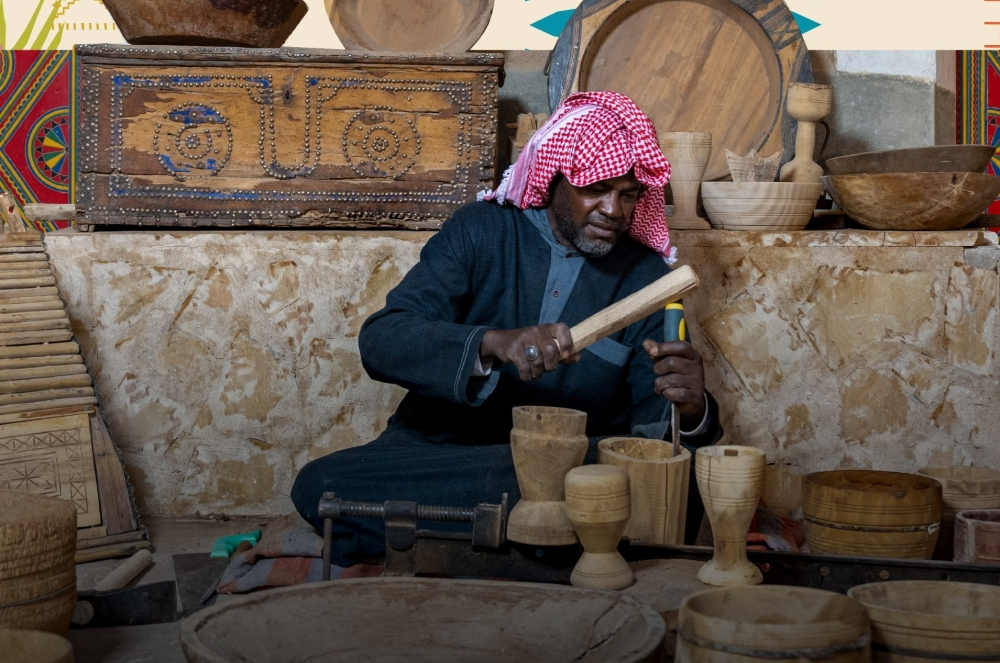
In a significant regulatory step aimed at preserving the rich cultural heritage of the Kingdom of Saudi Arabia and enhancing its contribution to the national economy, the Ministry of Culture, represented by the Heritage Commission, has issued the executive regulations for the Crafts and Handicrafts Law. These regulations establish a comprehensive framework for organizing the crafts sector, supporting artisans, and ensuring the sustainability of this authentic heritage and its transmission to future generations.
General context and objectives of the new regulations
Traditional crafts and handicrafts are an integral part of Saudi national identity, reflecting the history and culture of the Kingdom's diverse regions, from Sadu weaving in the north to the Qatt Al-Asiri art form in the south. In line with Saudi Vision 2030 , which aims to diversify income sources and celebrate the Kingdom's rich cultural heritage, this regulation transforms the craft sector from a collection of unregulated, individual practices into a promising and sustainable economic sector. The regulation aims to enhance the status of artisans, open new opportunities for growth and professional development, and establish clear standards for licensing, classification, and quality.
Key provisions of the regulations: registration and licensing
The regulations included precise conditions and mechanisms for registering artisans in the "National Register of Artisans ." Each artisan is required to submit detailed information including their region, craft classification, academic qualifications and practical experience, as well as contact information. The regulations emphasized the importance of fulfilling all requirements, stipulating that if any registration requirements are missing, the artisan will be notified and given 30 days to complete them. Failure to comply within this period will result in cancellation of the registration, with the opportunity to reapply after fulfilling the required conditions.
12 approved fields for crafts and handicrafts
The regulations identified 12 main areas for crafts and handicrafts that will be regulated, while leaving the door open for adding new sub-areas in coordination with relevant authorities. These areas include:
- woodwork
- Imaginary crafts (palm fronds)
- Metalwork
- leather goods
- Textile products
- Jewelry
- Traditional construction works
- Binding and gilding
- Embroidered items
- pottery
- Perfumes and incense
- Supporting handicrafts
Expected impact at the local and international levels
This regulation is expected to have a significant positive impact. Locally , it will contribute to creating new job opportunities, empowering local talent, and transforming hobbies into profitable businesses, thus supporting local economies across the Kingdom. It will also ensure the protection of intangible cultural heritage from extinction by encouraging artisans to continue practicing their crafts. Internationally , regulating the sector and raising quality standards will enhance the appeal of Saudi handicrafts to tourists and open new avenues for export and promoting Saudi culture on the global stage. Furthermore, this regulation supports the nomination of Saudi crafts for inclusion on UNESCO's World Heritage List, solidifying the Kingdom's position as a global cultural hub.
Licensing rules and quality standards
The regulations mandate that the Heritage Authority establish clear licensing procedures within 90 days. These procedures will include two main types: a "Craft Practitioner License" for those practicing the craft for commercial purposes, and a "Shop License for Selling Heritage Craft Products ." The license will be valid for two years and renewable, with the possibility of cancellation in case of non-compliance with the conditions. The Authority will also work on developing and disseminating quality standards for craft products to ensure the provision of authentic, high-value products and to protect consumers from counterfeit goods.